
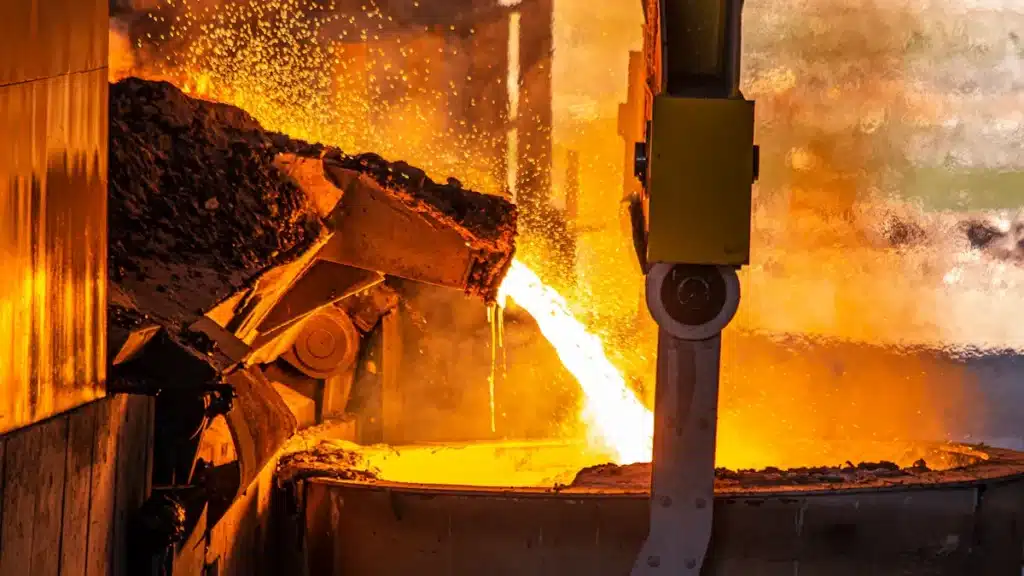
PDC (Pressure Die Casting) and GDC (Gravity Die Casting) are the two workhorse methods of modern metal casting, yet they differ in the one thing that matters most: how the mold fills. In PDC, a hydraulic plunger forces molten metal into a steel die at 150-1200 bar; in GDC, the metal simply pours in under gravity, with no external pressure at all. That single mechanical contrast drives everything else – cycle time, wall thickness, surface finish, porosity, and cost. For any buyer weighing these options, understanding pressure die casting is the first step toward matching the right process to the right part. The global die-casting market was valued at roughly $90.5 billion in 2026 and is projected to reach about $152 billion by 2033, growing near 7.7% a year – a clear sign that both processes sit at the center of automotive, electronics, and industrial manufacturing. Both share the same family of reusable tooling, but the filling force is what sets their cost and quality profiles apart.
Before the detail, four points decide the choice:
– PDC is built for speed and volume: thin walls, tight tolerances, and smooth surfaces – ideal above about 50,000 parts a year.
– GDC is the low-porosity, pressure-tight choice for 250-50,000 parts, where strength matters more than speed.
– Tooling is the swing factor: GDC dies run $10k-$90k, while PDC dies can exceed $500k.
– Match the process to the part – not the other way around – and you protect both budget and quality.
How Pressure Die Casting (PDC) Works and Where It Wins
The high-pressure process
PDC pushes molten aluminum, zinc, or magnesium into a hardened steel die in milliseconds. A hydraulic plunger applies 150-1200 bar – often 700-2500 bar on industrial machines – filling even the finest mold details before the metal solidifies. The speed is the headline benefit: cycle times fall between 15 and 90 seconds, so a single line can output tens of thousands of identical parts per year. Because the metal enters the cavity before any part hardens, aluminum die casting can hold wall sections under 1 mm while copying surface texture from the tool almost perfectly. The rapid, high-pressure cooling also builds a fine-grained microstructure that lifts mechanical properties.
Why buyers choose PDC
– Thin walls down to ~0.89 mm in aluminum and ~0.6 mm in zinc, cutting material weight.
– Tight tolerances near +/-0.1 mm (NADCA CT7), often removing the need for secondary machining.
– Excellent surface finish that frequently skips polishing steps.
– Design freedom for bosses, ribs, and threaded inserts in one shot.
The honest trade-off: porosity
The fast injection traps air inside the melt, and those pores weaken the part and can leak. Evidence shows larger, thicker sections carry a much higher defect density, so PDC fits thin-walled, non-pressure-critical parts better than sealed hydraulic bodies. Newer squeeze approaches apply 50-150 MPa to cut porosity 70-90% and push density above 99.5%, but that raises production cost 30-50% and needs 2-3x the upfront tooling investment. A qualified supplier or custom manufacturer will weigh these trade-offs against your volume before recommending PDC.
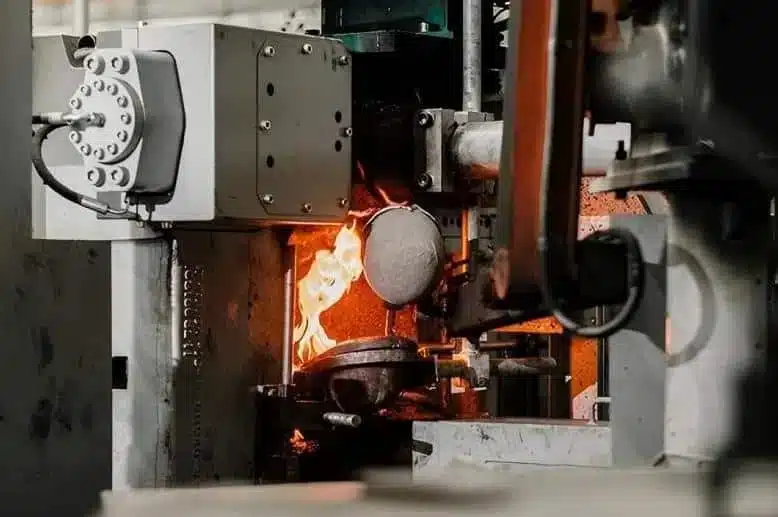
Gravity Die Casting (GDC): Process, Strengths, and Limits
The gravity-fed process
GDC – also called permanent mold casting – relies on nothing but gravity. An operator pours molten metal into a basin; it flows through runners and gates into a reusable metal mold and solidifies in 2-10 minutes. With no turbulent high-speed fill, trapped gas escapes naturally, producing dense, low-porosity parts that stay pressure-tight even after machining. Compared with PDC’s 15-90 second cycles, GDC is slower, but for low-to-medium volumes that pace is still efficient.
Strengths and limits
The slower, gentler fill gives GDC a real quality edge. Mechanical properties stay consistent across the cross-section, ductility and impact resistance beat sand casting, and heat treatment is usually possible. Tooling costs less than PDC because molds face far less stress, which suits 250-50,000 part runs. Common GDC parts include wheels, cylinder heads, and hydraulic valve bodies. The limits are speed and shape: cycle times of minutes make GDC uneconomic above ~50,000 parts, and it cannot fill thin walls or very intricate geometry. For structurally sound, thicker components, however, it is hard to beat.
The table below sums up where the two methods part ways on the factors buyers care about most:
| Factor | PDC (Pressure Die Casting) | GDC (Gravity Die Casting) |
| Filling force | 150-1200 bar hydraulic | Gravity only (0 external) |
| Best annual volume | 50,000+ parts | 250-50,000 parts |
| Min wall (aluminum) | ~0.89 mm | ~2-3 mm |
| Typical tolerance | +/-0.1 mm (NADCA CT7) | +/-0.3 mm (ISO 8062 CT9-11) |
| Tooling cost | $60,000-$500,000+ | $10,000-$90,000 |
| Porosity risk | Higher (air trapped) | Lower (gas escapes) |
| Surface finish | Excellent | Good, slightly rougher |
As the table shows, the crossover sits near 42,000 parts a year. Below that, GDC’s cheaper tooling usually wins; above 50,000, PDC’s per-part savings overtake its higher upfront cost.
How to Choose Between PDC and GDC for Your Part
Start with volume and cost
The decision almost always begins with one question: how many parts do you need? One representative case – switching an automotive transmission housing from GDC to PDC at a 75,000-unit annual run – delivered roughly 35% per-part savings once tooling was amortized. That example shows how a high tooling bill spreads across a big run, flipping the economics in PDC’s favor. Volume is the first filter; geometry and quality are the second.
Weigh geometry, tightness, and quality
Complexity and wall thickness decide shape feasibility: choose PDC for thin, intricate parts; GDC for thicker, moderate geometry. Pressure tightness favors GDC where leaks are unacceptable – hydraulic valve bodies, coolant paths, and brake components. Materials matter too: aluminum grades such as A380 and ADC12, plus zinc and magnesium, run in both processes, and a specialist in automotive die-casting can confirm the right alloy for your part. Quality assurance is the final filter. Leading Malaysian suppliers such as MORELUX back every batch with X-ray, CMM, spectrometer, and leak testing – the verification that protects first-pass yield.
For procurement teams, the partner matters as much as the process. A capable die-casting manufacturer or factory should own tooling design with CAD and flow simulation, CNC machining, finishing, assembly, and documented QC under one roof. If you are weighing wholesale or OEM supply, request material certificates and a sample run before committing to a full production mold. MORELUX provides one-stop die-casting solutions spanning aluminum, zinc, and magnesium, with inspection from X-ray to leak test on every order.

From the floor: “In fifteen years of die casting, the failures I see are rarely about the process itself. They come from mismatching the method to the part – picking PDC for a pressure-tight body, or GDC for a 200,000-part run. Get the process right and the rest follows.” – a senior process engineer at MORELUX.
Frequently asked questions
Q: Can pressure die cast parts be heat treated?
A: Usually not – trapped gas expands when heated and blisters the surface. GDC parts, with lower porosity, generally can.
Q: Which process holds tighter tolerances?
A: PDC, at about +/-0.1 mm versus GDC’s +/-0.3 mm, so PDC parts almost never need extra machining.
Q: Is gravity die casting the same as permanent mold casting?
A: Yes; both names describe a gravity-fed, reusable-metal-mold process.
Q: Can one factory run both PDC and GDC?
A: Yes. Many suppliers operate both, selecting the method per part based on volume, geometry, and quality needs.