
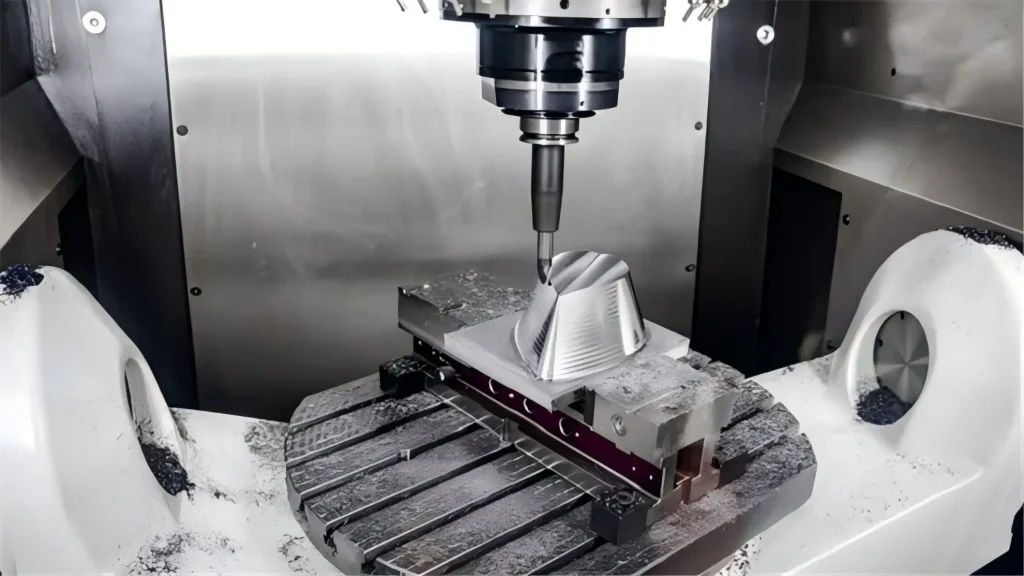
Precision casting is a high-precision method for manufacturing metal parts, also known as investment casting or lost-wax casting. This process can create shapes that are difficult or even impossible to produce using other methods. Many industries use precision casting because it produces fine and reliable parts. This method is used when parts need to be robust, durable, and complex in design.
Key Takeaways
- Precision casting, also known as investment casting or lost-wax casting, can produce very precise metal parts and can create parts with complex shapes.
- The process begins by creating a wax model, which is then encased in a ceramic shell. Finally, hot metal is poured into the ceramic shell to form the final part.
- This method is ideal for industries such as aerospace, automotive, and medical device manufacturing. These industries require fine and robust parts.
- Precision casting offers many advantages, such as: low material consumption, smooth surfaces, and high production speed.
- Choosing the right metal material is crucial, as is controlling the casting process. This helps to obtain high-quality finished products and prevent defects.
Precision Casting Method Overview
What is Precision Casting?
Precision casting produces precisely shaped metal parts with extremely smooth surfaces. This method is suitable for parts requiring fine details and tight fits. What makes precision casting special is its ability to create complex shapes that other methods cannot. Many industries use this method when high precision is required, such as aerospace, automotive, and medical device industries.
Investment Casting and Lost-Waste Casting
Precision casting is sometimes referred to by other names, such as investment casting and lost-waste casting. All these names refer to the same process. First, a wax model of the part is made. Then, the wax model is encased in a ceramic shell. When the ceramic shell is heated, the wax model melts, leaving an internal cavity. Hot metal is poured into the cavity, and as the metal cools, the final part is formed. The name lost-waste casting comes from the melting process of the wax model during heating.
Key Features of the Method
Precision casting has many good features:
- You can make hard shapes with great accuracy.
- The surface is smooth, so you do not need much extra work.
- You can use many metals like steel, aluminum, and bronze.
- The process is good for both small and big parts.
- You get the same results, even if you make many parts.
When you pick the precision casting method, you can make detailed and strong parts for many jobs.
Precision Casting Process

Precision casting is a process capable of manufacturing high-precision metal parts with complex geometries. This technology has a long history. Ancient Egyptians and Chinese craftsmen used early precision casting techniques to create jewelry and bronze vessels. Over time, the process has been continuously improved. In the 1940s and 50s, the aerospace industry focused on developing more advanced manufacturing methods to produce parts with smaller tolerances and smoother surfaces. Today, with advanced tools and technologies, even greater precision can be achieved.
Wax Model Making
The first step in precision casting is creating a wax model. The wax model’s appearance must perfectly match the part you ultimately want. The precision of the wax model is crucial. A precise wax model is essential for a precise metal part. You can choose different types of wax to make wax models. Filled wax models are strong and have low shrinkage, making them ideal for manufacturing engine parts. Unfilled wax models are soft and easily melted, making them ideal for jewelry making. Water-soluble wax models allow you to create very complex geometries because you can dissolve them.
Typical wax models have a resolution of up to 2900 DPI and a layer height of 15µm. Dimensional accuracy is approximately ±0.04mm per 20mm distance. Surface finish is also very smooth, with roughness values between Ra3.2 and Ra12.5. These properties help you achieve the stringent tolerances required in many industries.
Ceramic Shell Forming
Next, you need to build a ceramic shell around the wax model. Dip the wax model into a slurry composed of fine ceramic particles. After each dip, sprinkle with sand and allow it to dry. Repeat this step several times to strengthen the ceramic shell. The quality of the ceramic shell affects the surface finish and dimensional accuracy of the part. By controlling the slurry concentration and using suitable materials, you can obtain a ceramic shell that perfectly captures all the details of the wax model.
The ceramic shell must be strong enough to withstand molten metal while also being smooth enough to achieve a fine surface finish. You can use materials such as quartz sand and aluminosilicate refractories to ensure the shell has the appropriate properties. The number of layers and drying time also have a significant impact on the final result.
Lost-Wax Removal
After the shell dries, you need to remove the internal wax. Heat the shell to melt and drain the wax. This step is called lost-wax casting. You can use vibration, hammering, or even chemical methods to ensure all wax is removed. Careful wax removal helps preserve the fine details and complex geometry of the part. Rushing this step may damage the shell or result in the loss of some details.
Metal Pouring and Cooling
Now you can pour the metal into the empty shell. Heat the metal until it melts; typically, aluminum has a melting point of around 660°C (1220°F). Pour the molten metal into the shell at a temperature of 680°C to 750°C (1256°F to 1382°F). Pouring the metal smoothly at the appropriate temperature helps avoid bubbles and defects.
The cooling rate is crucial in the casting process. Rapid cooling of the metal results in a fine-grained structure, increasing the strength and durability of the part. You can control the cooling rate by changing the mold design or using special materials. The way the metal is cooled affects the strength and surface finish of the final part.
Finishing Steps
After the metal has cooled and hardened, remove the ceramic shell. You can use vibration or a machine to do this. Next, cut the part from the center tree, sand away any rough edges, and inspect each part. Inspection is a critical step in the precision casting process. You can use advanced tools such as laser scanners or CT scanners to check for defects and ensure that the parts meet your specifications.
| Step | Description |
|---|---|
| Knockout | Remove the ceramic shell using vibration or machines. |
| Cut Off | Separate the parts from the central tree with a saw. |
| Grinding | Smooth out rough areas left from the casting process. |
| Inspection | Check each part for accuracy and quality using advanced measurement tools. |
| Post Treatment | Perform any final treatments to improve surface finish or strength. |
You finish the process by making sure every part has the right surface finish and dimensional accuracy. This careful attention to detail is what makes the precision casting method so valuable for creating complex geometries and high-quality parts.
Precision Casting Materials and Types

Common Metals Used
There are many metals you can use with the precision casting method. This means you have lots of choices for different jobs. Here are some common metals used in precision casting:
- Bronze: Good for parts that need to last long and not rust.
- Nickel-Based Alloys: Can handle very tough and hot places.
- Carbon Steel: Strong and lasts long, but does not cost too much.
- Magnesium Alloys: Light in weight, so they are used when you want to make things lighter.
- Stainless Steel: Does not rust easily and is strong.
- Aluminum Alloys: Light and strong, often used in cars and planes.
- Copper Alloys: Includes bronze and brass, great for wires and decorations.
- Titanium Alloys: Very strong and light, used in medical and airplane parts.
Having many metal choices is a big benefit of precision casting. You can pick the best metal for your project.
Types of Precision Casting
There are different types of precision casting. Each type has its own good points. The main types are:
- Investment Casting (Lost Wax Casting): Uses a wax shape and a ceramic shell. This is the most used type and works for both big and small parts.
- Vacuum Casting: Takes air out of the mold to stop mistakes. It is used for very good parts in planes and medical tools.
- Shell Casting: Uses a thin shell mold. This makes parts faster and gives a smooth finish.
- Single-Crystal and Directionally Solidified Casting: Used for blades and parts that must handle a lot of heat and stress.
Each type helps you make parts with different shapes, sizes, and features.
Material Selection Factors
You need to think about some things when picking a metal for precision casting. The table below shows how different jobs and metals have special needs:
| Material Type | Examples | Key Properties/Considerations |
|---|---|---|
| Ferrous Metals | Stainless Steel, Carbon Steel | Must be easy to shape and very strong. |
| Non-Ferrous Metals | Aluminum, Copper, Nickel Alloys | Need the right mix of metals for good results. |
| Aerospace | Turbine Blades | Use special casting for parts that get very hot and stressed. |
| Automotive | Aluminum Parts | Light and strong, often made with thin walls. |
| Medical & Dental | Implants | Need rough surfaces to fit better in the body. |
| Electronics | Housings, Heat Sinks | Need tricky shapes and smooth surfaces. |
| Energy | Turbine Components | Must work well in very hard conditions. |
| Firearms | Receiver Components | Need to be exact and sometimes heat treated. |
| Industrial Machinery | Pumps, Valves | Must last long and be tough. |
| Art & Jewelry | Sculptures, Jewelry | Need tiny details and a shiny finish. |
You should always pick the metal that fits the part’s job, where it will be used, and what the rules are for that industry. Picking the right metal helps you get the best results from your precision casting work.
Advantages and Disadvantages of Precision Casting
Benefits of Precision Casting
There are many reasons to pick precision casting for your work. This process lets you make parts with exact sizes. You can create shapes that other methods cannot make. The surface is smooth, so you do not need much extra work. Tight tolerances mean your parts fit together well.
Some main benefits of precision casting are:
- You waste less material because you use only what you need.
- You save money since the parts are almost finished when they come out.
- You can design parts with more freedom and detail.
- You make many parts at once, which saves time.
- You get strong parts that last longer and work better.
Limitations and Challenges
Precision casting also presents several challenges. Problems can arise during production. High start-up costs make it difficult for small businesses to begin. Appropriate materials must be selected, otherwise parts may lack sufficient strength or be defective. Porosity and other defects can lead to part breakage if process control is inadequate.
The table below lists common problems and their solutions:
| Challenge | Impact | Solution |
|---|---|---|
| High Initial Setup Costs | Hard for small runs | Use shared or modular molds |
| Material Limitations | Defects or low quality | Choose the right alloy |
| Porosity and Defects | Weak or failed parts | Control temperature and cooling |
| Complex Mold Making | Slower production, higher costs | Use 3D printing for faster molds |
| Dimensional Accuracy Issues | Poor fit, more rework | Use advanced quality checks |
| Cooling and Solidification | Cracks or deformation | Use controlled cooling systems |
You may find defects such as porosity, inclusions, or cracks. These problems are often caused by poor venting, improper temperature control, or mold design flaws. Many of these issues can be resolved by inspecting the process flow and using higher-quality tools.
Precision casting offers numerous benefits, but you must overcome various challenges to achieve optimal results.
Applications and Comparisons
Uses of Precision Castings
Precision castings are used in many industries. They help make metal parts with lots of detail. These parts often have tricky shapes. They must meet strict rules. Precision casting is used in many fields. The table below shows where you find these parts and what they look like:
| Industry | Examples of Parts Produced |
|---|---|
| Aerospace & Aviation | Turbine blades, engine parts, missile parts |
| Automotive | Engine components, transmissions, turbochargers |
| Medical & Dental | Hip implants, dental implants, surgical tools |
| Electronics & Consumer Goods | Housings, heat sinks, connectors |
| Energy & Power Generation | Turbine components, valves, pump housings |
| Firearms & Defense | Receiver components, triggers |
| Industrial Machinery & Equipment | Pumps, valves, gears, hydraulic components |
| Art & Jewelry | Intricate sculptures, jewelry |
Comparison with Other Metal Casting Methods
Precision casting is different from other casting methods. It gives the best accuracy, about ±0.05mm. Die casting is also accurate but does not show as much detail. Sand casting has rough surfaces and is not as accurate.
| Casting Method | Dimensional Accuracy | Cost Characteristics |
|---|---|---|
| Precision Casting | ±0.05mm | High starting costs, good for making many parts, cheaper equipment |
| Die Casting | Better than Sand Casting, but less than Precision Casting | Costs more for tools, best for big orders |
| Sand Casting | Lower accuracy, rougher finish | Cheaper, but needs more work and has less detail |
Precision casting has higher initial costs due to the need for specialized molds. Die casting is better suited for mass production. Sand casting is suitable for projects with simple shapes and limited budgets, but it sacrifices detail.
Precision Die Casting vs. Investment Casting
Precision die casting and investment casting are not the same. Both can manufacture complex metal parts, but their processes differ. Precision die casting uses high pressure to force molten metal into a steel mold. This method is best suited for rapid mass production of parts, achieving thin walls and tight fits. Investment casting (or lost-wax casting) can produce very fine shapes, suitable for small-batch production and smooth surfaces.
| Aspect | Precision Die-Casting (e.g., MORELUX) | Investment Casting (Lost Wax) |
|---|---|---|
| Processing | Tight fits, thin walls, fast making | Lots of detail, tricky shapes, slower process |
| Surface Finish | Smooth, may need extra work | Very smooth, almost finished shape |
| Production Cost | High tool cost, low part cost for big jobs | Lower tool cost, higher part cost for big jobs |
| Production Efficiency | Very fast, up to 100 parts each minute | Slower, makes parts in batches |
MORELUX offers advanced precision die casting solutions. You can obtain robust metal parts for automotive, electronics, and medical devices. Precision die casting is ideal if you need to produce large quantities of parts quickly. For smaller orders or complex-shaped parts, investment casting can provide finer details.
Now you know that precision casting helps you create complex-shaped, tightly fitting metal parts. This process uses molds, dies, and molten metal to create strong and delicate parts. Compared to other processes, you get parts with extremely high precision, smooth surfaces, and less waste. Choose this method when you need precise parts for aircraft, medical devices, or jewelry. It is best suited for manufacturing small quantities of parts or situations where a perfect appearance is desired.
FAQ
What are the main advantages of precision casting?
It can create parts with extremely fine details and very smooth surfaces. Other casting methods cannot achieve these shapes.
Can different metals be used in precision casting?
Yes, a variety of metals can be used. Some common metals include aluminum, steel, bronze, and titanium. You can choose the appropriate metal based on the project requirements.
How does precision casting compare to die casting?
Precision casting can achieve richer details and is ideal for small-batch production. Die casting is faster and can produce a large number of parts quickly.
Is precision casting suitable for making jewelry?
Yes, precision casting is ideal for making jewelry. It allows for fine details and smooth surfaces. Many artists and jewelers prefer this method for creating custom jewelry.