

The engineering team has examined the primary drawbacks of the pressure die-casting process. Mold costs account for 40% of the total project expense, resulting in high initial costs. The high-pressure die-casting process is prone to internal porosity and imposes certain material limitations. While standard die-casting is well-suited for mass production, low-pressure die-casting is better adapted for small-batch production; furthermore, alternative processes are available to meet small-batch requirements. Engineers are focusing on the limitations of the pressure die-casting process.
Key Takeaways
- High start costs make high-pressure die casting best for big jobs.
- Do not use it for small groups.
- Pick low-pressure die casting to save weak cores.
- It also makes parts with thick walls or tricky shapes.
- Test parts early with X-rays.
- This helps you find hidden air pockets.
- It also keeps surface finishes strong for heat treatment.
Disadvantages of High-Pressure Die Casting

High Initial Tooling and Equipment Costs
High-pressure die casting needs costly tools. Making steel molds costs lots of money. Machinery adds to the setup price.
| Category | Disadvantage Details |
|---|---|
| Financial Disadvantages | • High setup costs come from complex dies. • Low costs need high production runs. |
| Structural & Quality Disadvantages | • Trapped air causes internal porosity problems. • Thicker walls slow down cooling time. • The method limits metal choices strictly. |
This method needs high initial tooling money. Molds can cost over $80,000. Parts become expensive for buyers.
Not Suitable for Small-Batch Production
Small-batch orders result in higher unit prices, whereas large-scale production lowers total costs.
Engineers prioritize cost considerations. Low-pressure casting is well-suited for small-batch production because it minimizes mold wear, thereby helping small businesses save on expenses. In contrast, high-pressure casting entails excessive costs, making low-pressure casting the more ideal choice.
High Costs for Mold Modifications
Modifying a design creates numerous complications. Repairing hardened steel molds is difficult, and reworking them causes schedule delays; furthermore, precision machining often requires additional investment.
This process requires the design plan to be finalized at an early stage. Teams must quickly settle on all details and employ rigorous planning to prevent major errors, while management oversight ensures that late-stage changes are avoided. Once the mold design is finalized, no further alterations are made.
Material and Design of Pressure Die Casting
Limitations of Non-Ferrous Metals
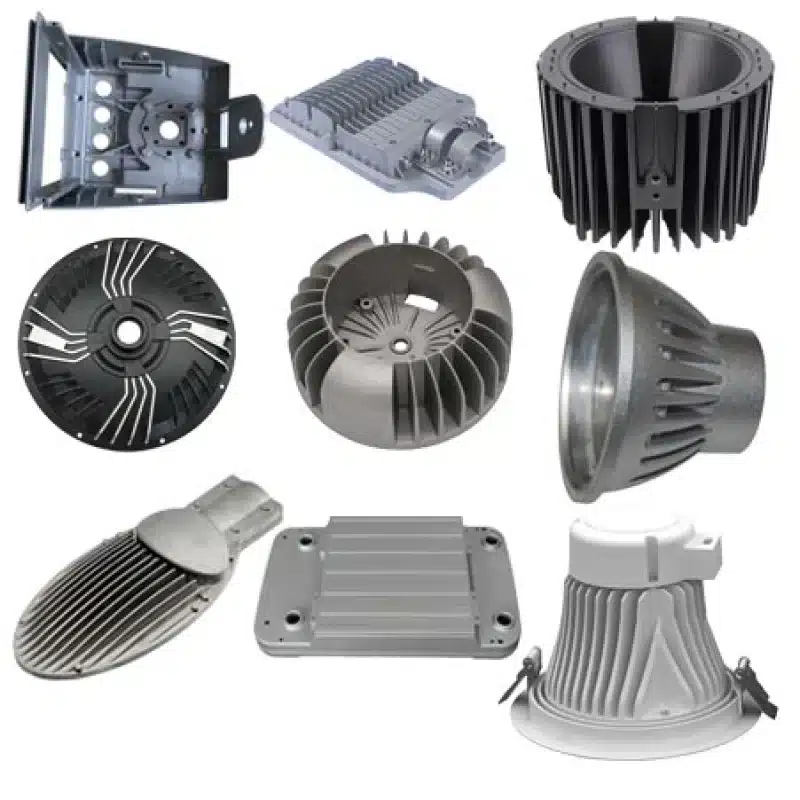
The high-pressure die-casting process presents significant drawbacks regarding materials. Facilities primarily process non-ferrous metal alloys, whereas ferrous metals have very high melting points; molten metal at high temperatures rapidly damages steel molds, and the risk of mold failure is further increased if an unsuitable alloy is selected.
Engineers pick alloys using strict heat limits:
- Aluminum die casting range: 580°C to 630°C
- Zinc alloys: 380–420°C
Shops avoid iron to stop heat damage. However, low pressure die casting handles poured metal better.
Inability to Use Conventional Sand Cores
High-pressure die casting involves powerful fluid forces, with molten metal injected into a sealed mold at extremely high speeds. This turbulent metal flow can destroy sand cores; consequently, internal structures typically require steel slide cores.
Steel components increase overall manufacturing costs, and complex hollow shapes often necessitate additional moving slides. In contrast, low-pressure casting allows for the use of sand cores. Factories frequently employ low-pressure casting for complex parts because the gentle metal-filling process ensures that fragile sand cores remain intact.
Limitations on Part Size and Geometry in Pressure Casting
Equipment dimensions limit the size of parts that can be produced. Large clamping units are required to keep the mold securely closed, and the production of large parts demands massive machinery; thus, high-pressure die casting is generally unsuitable for manufacturing ultra-large components.
Engineering designs typically call for thinner walls because thick sections cool very slowly. Low-pressure casting, however, is well-suited for producing thick-walled structures. Size limitations remain a critical factor during the design review process.
High-Pressure Die Casting Secondary Process
Risks of Porosity and Cold Shuts
Excessive flow velocity in the molten metal leads to turbulent flow. Poorly designed gates can entrain air into the metal stream, resulting in porosity in the finished part. Turbulent flow mixes this entrapped air into the body of the metal.
“Cold shuts” occur when the molten metal cools too rapidly, preventing separate streams from fully fusing together. Long flow paths reduce the velocity of the metal stream. Low-pressure die casting mitigates this issue by maintaining a smooth, steady flow of molten metal.
Limitations Regarding Heat Treatment and Welding
Entrapped air poses risks during heat treatment. High temperatures cause internal air to expand rapidly, pushing against the softened metal and creating unsightly surface blisters. In contrast, low-pressure die casting offers superior performance during heat treatment.
Air pockets compromise weld quality, as entrapped air reduces the metal’s strength at high temperatures. Engineers take these die-casting limitations into account during the design phase. High-performance parts require structural integrity, necessitating strict risk control in conventional die-casting processes.
Constraints on Surface Finish and Internal Defects
Polishing can expose tiny, hidden pores, while pickling may reveal concealed micro-cavities. Plating solutions seeping into these voids can generate gas bubbles, and untreated porosity leads to visible surface defects.
Factory experts assist buyers in addressing internal defect issues. X-ray inspection is employed during production to ensure quality and precisely monitor part dimensions. Early detection helps reduce costs associated with downstream finishing. Risk assessment enables buyers to select the most appropriate manufacturing process, while effective process control ensures safety and quality in high-pressure die casting.
Engineers check good and bad points first. Tooling costs are very high. High-pressure die casting hurts small jobs. Factories pick low pressure die casting. Air holes limit metal strength. Managers check all casting limits. They talk with specialized factories. This helps fix both casting methods.
FAQ
Why do custom manufacturers avoid using the high-pressure die casting process for small-batch production?
Small-batch production leads to a significant increase in the cost per unit, while initial tooling costs remain high. In contrast, low-pressure die casting is less expensive and offers greater cost savings for custom clients.
Which metal materials are unsuitable for the high-pressure die casting process?
Steel and iron are unsuitable for this process. High temperatures can rapidly damage steel molds, so manufacturers must use non-ferrous metal alloys instead.
How does porosity affect the quality of high-pressure die castings?
Trapped air creates voids (porosity) within the casting. These defects can cause surface blistering—particularly during heat treatment—and compromise the strength of the finished product.