
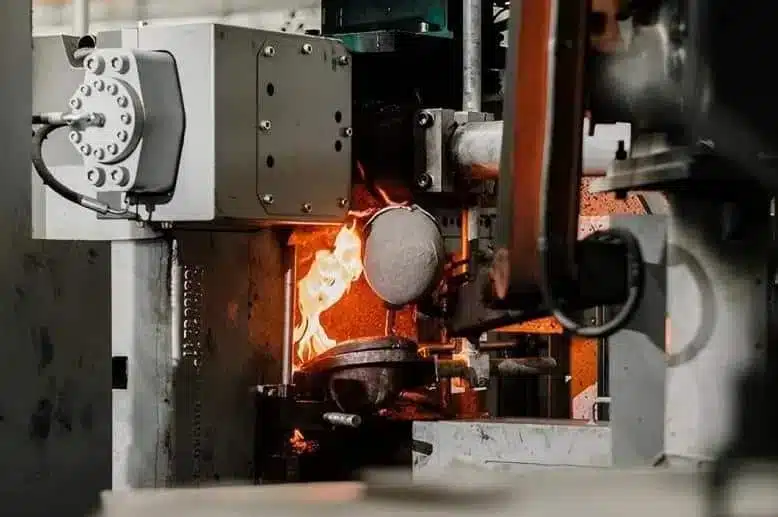
High-pressure die casting (HPDC) is a mainstream metal forming process widely adopted across automotive, electronics and medical device industries. It delivers dimensionally stable, robust components with consistent surface quality and high production efficiency. Modern manufacturers apply mature process control and inspection systems to guarantee stable output.
Key Takeaways
- Production output varies drastically by part size and structure: miniature parts can reach a maximum throughput of 18,000 units per hour, supporting large-batch orders and cost optimization. Castings feature uniform, smooth surfaces, which effectively reduces post-processing workload and ensures consistent assembly performance.
Key Advantages of Pressure Die Casting
Complex Shapes and Design Flexibility
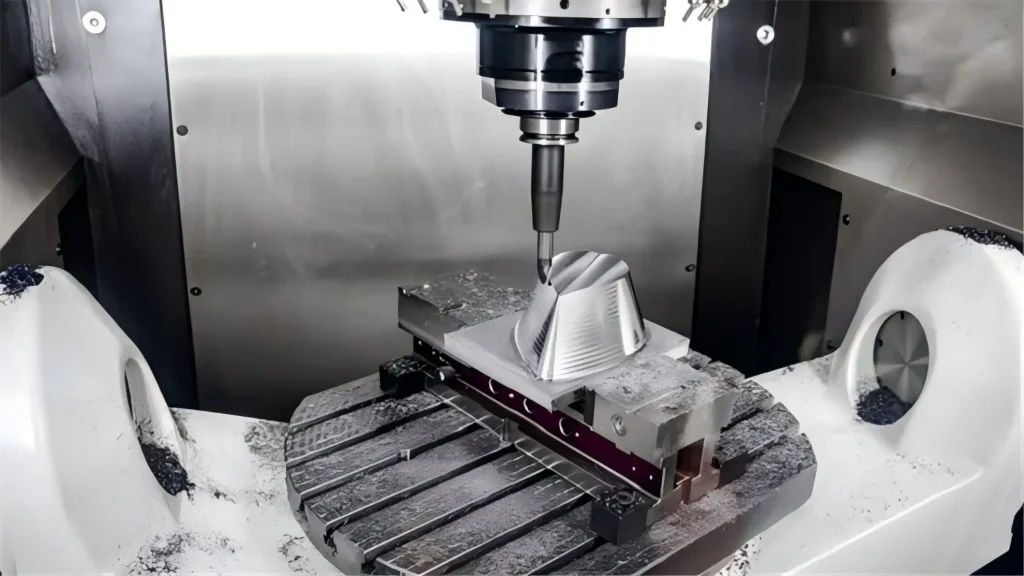
High-pressure die casting excels at manufacturing components with intricate structures, thin walls and fine features. It enables integrated part design, combining multiple discrete components into a single casting. Compared with traditional casting processes, this integration simplifies assembly procedures and cuts overall production costs. The process produces lightweight yet rigid parts, which is highly valued in automotive and electronic manufacturing. Professional manufacturers adopt CAD and flow simulation software to support customized mold development and product design.
Pressure die casting also broadens product design possibilities. It is commonly used for durable, recyclable equipment housings and heat dissipation components in the electronics sector. Integrated one-piece structure protects internal tiny components and optimizes internal space layout, making it a preferred process for products requiring compact size and reliable performance.
High Production Efficiency
Factories like pressure die casting because it is fast. The process pushes metal into molds quickly. This means more parts are made in less time. Hot-chamber die casting can make 200 to 300 parts each hour. For tiny parts, like zipper teeth, it can make 18,000 each hour. This speed helps companies fill big orders on time.
Pressure die casting does not waste much metal. The parts come out almost finished, so less work is needed later. Using metals like aluminum and zinc is better for the planet. MORELUX uses these good points to help business customers get fast and green solutions.
Tip: Making one die-cast part instead of many can cut costs by up to 40%. It also means fewer extra steps are needed.
Superior Surface Quality and Precision
High-pressure die casting delivers excellent surface finish, outperforming conventional sand casting. The table below lists typical surface roughness (Ra) ranges of mainstream casting processes, which follow general industrial casting standards:
| Casting Method | Surface Finish (Ra, µm) |
|---|---|
| Sand Casting | 6.3–25 |
| Investment (Lost-Wax) | 1.6–6.3 |
| Die Casting | 1.6–3.2 |
| Gravity Die Casting | 3.2–6.3 |
| Lost Foam Casting | 3.2–12.5 |
| Vacuum Casting | 1.6–3.2 |
With high-precision tooling, HPDC castings maintain tight dimensional tolerances and excellent assembly compatibility. Most standard parts can be used directly after casting without additional machining, cutting down time and expenditure. Professional factories conduct full-range quality inspection and provide supporting surface treatment including plating and anodizing to enhance both structural performance and appearance.
Consistency and Repeatability
HPDC is ideal for mass production of identical components. The whole production workflow, from alloy melting to cooling, adopts standardized parameter control to guarantee uniform quality across batches. The core production steps are shown below:
| Step | Description |
|---|---|
| Molten Metal Preparation | Metal is heated to the right temperature so it flows well and has no problems. |
| High-Pressure Injection | Hot metal is pushed into molds fast, so there are no air bubbles and the mold fills up. |
| Solidification and Cooling | The metal cools quickly, making the surface smooth and the size correct. |
| Part Ejection | Parts are pushed out with pins, so they keep their shape. |
| Trimming and Finishing | Extra metal is cut off, and other steps are done if needed. |
Stable repeatability is critical for automotive, electronic and medical device components that require strict quality uniformity. Standard batch inspection procedures are implemented to comply with international quality specifications.
Note: High material utilization and recyclable casting alloys make HPDC an environmentally friendly manufacturing process.
Pressure Die Casting vs. Other Methods
Gravity Casting Comparison
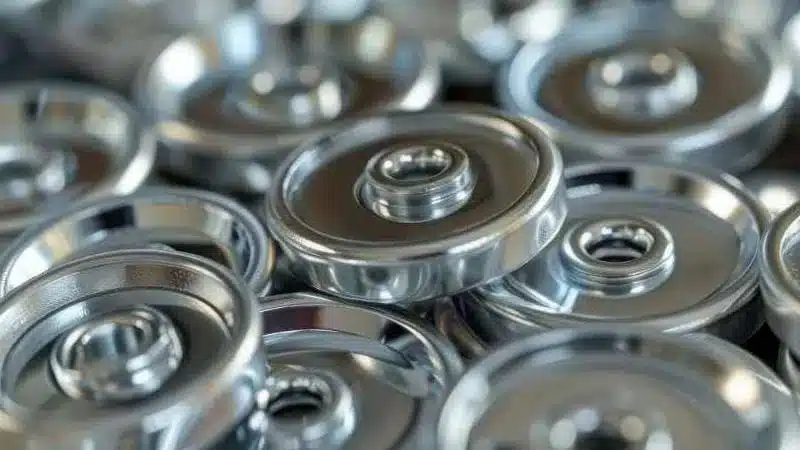
Manufacturers usually compare high-pressure die casting and gravity die casting (GDC) to select suitable forming technology. HPDC injects molten alloy via external high pressure, while GDC relies on natural gravity for mold filling, so HPDC delivers far higher production efficiency. The comparison between the two processes is as follows:
| Aspect | Gravity Die Casting (GDC) | High Pressure Die Casting (HPDC) |
|---|---|---|
| Injection Method | Gravity-fed | Forced under high pressure |
| Volume | Medium-high | High |
| Wall Thickness | Moderate | Thin walls possible |
| Dimensional Accuracy | Good | Excellent |
| Tooling Cost | Lower | Higher initial tooling cost |
High-pressure die casting makes parts that fit better. The parts also look smoother. MORELUX uses die casting to give customers good parts every time.
Sand Casting Comparison
Sand casting and HPDC apply to different production scenarios. Sand casting uses disposable sand molds and generally produces parts with rough surfaces, while HPDC adopts durable metal molds for superior surface quality. The surface roughness comparison is shown below:
| Casting Method | Typical Ra (micrometers) | Typical Ra (microinches) |
|---|---|---|
| Sand Casting | 6.3 – 25 | 250 – 1000 |
| Die Casting | 1.0 – 4.0 | 40 – 160 |
Through precise control of injection speed, pressure and cooling parameters, HPDC effectively reduces common defects such as porosity and incomplete filling. The finished components have stable mechanical performance, meeting the safety and reliability requirements of automotive and electronic products.
Suitability for Mass Production
High-pressure die casting is great for making lots of parts. It works best when companies need more than 50,000 parts each year. Car, airplane, and electronics companies use pressure die casting for engine parts and cases. The process makes many parts that are all the same. MORELUX helps customers finish big orders on time and meet quality rules.
Tip: Companies pick high-pressure die casting when they want fast, accurate, and repeatable results for big jobs.
Manufacturers pick pressure die casting because it can make tricky shapes. It also makes parts that fit very well and look smooth. The table below shows the main benefits:
| Advantage | Benefit |
|---|---|
| Complex Shapes | Hard designs can be made |
| Dimensional Tolerances | Very accurate sizes |
| Surface Finish | Smooth, good for plating |
HPDC produces components featuring high strength, light weight, long service life and stable batch quality. It supports cost-effective mass production and is compatible with a wide range of die-casting alloys.
FAQ
What are the main differences between pressure die casting and low-pressure die casting?
Pressure die casting uses high pressure to quickly fill the mold. Low-pressure die casting uses lower pressure and a slower filling speed. Low-pressure die casting is more suitable for large or complex-shaped parts.
Can low-pressure die casting manufacture thin-walled parts?
Low-pressure die casting is best suited for manufacturing thick-walled parts. Pressure die casting can produce thinner walls and finer details. Companies will choose the appropriate process based on the specific requirements of the part.
When should companies choose low-pressure die casting?
Companies should choose low-pressure die casting to manufacture large, simple-shaped parts. Low-pressure die casting is also a good choice when parts need to be robust, durable, and leak-proof. It helps prevent internal problems from occurring in the part.