
Yes — many modern engine blocks are die cast, but not all. The answer turns on the metal and the duty cycle: most gasoline passenger-car blocks are produced by aluminum die casting, while heavy-duty diesel and large cast-iron blocks still come from sand casting. For high-volume passenger cars, die-cast engine blocks are the norm, and a specialist automotive die-casting supplier builds them with aluminum’s strength-to-weight edge. When a manufacturer weighs build cost against performance, the route is set by volume, load and material — not the part’s name. This guide explains what die casting actually is, why aluminum took over the passenger-car block, and how a die-cast block compares with a sand-cast iron one, using figures from real production lines.
Key Takeaways
- Yes, many engine blocks are die cast — mostly aluminum blocks for passenger cars; iron and heavy diesel blocks use sand casting.
- Die casting injects molten aluminum at 7-207 MPa into steel dies, reaching wall thickness as thin as 0.8 mm.
- A380 is the workhorse block alloy; AA 390’s high silicon resists wear on cylinder bores.
- Pick die casting for high-volume runs; sand casting wins for low volume and extreme-load iron parts.
- A custom die casting manufacturer should confirm alloy, tolerance and porosity control before tooling is cut.
What Die Casting Is — and How It Makes Engine Blocks
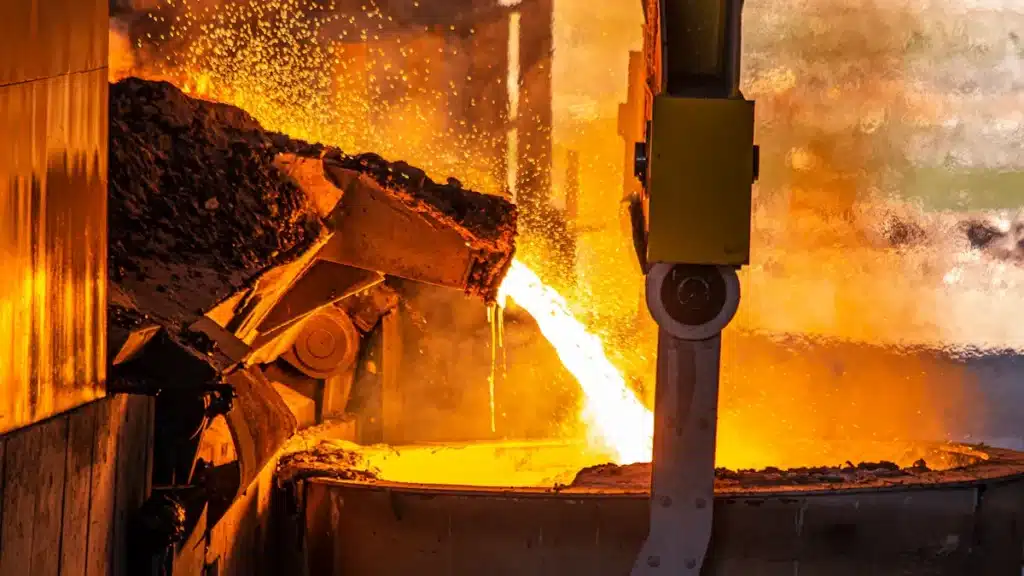
Die casting forces molten metal into a steel die at high speed and pressure, then ejects a solid part in seconds. Unlike sand casting, the reusable steel die holds its shape shot after shot, so dimensions stay consistent across a long run. For engine blocks this matters: a block is a thin-wall, internally cored part where coolant and oil passages must line up every single time. A manufacturer reaches that repeatability by controlling injection pressure, melt temperature and cooling rate — not by re-making a mold for each part.
The high-pressure process, by the numbers
A cold-chamber aluminum line melts ingots near 660 degC and injects the metal at 7-207 MPa depending on machine size. Thin wall sections down to 0.8 mm are achievable, which is exactly why a die-cast block can be lighter than a sand-cast iron one without losing rigidity. Because the cavity fills in milliseconds and the part ejects quickly, the process suits mass production where thousands of identical blocks are needed. The main risk is gas entrapment, so modern lines add vacuum assistance and X-ray inspection to keep porosity in check before machining.
Aluminum Die Casting: The Standard for Passenger-Car Engine Blocks
Aluminum die casting is now the default for passenger-car blocks, and the reason is simple physics: aluminum weighs about one-third as much as steel and moves heat well, so a block sheds weight and runs cooler. aluminum die casting also gives a near-net-shape part that needs little post-machining. A380 is the workhorse grade, while AA 390’s high silicon content resists wear on cylinder bores — the kind of detail a die caster tunes for engine service. On a production line the castings are finished with CNC machining (to +/-0.01 mm) and verified by X-ray and CMM, so a wholesale buyer gets repeatable, ready-to-assemble blocks.
Which alloy, and why it matters
| Alloy | Silicon / Copper | Why it is used in blocks |
| A380 | ~9% Si, 3.5% Cu | Best all-round castability and strength |
| A360 | Low copper | Corrosion resistance, good surface finish |
| A390 | High silicon | Wear resistance on cylinder surfaces |
| A413 | Higher strength | Structural durability |
Alloy choice is a sourcing decision, not a guess. A custom factory should match the grade to wall thickness, load and finish before steel is cut — because changing alloy after tooling release is expensive. For most passenger blocks, A380 or AA 390 covers the range from general duty to high-wear bores, and a supplier can advise once they see the drawing.
Die Cast vs Sand Cast: Choosing the Right Process for Engine Blocks
Neither method is ‘better’ — they fit different jobs. Die casting wins on precision, speed and weight for high-volume aluminum; sand casting wins on tooling cost and raw strength for low-volume iron. A buyer choosing a route should look at three things: how many parts, how thin the walls, and how much load the block sees. precision die-casting capabilities — tooling, casting, CNC, finishing and assembly under one roof — let a single supplier take a block from drawing to finished goods without hand-offs that break traceability.

| Factor | Aluminum HPDC (die cast) | Sand-cast iron |
| Material | A380 / AA 390 aluminum | Gray cast iron |
| Tensile strength | 180-300 MPa | Higher (iron) |
| Wall thickness | 0.8-4.0 mm | Thicker required |
| Best volume | High (10k-50k / batch) | Low-mid |
| Tooling cost | High die, amortized | Low pattern |
| Porosity control | Vacuum-assist + X-ray | Low risk |
| Best for | Passenger-car blocks | Heavy-duty diesel |
The table makes the trade-off concrete. A die-cast aluminum block suits millions of passenger cars where weight and repeatability rule; a sand-cast iron block suits a low-volume, extreme-load diesel where upfront tooling must stay low. Porosity is the die caster’s main enemy, which is why vacuum assistance and X-ray inspection are standard on automotive lines — and why a supplier such as MORELUX, certified to IATF 16949, ISO 9001, ISO 13485 and AS9100D, is worth the shortlist.
FAQ
Are most car engine blocks die cast today?
Yes — most gasoline passenger-car blocks are aluminum and die cast, because the method delivers light weight and tight tolerances at volume. Large diesel and industrial blocks stay sand cast, where iron strength and low tooling cost matter more than weight.
How strong is a die-cast aluminum block?
Aluminum high-pressure die casting reaches 180-300 MPa tensile strength. It trades some of iron’s raw strength for weight savings and precision, which is the right call for most passenger engines.
Why not die cast every engine block?
The steel die is costly and only pays off at high volume, while iron sand casting is cheaper to start for low runs and heavy loads. Production target, not the part’s name, decides the route.
Can a custom manufacturer make engine blocks?
Yes. A custom die casting manufacturer builds blocks and transmission cases for automotive OEMs and tier suppliers using aluminum’s light weight and heat properties, with porosity control and dimensional verification built into the line.
About the author
This guide was written by the MORELUX engineering team, which runs aluminum, zinc and copper die casting for automotive, electronics, lighting and telecom buyers. Figures follow the alloy and process data on our production lines and are verified by X-ray and CMM inspection; confirm specific grades and tolerances against your drawing before tooling release.