
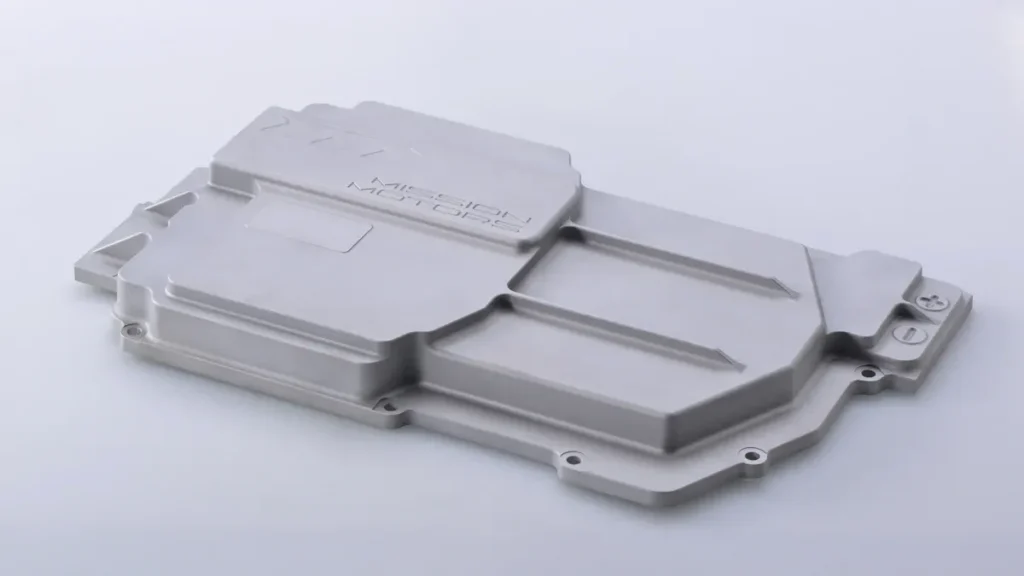
Aluminum alloys can sustain high-pressure service conditions, yet their pressure resistance varies drastically based on alloy series, heat treatment temper and manufacturing forming process. Material designers select matched aluminum grades for high-load industrial, automotive and aerospace scenarios. The tensile mechanical performance of general wrought aluminum under different tempers is listed below:
| Property | Unit | O Temper | T4 Temper | T6 Temper |
|---|---|---|---|---|
| Tensile Strength | MPa | ≥110 | ≥240 | ≥290 |
| Yield Strength | MPa | ≥35 | ≥140 | ≥240 |
Pressure bearing capacity is primarily determined by alloy composition. Below are mainstream high-pressure die-cast aluminum alloys and their core applicable scenarios:
| Alloy Type | Key Characteristics | Application Suitability |
|---|---|---|
| A413 | Improved fluidity | Intricate, thin-walled |
| ADC12 | Enhanced strength | Higher loads, wear |
| A380 | Better machining | Secondary operations |
Professional die-casting manufacturers adopt optimized melting and injection processes to reduce internal porosity, improving the pressure resistance of aluminum cast structural parts for automotive and general industrial equipment.
Key Takeaways
- Aluminum alloys deliver viable high-pressure resistance, but performance differs widely across alloy grades and forming processes; matching alloy to load conditions is the core design priority.
- Wrought high-strength aluminum (7075-T6) serves aerospace high-load structures, while medium-strength 6061-T6 is widely used for general industrial structural frames; these wrought alloys differ fundamentally from die-cast aluminum series.
- Optimized high-pressure die casting with rapid solidification refines internal grain structure and lowers porosity, effectively boosting compressive and tensile load capacity for cast aluminum components.
How aluminum withstands pressure

Core Mechanical Indicators for Pressure Resistance
Aluminum’s ability to bear static and cyclic high pressure is evaluated via two core metrics: ultimate tensile strength and compressive yield strength. Ultimate tensile strength refers to the maximum tensile load a material sustains before fracture; yield strength marks the stress threshold where permanent plastic deformation occurs. Material suppliers select wrought or cast aluminum grades based on target load requirements.
| Alloy Grade | Tensile Strength (psi) | Yield Strength (psi) |
|---|---|---|
| 7075-T6 Wrought Aluminum | 83,000 | 73,000 |
| 6061-T6 Wrought Aluminum | 45,000 | 40,000 |
The table shows how strong two common alloys are. 7075-T6 is stronger, so it is used in planes and the military. 6061-T6 is strong too and is used in machines. Aluminum’s compressive yield strength changes with each alloy:
| Alloy Type | Compressive Yield Strength (MPa) |
|---|---|
| Pure Aluminum (1xxx series) | 7–110 |
| 6061-T6 | 240–310 |
| 6063-T5/T6 | 150–200 |
| 7075-T6 | 500–600 |
| Aluminum Matrix Composites | 938 (at 400℃) |
| New Aluminum-based Entropy Alloys | >1000 (at room temperature) |
These numbers show that some aluminum alloys are very strong. New ways to make aluminum can make it even stronger. MORELUX checks every part to make sure it is strong enough by using careful die-casting and testing.
Factors influencing pressure resistance
Multiple design and material variables jointly decide an aluminum component’s high-pressure service lifespan: alloy composition, cross-sectional wall thickness, geometric structure, and cyclic fatigue resistance. Fatigue strength describes a material’s capacity to withstand repeated cyclic compression/tension loads, a critical metric for components under continuous working pressure.
Fatigue performance fluctuates with operating temperature; high tensile strength does not equate to superior fatigue resistance, creating unique design constraints for cyclic high-pressure equipment. Geometric design directly impacts local stress concentration: designers adopt uniform wall thickness, full fillet rounded corners to disperse concentrated stress and suppress crack initiation. Anti-fatigue surface coatings can be applied for components with unavoidable high local stress.
Fatigue performance grading of mainstream wrought structural aluminum:
| Grade | Fatigue Strength | Strong Enough For … |
|---|---|---|
| 6061 | Good | Structural profiles on heavy-duty vehicles, bridges |
| 2014 | Very good | Aerospace framework |
| 2024 | Great | Sheet form for aircraft wings & fuselage |
| 7050 | Amazing | Aircraft fuselage frames, bulkheads, wing skins |
| 7075 | Amazing | Aerospace components, bikes, rock climbing equipment |
Optimized die-casting DFM design controls consistent wall thickness and smooth transitional geometry, minimizing stress concentration and stabilizing pressure bearing capacity for cast aluminum structural parts.
Top Aluminum Grades for High-Pressure Service
Alloy selection is the primary step to guarantee reliable performance under sustained high pressure. Performance comparison of two mainstream wrought structural aluminum alloys:
| Alloy Type | Strength | Corrosion Resistance | Weldability | Application Suitability |
|---|---|---|---|---|
| 6061 | Medium | Good | Excellent | General industrial use |
| 7075 | High | Poor | Good | Aerospace applications |
7075 features ultra-high specific strength with low density, deployed for aircraft load-bearing frames, landing gear and defense high-pressure structural components. 6061 balances moderate strength and outstanding weldability, making it universal for general mechanical pressure parts.
High-pressure die casting improves cast aluminum’s pressure resistance via three core process mechanisms:
| Aspect | Description |
|---|---|
| Injection Pressure | High pressure makes the metal less porous and stronger. |
| Solidification Speed | Fast cooling makes the grains smaller, which makes it stronger. |
| Surface Finish | Quick filling gives a smooth surface, which helps strength and looks better. |
Professional die-casting facilities adopt standardized process control and full mechanical testing to ensure finished castings meet international mechanical property benchmarks for automotive, electronic and general machinery high-load parts.
Daily-life proof of aluminum’s pressure resistance: beverage aluminum cans withstand internal pressure exceeding 90 psi. Can lid alloys adopt elevated magnesium content to enhance tensile performance; the container is engineered to safely hold internal pressure three times standard atmospheric pressure, acting as miniature low-pressure vessels and verifying aluminum’s practical pressure-bearing capability in consumer goods.
Aluminum vs other materials

Strength & Specific Strength Comparison
Both carbon steel and high-grade wrought aluminum support high-pressure service, yet they present divergent advantages for different design priorities. Wrought AA7068-T6 aluminum reaches a maximum tensile strength of 710 MPa, while AISI 1080 carbon steel hits 965 MPa absolute tensile strength. The core advantage of aluminum lies in superior specific strength, ideal for lightweight pressure-critical structures, whereas steel delivers higher absolute load capacity for weight-unrestricted heavy equipment.
| Material | Maximum Tensile Strength | Weight-to-Strength Ratio |
|---|---|---|
| Aluminum AA7068-T6 | 710 MPa | High |
| Steel AISI 1080 | 965 MPa | Lower |
The two materials exhibit distinct failure mechanisms under sustained and cyclic high pressure, which must be accounted for in component design:
| Material | Failure Modes |
|---|---|
| Steel | Brittle fractures, fatigue failure, hydrogen embrittlement, laminations, decarburization, slag inclusions |
| Aluminum | Fatigue, stress corrosion cracking, creep failure, porosity, cold shuts, oxide inclusions |
Industrial & Real-World High-Pressure Aluminum Applications
Aluminum alloys are widely adopted across automotive, electronic and general machinery high-load components, leveraging outstanding specific strength to cut overall system mass while retaining structural bearing capacity. Automakers deploy die-cast aluminum for engine blocks and crankcases to reduce curb weight and improve corrosion resistance; electronics utilize aluminum for pressure-bearing heat dissipation housings due to its high thermal conductivity and long service life.
| Characteristic | Benefit in High Pressure Applications |
|---|---|
| High strength-to-weight ratio | Reduces total system weight, enhancing structural integrity |
| Naturally corrosion-resistant | Resists degradation in harsh environments |
| Excellent thermal conductivity | Aids in heat dissipation, crucial for electronics |
| Lightweight but structurally strong | Lowers transportation and installation costs |
Custom aluminum die-cast structural components support post-surface treatments including anodizing and electroplating to boost surface hardness and corrosion resistance. Optimized die-cast design enables ultra-thin uniform walls with stable compressive load capacity, complying with global industry mechanical performance standards for harsh working conditions.
When properly matched with alloy grade, forming process and geometric design, aluminum alloys deliver reliable performance under long-term high-pressure service. Key evaluation indicators include compressive strength, corrosion resistance and formability, validated via industrial mechanical load testing across mass-production scenarios.
MORELUX Precision Die-Casting develops durable, load-bearing aluminum die-cast components customized for diverse high-pressure industrial operating conditions.
FAQ
What factors enable aluminum to withstand high-pressure working conditions?
Three core elements guarantee reliable pressure resistance: selecting aluminum alloys with matched compressive yield strength, optimizing high-pressure die-casting processes to minimize internal porosity, and implementing stress-dispersed geometric structural design.
How does aluminum compare with steel in load-bearing performance?
Carbon steel boasts higher absolute tensile strength, while high-grade wrought aluminum delivers superior strength-to-weight. Aluminum is the preferred material for lightweight pressure-sensitive equipment.
Do aluminum components retain their mechanical strength long-term?
Long-term pressure fatigue performance depends on alloy grade, forming quality and operating temperature. Standardized mechanical testing during production verifies consistent load-bearing capacity for long-cycle service.