

Technically, bronze alloys can be processed via high-pressure die casting (HPDC) with dedicated high-temperature casting equipment, yet bronze die casting remains extremely uncommon compared to zinc, aluminum and magnesium alloys, which dominate standard mass die-casting production. Vacuum-assisted high-pressure copper-alloy die casting effectively reduces internal porosity and improves the mechanical integrity of bronze components. Bronze delivers outstanding corrosion resistance and mechanical strength, making it suitable for specialty automotive fluid components, marine fittings and electronic conductive hardware. Standard precision die-casting manufacturers focus mainstream production on low-melting-point alloys.
Key Takeaways
- Bronze alloys feature high tensile strength and superior corrosion resistance, suited for marine, hydraulic and specialty electronic components.
- Bronze die casting faces severe production barriers driven by its high melting temperature; most mass-production foundries prioritize aluminum, zinc and magnesium die casting for cost and tool life reasons.
- Sand casting and investment lost-wax casting are the dominant, cost-effective manufacturing routes for large bronze workpieces or ultra-intricate bronze components, replacing die casting for most projects.
Bronze Suitability for Die Cast
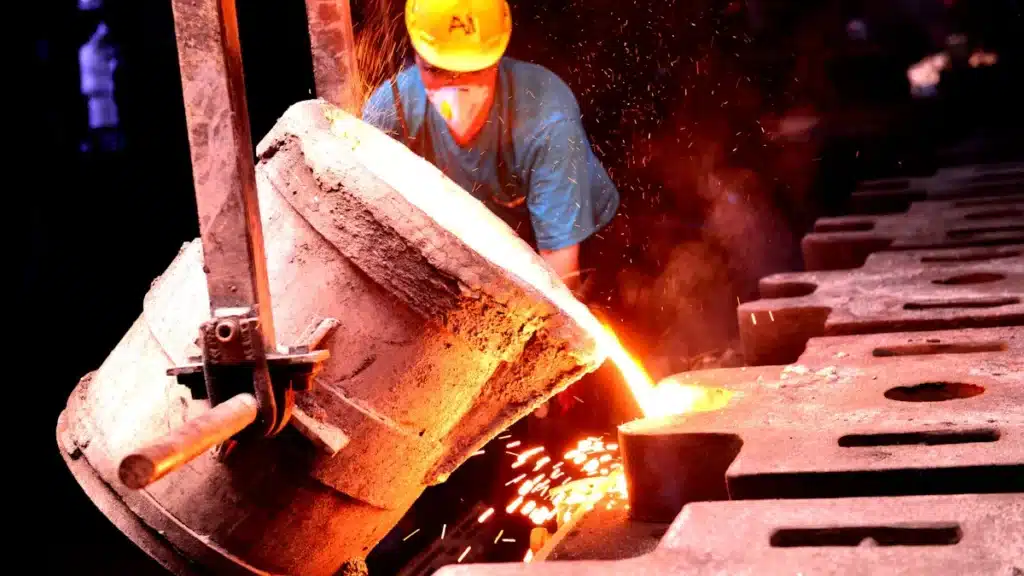
Bronze Material Properties
Bronze copper alloys possess high mechanical toughness and exceptional anti-corrosion performance, widely applied to pump housings, marine hardware, hydraulic valve bodies and wear-resistant bearing parts. The mechanical performance data below follows national copper alloy casting material handbooks:
| Bronze Grade | Tensile Strength (MPa) | Yield Strength (MPa) | Elongation (%) | Hardness (HB) | Castability Description |
|---|---|---|---|---|---|
| Common Bronze Grades | ≥280 | ≥110 | ≥20 | ≥80 | Excellent; suitable for complex-shaped components |
| ZCuSi10P1 | ≥350 | ≥140 | ≥12 | ≥100 | Good; suitable for thin-walled, precision castings |
| Lead Bronze | ≥220 | ≥100 | ≥8 | ≥65 | Excellent fluidity; suitable for highly machinable components |
| Nickel Bronze | N/A | N/A | N/A | N/A | Superior corrosion resistance and toughness |
Alloyed bronze outperforms pure copper in wear resistance and thermal stability. Alloying elements including tin, silicon, and lead optimize fluidity, shrinkage performance and machinability, which requires strict proportion control during smelting. Though bronze alloys have sufficient formability for complex geometries, their high melting point creates major obstacles for standard die-cast tool steel molds.
Note: Degassing and deoxidation are key steps in bronze casting. They help stop problems like bubbles and unwanted bits in the metal. This keeps the final part strong and looking good.
Standard High-Pressure Die Cast Workflow for Bronze
High-pressure die casting injects fully liquefied bronze alloy into hardened steel molds under continuous high pressure to create dimensionally consistent, smooth-surface components. The full production workflow exclusive to high-temperature bronze HPDC is listed below (the wax/ceramic shell process described in the original text belongs to investment casting, not die casting, so it is completely removed):
- Melting & refining: Bronze alloy is melted and held steadily at 1150–1200°C, with complete degassing and deoxidation to eliminate trapped gas.
- Mold preheating: Special heat-resistant tool steel dies are preheated to 200–300°C to avoid premature solidification on thin wall sections.
- High-pressure injection & pressure holding: Molten bronze is pushed into sealed mold cavities via dedicated copper-alloy injection systems; sustained pressure suppresses shrinkage voids during cooling.
- Controlled cooling & ejection: Regulated cooling cycles solidify the alloy uniformly, then ejector pins remove intact castings without deformation.
- Post-processing: Trimming overflow runners, deburring, surface polishing and airtight leak testing for valve and hydraulic parts.
Workpieces such as valve bodies and wear-resistant bearing plates that demand structural rigidity and zero leakage can be manufactured via bronze die casting. Bronze grades C87300 and C90500 offer favorable fluidity to replicate intricate geometric features. Melt temperature and mold preheating temperature must be strictly maintained within the above ranges to avoid filling defects.
Multiple forming technologies exist for bronze parts, among which HPDC is technically feasible but far less mainstream than aluminum, zinc and magnesium die casting. MORELUX mainly operates die-casting production lines optimized for low-melting-point zinc, aluminum and magnesium alloys, as these materials deliver longer mold service life and lower per-unit mass production costs. Bronze is only selected for niche specialty components requiring exceptional wear and corrosion resistance.
Tip: Designers should comprehensively evaluate production volume, dimensional tolerance requirements and overall budget before confirming bronze forming processes. Professional precision casting suppliers can deliver process feasibility analysis for complex heavy-duty or fine-detail bronze components.
Die Cast Challenges with Bronze

High Melting Point & Accelerated Die Thermal Fatigue
The biggest bottleneck restricting bronze die casting promotion is its high melting temperature; nearly all commercial bronze alloys have a liquidus point above 1000°C. Long-duration contact between high-temperature molten bronze and hardened steel dies triggers severe cyclic thermal fatigue, rapidly accelerating mold wear. Frequent mold replacement pushes up manufacturing costs and limits continuous mass production capacity.
The melting temperature range and corresponding mold wear impact of mainstream bronze casting alloys are sourced from metallurgical industry standard data, as shown below:
| Bronze Alloy | Composition | Melting Point (°C) | Impact on Die Wear |
|---|---|---|---|
| Tin Bronze | Cu 80–95%, Sn 5–20% | 850–1,020 | Tin lowers melting point; high Sn can lead to brittleness. |
| Phosphor Bronze | Cu 88–94%, Sn 5–11%, P 0.01–0.5% | 930–1,050 | Excellent wear resistance; phosphorus slightly raises solidus temperature. |
| Aluminum Bronze | Cu 80–88%, Al 5–12%, Fe/Ni ≤5% | 1,040–1,070 | High melting range; superior strength and seawater corrosion resistance. |
| Silicon Bronze | Cu 94–96%, Si 2–4%, Zn ≤2% | 1,020–1,050 | Good castability and weldability; corrosion-resistant. |
| Leaded Bronze | Cu 75–90%, Sn 5–15%, Pb 2–20% | 850–930 | Lead lowers melting point; excellent machinability and bearing applications. |
| Nickel-Aluminum Bronze | Cu 75–85%, Al 8–12%, Ni 3–5%, Fe 3–5% | 1,050–1,100 | Highest melting range; ideal for heavy-duty marine hardware and aerospace. |
Repeated thermal expansion and contraction from molten bronze contact creates thermal cracking and permanent die deformation, a defect rarely encountered when die casting low-melting aluminum and zinc alloys. For most manufacturers, switching to zinc or aluminum die casting extends die service life many times over and cuts long-term mold maintenance overhead.
Process Compatibility & Forming Limitations
Closed-loop precise control of melt temperature, injection speed and mold temperature is non-negotiable for bronze die casting. Minor thermal parameter deviation triggers premature solidification, leading to incomplete cavity filling, localized thin-wall weak zones and rough surface texture. Ultra-precise thin-wall complex structures carry the highest scrap risk during bronze HPDC.
Cold-cast bronze is a decorative craft process mixing bronze powder with resin binders without full metal melting. Composite cold-cast products cannot bear mechanical loads and are unsuitable for industrial structural hardware. Large solid bronze castings have unique solidification shrinkage characteristics, making static sand casting much more cost-effective than die casting. Sand casting accommodates large cross-section parts and lowers post-machining distortion risks.
Manufacturers assess component geometry, overall dimension and mechanical load standards to select the most suitable bronze forming technology.
MORELUX’s production equipment is calibrated for mass HPDC of aluminum, zinc and magnesium alloys, supporting stable fast cycles with minimal mold wear. If clients require bronze components, the factory typically adopts sand casting or investment casting instead of in-house die casting due to specialized high-temperature equipment and cost limitations.
Alternatives to Die Casting Bronze
Sand Casting for Bronze
Sand casting is the dominant mass-production forming process for bronze components, ideal for medium-to-large workpieces with moderate order volumes and controlled overall project expenditure. Reusable sand molding media enable flexible mold modification at low upfront tooling expense. The process delivers moderate dimensional precision and usually requires secondary machining to meet tight tolerance demands; strict melt pouring temperature control is required to reduce porosity and shrinkage defects.
Comparison of sand casting vs high-pressure die casting for bronze applications:
| Aspect | Sand Casting (Bronze) | HPDC Die Casting (Bronze) |
|---|---|---|
| Upfront Tool Investment | Very low disposable mold cost | Extremely high dedicated high-temp steel die cost |
| Dimensional & Surface Quality | Moderate precision, secondary finishing required | Ultra-tight tolerances, as-cast smooth surface |
| Optimal Application Scope | Medium/large bronze components, low-medium batches | Small thin-wall bronze specialty parts, ultra-high volume niche orders |
Investment Casting
Investment casting (lost-wax casting) excels at producing ultra-intricate, fine-detail bronze components for art sculptures, precision valve fittings and complex structural hardware. The ancient casting technique delivers near-net-shape parts with minimal post-processing and tight dimensional tolerances, widely preferred over bronze die casting for low-volume custom intricate designs.
Centrifugal Casting
Centrifugal casting rotates molds at high rotational speed, utilizing centrifugal force to push molten bronze toward the mold outer wall. The process effectively segregate oxide impurities toward internal non-critical surfaces, producing dense, high-strength hollow bronze components such as bushings, bearings and pipe sleeves with low internal defect rates.
Note: Sand, investment and centrifugal casting remain mainstream bronze forming solutions, featuring lower mold loss, stable part quality and lower overall cost compared to bronze die casting.
Bronze high-pressure die casting is technically feasible yet operationally difficult for most factories, restricted by multiple drawbacks including extreme mold wear and high equipment investment. Process selection is determined by three core factors: component size, geometric complexity and target manufacturing budget. Industrial designers are advised to consult professional casting specialists for customized forming solutions. Custom alloy formulation and surface treatment can further boost bronze’s mechanical strength and anti-rust performance.
FAQ
Why do factories use other ways instead of die casting for bronze?
Sand and investment casting avoid the extreme thermal fatigue damage to expensive high-temperature die-cast steel molds caused by molten bronze above 1000°C. These alternative processes deliver stable mechanical performance for both high-strength and fine-detail bronze components with far lower long-term production costs.
Can a bronze foundry make small and detailed parts by casting?
Investment lost-wax casting is the standard solution for miniature complex bronze components, delivering smooth as-cast surfaces and tight dimensional tolerances without heavy secondary machining.
Is die casting always the best for bronze parts?
Bronze HPDC is only viable for niche small thin-wall high-volume orders with dedicated high-temperature casting equipment. For large, thick-walled or low-batch intricate bronze workpieces, sand or investment casting provides superior economic and quality outcomes.