

6061 aluminum can technically be cast, but it is not suitable for conventional high-pressure die casting (HPDC). It suffers from poor fluidity, high tendency for casting defects, and limited capability for complex thin-wall designs. For standard aluminum die-casting projects, dedicated die-cast alloys are always the preferred option. Professional alloy and process selection is critical for stable part quality.
Key Takeaways
- 6061 aluminum is not recommended for high-pressure die casting due to poor molten fluidity and a high risk of internal and surface defects; standard die-cast aluminum alloys deliver far more stable results.
- 6061 aluminum is better suited for gravity die casting and permanent mold casting rather than high-pressure die casting, achieving higher structural integrity and fewer porosity issues.
- It is advisable to consult a professional die-casting manufacturer for alloy selection and process customization to match your part design and performance requirements.
What is a 6061 aluminum die casting?
High-pressure die casting injects molten metal into a precision steel mold under high pressure to form complex-shaped components with good surface finish and dimensional accuracy. While 6061 aluminum can be anodized for improved surface corrosion resistance and appearance, its material characteristics make it incompatible with standard HPDC mass production workflows.
The core limitation of 6061 aluminum in die casting is its low fluidity in molten state. It is difficult to fill thin-wall or intricate mold cavities, accompanied by a high probability of incomplete filling, porosity and shrinkage defects. For high-pressure die casting production, professional eutectic aluminum die-cast alloys are widely adopted instead.
Note: High-pressure die casting is not the only manufacturing route for 6061 aluminum; alternative casting and forming processes are more practical for most project requirements.
Other ways to cast include gravity die casting and centrifugal casting. These ways do not use high pressure. They use gravity or spinning to fill the mold.
- Gravity die casting:
- Hot metal is poured into a metal mold using gravity.
- This way gives better size accuracy and stronger parts.
- It works best for simple or medium shapes, not thin walls.
- Centrifugal casting:
- The mold spins while hot metal is poured in.
- This makes thick, strong walls with few mistakes, good for round shapes.
- It only works for even shapes and needs careful speed control.
These alternative low-pressure casting processes are far more compatible with 6061 aluminum composition, producing components with better mechanical integrity and ductility for structural and medium-sized industrial parts. Centrifugal casting is used in cars and planes. It makes strong, light parts that last a long time.
Many makers, sellers, and suppliers use these ways for 6061 aluminum parts. They like the strength and trust the finished parts. The airplane industry uses aluminum cast parts because they are light and strong. The car industry also uses these casting ways for tough parts.
Professional die-casting manufacturers focus on applying optimized standard aluminum alloys for high-pressure production, delivering stable dimensional tolerance, complex geometry capability and consistent surface finish for automotive, electronics and industrial equipment industries. Custom alloy recommendation and process design are essential to match part function and mass production demands.
Can 6061 aluminum alloy be die-cast?
Many makers want to know if 6061 aluminum can be die-cast. The answer is yes, but it is not easy. Most factories do not use this alloy for big jobs. The process needs careful work and skilled people.
6061 aluminum die casting has some tough problems. The table below shows the main issues that makers and sellers face:
| Barrier Type | Description |
|---|---|
| Anodizing Challenges | Non-standard die-cast microstructure and porosity lead to uneven anodizing and unstable surface quality. |
| Porosity | Gas gets trapped and makes holes, hurting the coating. |
| Alloy Composition | 6061 wrought alloy formulation is not optimized for high-pressure die casting, raising defect risks. |
These problems make 6061 aluminum die casting rare. Many factories say parts made this way can have bad surfaces or weak spots. The high-pressure process traps gas and causes porosity. This lowers the strength and looks of finished parts.
Makers and sellers often pick other alloys for die-casting. These alloys flow better and have fewer problems. Still, some projects need 6061 aluminum for special reasons. In these cases, skilled makers like MORELUX use smart methods to make parts better.
Tip: Always consult a professional die-casting manufacturer for alloy feasibility evaluation before selecting 6061 aluminum for casting projects.
6061 Aluminum Die Casting Challenges
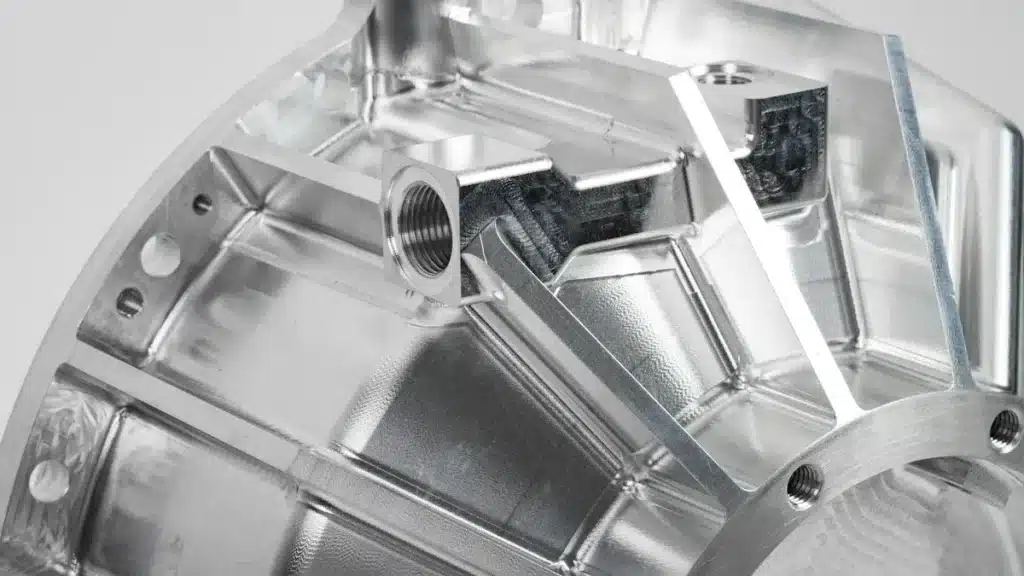
Technical Challenges In Aluminum Die-Cast
Manufacturers have many problems when making 6061 aluminum die casting parts. This alloy does not move well in high-pressure die casting. It is hard to fill molds with thin walls or tricky shapes. Many defects can happen in aluminum die-castings. Gas can get stuck inside the metal and make pores or bubbles. Slag inclusions show up if the charge is not clean. Thick parts can get shrinkage porosity. Cracks can form if the mold is not designed right or if the metal gets too hot.
| Defect Type | Description | Reason for Occurrence |
|---|---|---|
| Slag Inclusions | Gray-white or yellow spots on the surface and corners | Unclean charge, too much returning charge, and slag not removed from the alloy liquid |
| Stomata and Bubble | Round or oval pores, sometimes oily yellow | Gas gets in from unstable casting alloy, dirty molding sand, and bad ventilation |
| Shrinkage Porosity | Cloudy areas at thick parts and transitions | Bad riser feeding and too much gas in the charge |
| Crack | Fractures from poor structural design and mold yield | Sharp corners, wall thickness changes, and overheating of the mold |
Gravity die casting and centrifugal casting are other ways to use 6061 aluminum. These methods use gravity or spinning to fill the mold. They help stop gas from getting trapped and make better die casting parts. Factories pick these ways for projects that need strong and reliable aluminum die-castings.
Quality And Property Limitations
6061 aluminum die casting parts have some limits in quality and properties. The alloy can make fine-grain structures and smooth surfaces, but defects can still happen. Surface finish for die-cast 6061 aluminum is Ra 1.6–3.2 µm, which is smoother than sand casting. Dimensional accuracy is very good because of high-pressure injection. But porosity and cracks can make the parts weaker. These defects change the strength and look of die-cast products.
While die-cast parts generally achieve better dimensional accuracy and surface finish compared with sand casting, 6061 aluminum cannot realize its theoretical advantage in standard HPDC due to inherent casting defects.
Professional die-casting manufacturers implement complete quality control procedures, including material composition testing, dimensional inspection and defect detection, to ensure consistent finished part performance.
Why 6061 Aluminum Is Rarely Used
6061 aluminum is not used much for high-pressure die casting. Manufacturers like other alloys because they move better and have fewer defects. Alloys like A380 and ADC12 are better for high-pressure die casting. These alloys fill molds easily and make strong, smooth die-cast parts. Factories and suppliers pick them for big jobs.
Gravity die casting and centrifugal casting work better for 6061 aluminum. These ways help stop porosity and cracks. They make parts stronger and more reliable. Manufacturers use these ways for projects that need the special properties of 6061 aluminum.
Selecting suitable commercial die-cast aluminum alloys is the key to stable high-pressure production. Professional process and alloy consulting can effectively reduce defect rates and improve overall project cost-performance.
Best Alloys For Aluminum Die Casting Process
Common Aluminum Alloys For Die Casting
Factories and sellers pick certain alloys for aluminum die casting. They do this to get the best results. The most used alloys in the world are:
- A380 and ADC12: These are used for car parts and electronics.
- A383: This one is good for thin and tricky shapes.
- A360: It does not rust as easily.
- AlSi10Mg: Factories use it for strong parts.
- EN AC 46000: This alloy meets rules in Europe.
These alloys help make die-cast parts that are strong and the same every time.
Advantages Over 6061 Aluminum
A380 and ADC12 have many good points over 6061 aluminum. The table below shows how they are better:
| Alloy | Advantages over 6061 Aluminum |
|---|---|
| A380 | Easy to cast, strong, handles heat well, easy to machine, cheap for big jobs, can be recycled a lot. |
| ADC12 | Like A380 but a bit different. Better for casting than 6061 aluminum, with less shrinking. |
A380 and ADC12 fill the mold better and shrink less. They also keep their shape well when making lots of parts. Factories like these alloys because 6061 aluminum can get holes and harden wrong.
Choosing The Right Alloy For Your Project
Picking the best alloy for aluminum die casting depends on many things:
- How strong and hard the part needs to be
- How well it handles heat and melts
- If it can resist rust in different places
- How much it costs and if it is easy to get
- If it gets defects when casting
- If it works with surface finishes
A380 is great for car parts. ADC12 is best for cooling parts in electronics. Factories should know how alloys are grouped to pick the right one. Experienced die-casting suppliers provide tailored alloy and process solutions according to part application, mechanical requirements and production volume.
Alternatives To 6061 Aluminum Die Casting

Forging And Machining 6061 Aluminum
Manufacturers use forging or machining for 6061 aluminum parts. These ways work well because 6061 aluminum is easy to shape and cut. Forging presses the metal to make it stronger. Machining uses tools to cut the metal into the right shape. Both ways help factories make parts with close sizes and smooth surfaces.
6061 aluminum is a good choice for parts that do not need super strength. Planning the process is important for good results. Tooling, spindle speed, feed rate, coolant, and part shape all change how the part turns out. Design teams must think about how strong and steady the part will be. Thin walls, deep pockets, and big flat areas can cause problems if not planned right.
When To Use 6061 Aluminum In Manufacturing
6061 aluminum is used in many industries. Factories pick it for its strength, light weight, and easy to work with. Manufacturers use 6061 aluminum for these jobs:
- Aerospace
- Automotive
- Structural applications
The table below shows where 6061 aluminum is used most:
| Industry | Application Description |
|---|---|
| Structural Construction | Beams, frames, trusses, and architectural supports |
| Industrial Components | Machine frames, tooling plates, and equipment housings |
| Aerospace | Secondary structural components where weight and reliability matter |
| Automotive | Frames and support members needing balanced strength and fabrication flexibility |
| Construction | Structural framing, architectural systems, and engineered load-bearing applications |
Factories use gravity die casting for 6061 aluminum when they need strong and reliable parts. This way works well for medium and big parts. Machining and forging are best for parts that need high accuracy or special shapes.
6061 aluminum is not the best choice for die casting. Makers have problems with holes and rough surfaces. The table below lists important features:
| Property/Challenge | Description |
|---|---|
| Density | 2.70 g/cm³ |
| Strength-to-Weight Ratio | Superior |
| Welding Challenges | Loss of strength |
| General Suitability | Consistent performance |
Maintaining uniform wall thickness and reasonable structural design can reduce casting defects significantly. For aluminum high-pressure die casting, industry-standard alloys such as A380 and ADC12 remain the most practical and reliable choices for mass production.
FAQ
Can manufacturers use 6061 aluminum for high-volume die casting?
Most suppliers do not pick 6061 aluminum for big jobs. They use alloys like A380 or ADC12 instead. These alloys move better and have fewer problems.
Why do factories prefer A380 or ADC12 over 6061 aluminum?
Factories like A380 and ADC12 because they fill molds well. These alloys also help stop holes and make better parts for many projects.
Does MORELUX offer custom solutions for aluminum die casting?
Reputable die-casting providers offer customized alloy selection, tooling design and process optimization to meet specific mechanical, dimensional and surface finish requirements.