
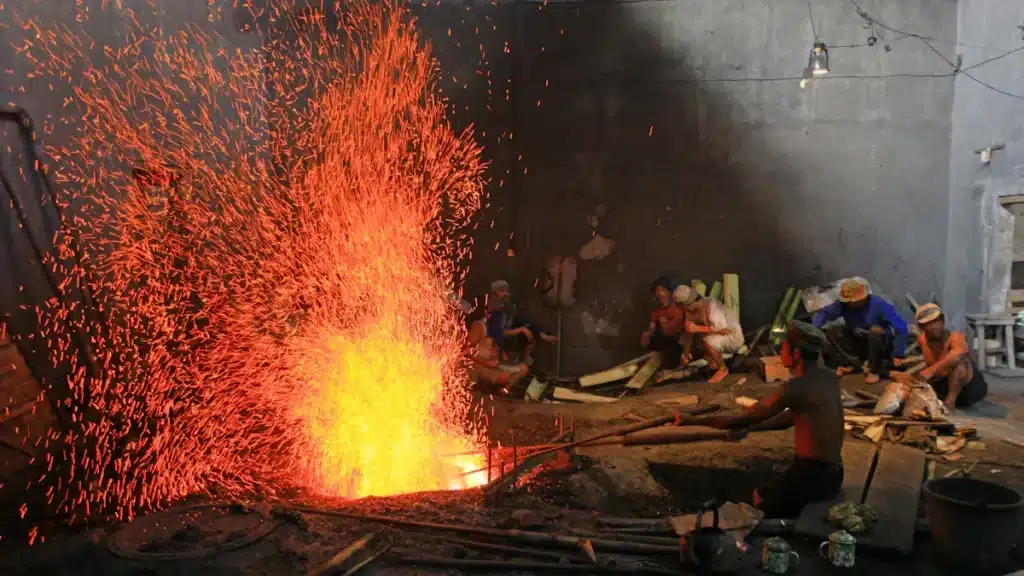
Brass is a strong yes for many casting jobs – but the honest answer is “it depends.” As a copper-zinc alloy, brass fills fine molds, machines cleanly, and shrugs off corrosion, which is why it stays popular for valves, fittings, and decorative hardware. If you are weighing metals for a new part, start with our guide on brass casting to see how the process actually works at high volume. At MORELUX we cast brass by cold-chamber die casting and by sand casting, and the right method hinges on your part size, order volume, and budget – not on the metal alone. This article breaks down where brass casting shines, the real trade-offs you must plan for, and how it stacks up against aluminum so you can choose with confidence.
Key Takeaways
- Brass flows into thin walls and fine detail thanks to high fluidity; HPDC fills the cavity before it freezes, so misruns stay low.
- Brass machines faster than steel and most bronzes, with tool life that holds tight tolerances (tooling to +/-0.02 mm at MORELUX).
- Die wear is the catch: a brass tool lasts about 10,000 cycles vs ~100,000 for aluminum – roughly 10x shorter.
- Brass weighs ~3x more than aluminum (8.5 vs 2.70 g/cm3) and costs more per kilo because copper drives the price.
- Zinc fumes form above 900 degC, so ventilation and fume extraction are mandatory on the factory floor.
Why Brass Casting Works Well for Detailed Parts
Low Melting Point and High Fluidity
Brass melts high for an alloy – high-pressure die casting heats it to 960-1000 degC, about 40-60 degC above its liquidus – but that heat is exactly what gives it excellent fluidity. Molten brass reaches every corner of a mold, copying fine detail with high accuracy. Its coefficient of linear expansion is near 19×10^-6/degC, so tool designers size cavities with growth in mind. The payoff is sound parts with smooth surfaces and few misruns, which means less grinding and polishing after the pour. For small gears, fittings, and intricate hardware, brass captures the shape cleanly on the first run.
Easy Machining and a Lasting Finish
Brass is one of the easiest metals to machine. It forms short, clean chips, lets tools run faster, and holds tight tolerances without warping. The golden finish needs no plating, which buyers like for visible parts. Thermal conductivity varies widely by grade – low-silicon brass (C22000) reaches 189 W/m-K while silicon red copper (C69400) sits near 26 W/m-K – so the alloy you pick balances conductivity against strength. Tensile strength for HPDC brass runs 338-469 MPa, enough for valve bodies, electrical connectors, and marine hardware that must stay corrosion-free for years.

The Real Limits of Brass Casting You Should Weigh
Cost, Weight, and Die Wear
The same density that gives brass its heft also raises freight and support costs: at 8.5 g/cm3 it is about three times heavier than 6061 aluminum (2.70). Raw material is pricier too, because copper drives the cost. The bigger production risk is die wear. Brass’s high melting point attacks standard die steel, so a leaded-yellow brass tool lasts only ~10,000 cycles against ~100,000 for aluminum. Hot-work grades like H13, SKD61, and 8407 extend life, and stress-relief tempering after 3,000-5,000 cycles (then every 10,000) helps – but shorter tool life still lifts the per-part price in high volume.
Zinc Fumes and High-Heat Behavior
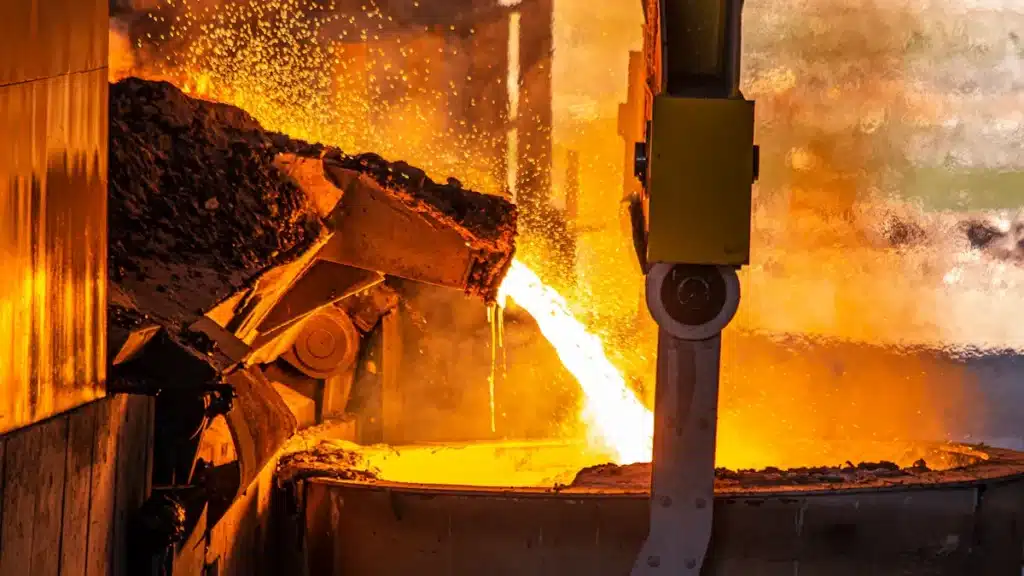
Molten brass off-gases zinc fumes above 900 degC, a real health hazard without extraction and PPE. Brass also softens under sustained heat, so it is not the first pick for constant high-temperature duty. Defects such as porosity, cracks, and misruns appear when temperature, venting, or gating drift – which is exactly why disciplined process control matters. If you want the failure modes spelled out, our write-up on common brass die casting defects walks through causes and fixes, from porosity to cold shuts, with the inspection methods that catch them early.
Brass vs aluminum – what the casting data shows:
| Factor | Brass | Aluminum |
| Melting point (HPDC) | 960-1000 degC | ~660 degC |
| Density | 8.5 g/cm3 (C360) | 2.70 g/cm3 (6061) |
| Tensile strength (HPDC) | 338-469 MPa | ~310 MPa (A380) |
| Tool life per mold | ~10,000 cycles | ~100,000 cycles |
| HPDC scrap rate | 3-8% | 3-8% |
Figures combine MORELUX’s published casting data with standard material references. Brass wins on corrosion resistance and looks; aluminum wins on weight, material cost, and heat sinking.
Choosing Brass Casting vs Aluminum for Your Project
Where Each Metal Wins
Pick brass when you need corrosion resistance, machinability, a decorative gold finish, or electrical and thermal performance in connectors and plumbing. Pick aluminum when weight, cost per kilo, or heat sinking lead the spec – its strength-to-weight ratio and ~167-205 W/m-K conductivity suit heatsinks and automotive bodies. Both run as HPDC with only 3-8% scrap, far below the 50-80% chips that CNC machining removes, so die casting beats machining for volume either way.
Tool life by casting material (cycles per mold):

Figure 1. A brass mold wears about 10x faster than aluminum (~10,000 vs ~100,000 cycles); zinc is kindest to tooling. Source: published casting data.
How a Custom Manufacturer Reduces Risk
Matching metal to part is easier with a partner that owns tooling, casting, machining, and finishing under one roof. As a custom die-casting manufacturer, MORELUX runs 280-2000T machines, holds tooling to +/-0.02 mm, and builds molds rated beyond 500,000 cycles for aluminum programs; the same one-stop flow serves brass and copper with cold-chamber and vacuum processes. Quality gates – X-ray for porosity, CMM for geometry, and OES for composition – catch drift early, and 20+ years of copper-alloy work shorten the learning curve on a tricky metal. For a wholesale buyer, an OEM supplier, or a custom project, that integration means fewer hand-offs, tighter tolerances, and a per-part cost you can actually forecast before the first shot.
Quick FAQ
Q: Can you die cast brass at all?
A: Yes. Cold-chamber high-pressure die casting handles brass, but it needs specialized alloys and tool steel because of the ~900 degC+ melt. Sand casting is the cheaper route for large or low-volume parts.
Q: Is brass better than aluminum for casting?
A: Not universally. Brass wins on corrosion resistance, machining, and looks; aluminum wins on weight, material cost, and heat sinking. The right choice follows your part’s duty and order volume.
Q: Why is brass die casting expensive?
A: High copper cost, ~3x the weight of aluminum, and ~10x shorter die life all push up the per-part price at volume – which is why method and alloy choice matter so much.
From the floor: “Brass will test your tooling before it tests your design. The shops that win are the ones that preheat the die, control all three temperature zones, and temper out stress early – not the ones that just crank up the pressure.”