

Plunger‑type hot‑chamber die‑casting machines are workhorses for high‑speed mass production of metal castings. With its built‑in plunger forcing molten metal into a locked mold cavity, this die‑casting method reliably produces cast parts with excellent accuracy and consistent quality.
Key Takeaways
- The hot chamber machine combines the furnace and plunger to push melted metal straight into the mold, allowing quick production.
- The working cycle follows a clear order: clamp, inject, cool, eject, and lubricate. This exact sequence helps make sure each part comes out with good quality.
- Set the injection speed in two steps. Start slow so air can escape. Then go fast to fill the mold fully.
Understanding the Hot Chamber Die Casting Machine
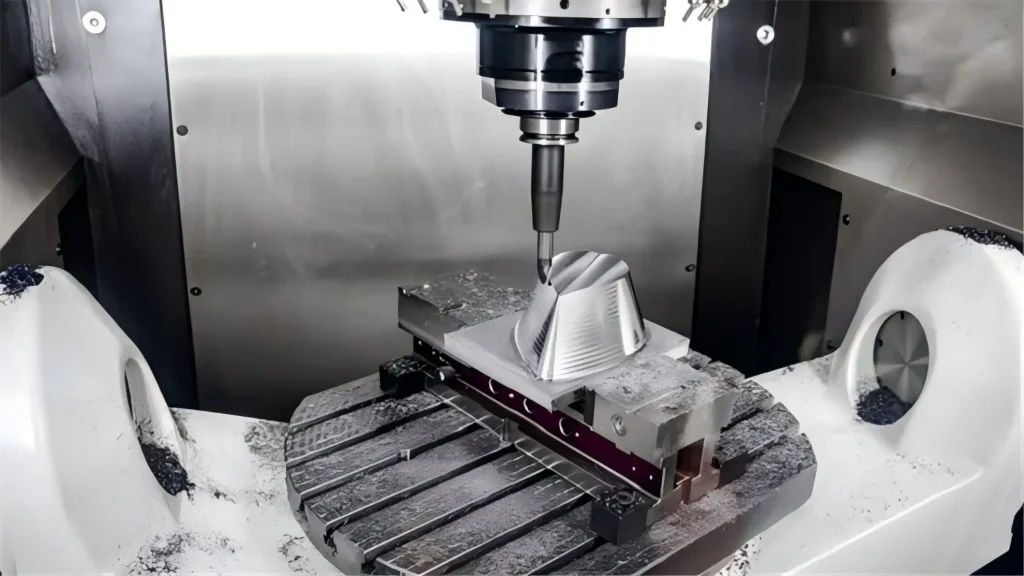
In a hot-chamber die-casting machine, the furnace is integrated directly into the machine itself. This design allows the plunger to move vertically within a gooseneck assembly that is submerged in the molten metal. Because there is no need for a separate metal-ladling step, each production cycle is significantly shortened; the metal is kept ready for injection at all times, enabling rapid part production.
Key components: furnace, gooseneck, and plunger
The furnace maintains the molten metal at a constant temperature. The gooseneck connects the furnace to the die, creating a sealed passage that prevents the metal from cooling as it flows. This steady flow ensures consistent metal quality with every injection into the die. The plunger moves downward, forcing the molten metal through the gooseneck and into the closed die cavity.
Machine maintenance is crucial. The gooseneck is prone to wear and corrosion due to prolonged exposure to high-temperature metal and high-pressure environments. High temperatures can also cause component deformation, affecting the alignment accuracy of the plunger. Residual metal debris must be cleaned out regularly to prevent malfunctions. Additionally, workers must frequently inspect seals and nozzles to prevent leakage at the interface between the plunger and the injection chamber.
The role of the die in casting
The die determines the shape of the final part. It consists of two halves that close to form a cavity, which holds the metal injected under high pressure. The shape of the cavity defines all surface details, such as complex curved surfaces and precise mounting holes. Such high precision is vital for industries like automotive and electronics, where part dimensions and shapes directly impact product performance.
MORELUX is a company that manufactures precision die-cast parts made of aluminum, zinc, and copper. They utilize computer simulation technology to design die cavities, ensuring smooth metal flow and optimal cooling. The final products are not only durable and cost-effective but also meet high quality standards. Hot-chamber die-casting machines are ideally suited for producing small-to-medium-sized parts with excellent surface finishes and consistent precision.
The Working Cycle of a Hot Chamber Casting Machine
The working cycle of a hot chamber die casting machine follows a precise sequence. Each step must happen in order to produce quality parts. The cycle includes clamping, injection, pressure holding, cooling, mold opening, and ejection. The timing of each stage matters for the final part quality.
From Mold Closing to Injection: The Initial Phase
The production cycle begins with the closing and locking of the mold. The two mold halves are clamped together under immense force. This clamping force must be sufficient to ensure a tight seal at the parting line. If the clamping force is inadequate, molten metal may leak, resulting in flash (excess thin layers of metal at the part’s edges). Operators must ensure adequate clamping force to prevent such defects. For a 400-ton machine, the closing and locking process takes 1 to 3 seconds, while larger machines may require 3 to 5 seconds.
Once the mold is locked, the plunger begins its downward stroke. It forces the molten metal through the gooseneck and into the mold cavity. The injection phase is extremely rapid, with the metal injection process taking only 0.01 to 0.5 seconds. The plunger applies high pressure, forcing the metal into every corner of the mold to ensure all details of the cavity are filled.
Injection speed requires precise adjustment. A slower speed during the initial phase helps evacuate air from the cavity, while increasing speed in the second phase ensures complete mold filling. However, excessive speed can cause turbulence, leading to air entrapment and surface defects.
For alloys with good fluidity, a slower injection speed is generally preferable, as it helps prevent flash and reduces turbulence within the cavity.
After injection, the casting must be held under pressure for a specific period. This holding phase ensures the casting’s density and dimensional accuracy. High pressure is maintained within the cavity during metal solidification to prevent shrinkage and preserve the part’s dimensional stability.
Cooling, Ejection, and Cycle Completion
Subsequently, the casting cools and solidifies within the mold. Cooling time depends on the part’s wall thickness. For thin-walled zinc alloy parts with wall thicknesses between 1.5 and 2.5 mm, solidification takes 3 to 8 seconds. During this time, the mold must remain closed to maintain the part’s shape.
Once solidification is complete, the mold opens—meaning the casting machine separates the two mold halves. The process of opening the mold and ejecting the part takes 2 to 5 seconds. Ejector pins push the formed casting out of the mold, after which an operator or a robotic arm removes the part from the machine. The final stage involves mold lubrication and resetting. The machine sprays lubricant onto the mold surface; this step takes 2 to 10 seconds, plus a 1- to 3-second blow-off period. Lubrication not only protects the mold but also helps ensure the smooth operation of the next work cycle. Subsequently, the machine resets and begins the next cycle.
| Stage | Time Range |
|---|---|
| Die Closing and Clamping | 1–3 seconds (400-ton machine) |
| Metal Injection | 0.01–0.5 seconds |
| Solidification and Cooling | 3–8 seconds (thin-walled zinc) |
| Die Opening and Part Ejection | 2–5 seconds |
| Die Lubrication and Reset | 2–10 seconds plus blow-off |
This production process is ideal for small to medium components. The hot chamber die casting machine offers fast cycles and high-quality castings. MORELUX uses this technology to produce street lamp housings and medical device components. The high precision of the process ensures consistent casting quality across large production runs. Each cycle produces parts with excellent surface finish and tight dimensional accuracy.
The plunger’s mechanical action defines the hot chamber die casting machine. An integrated furnace and submerged plunger remove the need for molten metal transfer. This design offers advantages of hot chamber die casting machines for high-volume production of zinc and magnesium metal parts. MORELUX uses an 18-point PPAP system and on-premise test lab for consistent metal quality. Vertically integrated manufacturing ensures control over each mold stage. The machine delivers reliable castings with precise mold filling.
FAQ
What is the difference between hot-chamber and cold-chamber die-casting machines?
Hot-chamber die-casting machines feature a built-in furnace, with the plunger submerged directly in the molten metal. This design eliminates the need for a separate metal-ladling step.
Which materials are best suited for this process?
Zinc and magnesium alloys are the most suitable. Their lower melting points help prevent premature wear on the submerged injection system.
How do molds help prevent casting defects?
The mold must be tightly locked before each injection. High clamping force prevents the formation of flash (burrs), while appropriate injection speeds reduce turbulence within the mold cavity.