
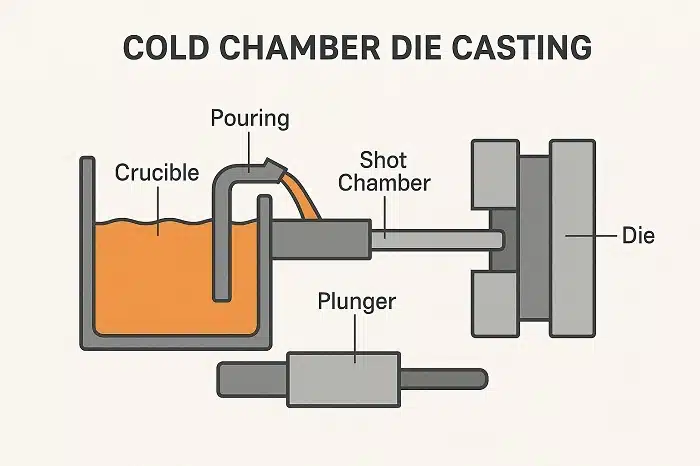
The phrase ‘metal molder’ lives in two very different worlds. On the hobby shelf it means the classic Metal Molder toy, which squirted a low-melting bismuth-tin alloy onto a small hot plate. On the factory floor it means precision die-casting — forcing molten non-ferrous metal into hardened steel dies at high pressure. A modern custom manufacturer runs aluminum, zinc, copper and magnesium through machines rated from 280 to 2,000 tons, turning out everything from phone housings to automotive brackets. This guide explains which metals a real metal molder actually pours, why each one wins, and how to match a metal to your part.
Key Takeaways
- A modern metal molder pours aluminum, zinc, copper and magnesium — never the toy’s bismuth-tin mix.
- Zinc fills the finest detail; aluminum gives the best strength-to-weight ratio.
- Magnesium is the lightest structural metal; copper moves heat and current best.
- A custom supplier matches alloy, wall thickness and finish to the part before tooling is cut.
Zinc Die Casting — The Go-To for Fine Detail
Zinc is the easiest non-ferrous metal to die cast. Its melting point is only 419.5 degC, so it fills the finest cavities in 10-20 milliseconds and holds +/-0.001 in repeatability on net-shape parts. That low heat is kind to tooling: a single hardened-steel mold can exceed 500,000 casting cycles, which keeps per-part cost down on long programs. On a zinc die casting floor the workhorse grades are Zamak 3 and Zamak 5, with ZA-27 and ACuZinc5 for higher load and wear. Small parts pour at more than 2,000 shots per hour, so zinc is the default for connectors, lock cylinders, brackets and decorative hardware that must plate cleanly.
Why buyers specify zinc
Zinc’s real edge is economy plus precision. Because it runs cooler than aluminum, a supplier can use less expensive tool steel and still hit IT5-IT7 accuracy; MORELUX’s tooling team even holds +/-0.02 mm at the mold stage. After casting, powder coat, chrome or nickel plating lands directly on the smooth as-cast surface, so secondary machining stays minimal. For a wholesale buyer quoting thousands of identical fittings, that combination of speed, accuracy and finish is hard to beat.
Aluminum Die Casting for Lightweight, Strong Parts
Aluminum is the most widely used die-casting metal because it pairs low weight with real strength. Molten aluminum is poured near 660 degC and injected at 7-207 MPa into dies as large as 2,000 tons, forming wall sections as thin as 0.8 mm. The result is a fine-grained structure that carries load while shedding mass — exactly what EV battery housings, engine brackets and LED lamp bodies need.
A380 is the most popular grade; A360 resists corrosion and A413 adds toughness for structural parts. After casting, 3-, 4- and 5-axis CNC centers hold +/-0.01 mm and finish roughly 80% of parts, while anodizing builds a 15-micron oxide layer and drops surface roughness below Ra 0.8 micron. A full aluminum die casting partner supplies lighting, automotive, medical, telecom and electronics programs from one floor — useful when one factory must handle both a heat sink and its housing.
Where aluminum wins
Aluminum’s thermal conductivity and corrosion resistance make it the natural pick for parts that shed heat or live outdoors. Lighting OEMs use it for street-lamp housings; automotive programs use it for brackets and transmission cases; medical and telecom buyers value the tight tolerances and clean finish for enclosures. When weight drives the spec, aluminum is almost always the first metal a custom manufacturer reaches for.
How to Choose the Right Die Casting Metal for Your Part
No single alloy is best at everything, so the choice starts with what the part must do. Use the table below as a first cut, then let a custom manufacturer tune alloy, wall thickness and finish to your drawing.
| Metal | Melting point | Key advantage | Best applications | Relative cost |
| Aluminum | ~660 degC | Best strength-to-weight | EV, automotive, lighting, telecom | Low |
| Zinc | 419.5 degC | Finest detail, platable | Connectors, locks, hardware | Low-Mid |
| Magnesium | ~650 degC | Lightest structural metal | Laptops, aerospace, power tools | Mid-High |
| Copper | ~1,000 degC | Top conductivity & wear | Electrical, plumbing, bushings | High |

Magnesium is the lightest structural metal — about 33% lighter than aluminum and 75% lighter than steel — but it needs controlled atmospheres because it burns when molten, and it must be coated to resist corrosion. Copper carries heat and current better than any other die-casting metal, yet its ~1,000 degC melt wears dies fast and raises cost, so it is reserved for electrical and plumbing parts. A wholesale buyer should brief the supplier on alloy, tolerance and finish before steel is cut; that one conversation sets tooling cost and lead time. A factory with 20+ years of experience can take a part from tooling (+/-0.02 mm) through X-ray, CMM and spectrometer inspection to assembled, tested goods.
And the toy? The Metal Molder used a bismuth-tin alloy that melts on a hot plate — safe and simple, but a world away from 700 degC industrial shots. The real metal molder’s toolbox is aluminum, zinc, magnesium and copper, each chosen for the job the part has to do.
FAQ
Which metal does a die caster use most?
Aluminum and zinc lead by volume. Aluminum wins on weight and strength; zinc wins on fine detail and platable finish. Magnesium and copper cover lighter or conductive special jobs.
How does a molder pick the alloy?
By function first: strength, weight, corrosion and cost. Zinc suits thin walls, aluminum takes structural load, magnesium cuts mass, copper moves heat and current. A custom manufacturer matches the grade to the drawing.
Can one supplier run all four metals?
Yes. A full-service custom factory offers aluminum, zinc, magnesium and copper die casting plus machining and finishing, so a wholesale buyer gets one partner and consistent quality across programs.
About the author
This guide was written by the MORELUX engineering team, which has run aluminum, zinc, copper and magnesium die casting for more than 20 years. Process figures reflect published alloy standards and in-house data; confirm specific grades against your drawing before tooling release.