
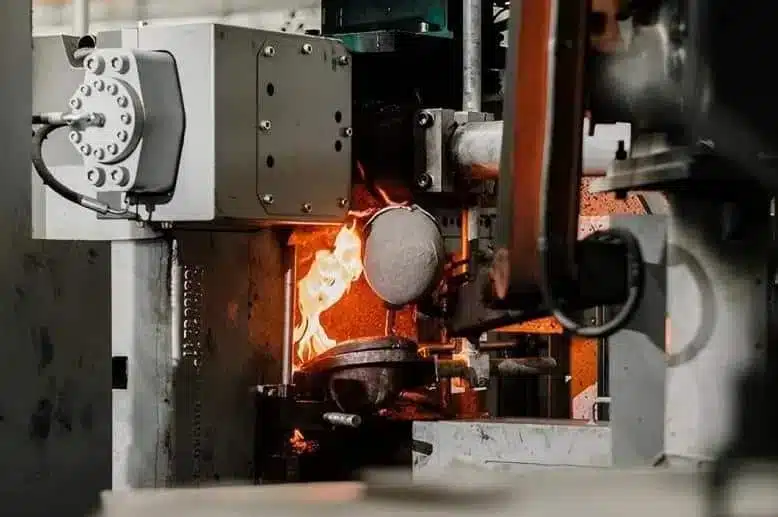
Material selection lies at the core of high-pressure die casting, directly defining the sturdiness and reliability of finished components. Aluminum, zinc, magnesium and copper each boast unique performance merits. Their characteristics and applicable scenarios are sorted in the table below.
| Material Type | Properties | Applications |
|---|---|---|
| Aluminum | Lightweight, corrosion-resistant, high conductivity | Automotive, aerospace, electronics |
| Zinc | High strength, good ductility, low melting point | Automotive components, gears, decorative |
| Magnesium | Lightest, high machinability | Automotive, aerospace |
| Copper | Excellent conductivity, heat resistance | Electrical components, heat sinks |
The choice of casting material exerts far-reaching influence on part performance, production cost and service lifespan. Premium manufacturers like MORELUX adopt these qualified metals consistently to meet stringent industrial production standards.
Key Takeaways
- The choice of materials directly affects the performance, manufacturing cost, and service life of parts, making it a crucial factor that manufacturers must carefully consider. Aluminum, zinc, magnesium, and copper are core materials for high-pressure die casting, each possessing unique performance advantages. Furthermore, recyclable metals such as aluminum and zinc help reduce energy consumption, enabling factories to achieve environmentally friendly production.
High Pressure Die Casting Process
Overview of Die Casting Process
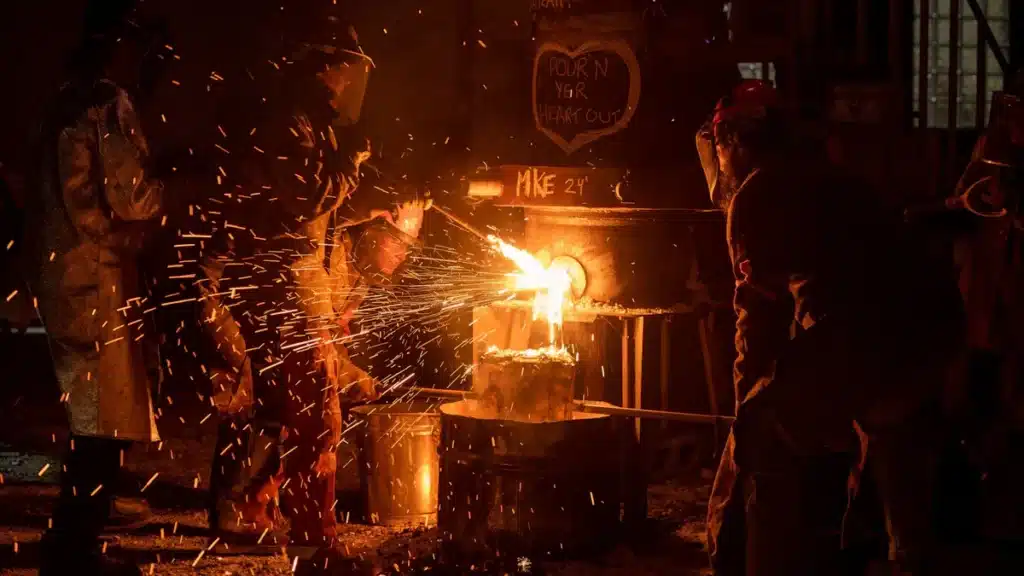
Die casting enables the efficient mass production of metal parts. In high-pressure die casting, molten metal is injected into a steel mold under high pressure, resulting in parts with precise shapes and smooth surfaces.
MORELUX utilizes advanced technology and rigorous quality control to maintain consistent product quality. Automated monitoring equipment detects production anomalies in real time, and experienced technicians verify mold designs and strictly adhere to standardized quality specifications. Robots and smart sensors further improve production efficiency and product consistency.
Throughout the casting process, temperature and pressure are closely monitored to ensure molding quality. Micro-lubrication reduces material waste and accelerates processing speed. Post-production X-ray and ultrasonic inspection effectively identifies internal defects.
Importance of Material Selection
The choice of material determines the performance and durability of die-cast products; therefore, manufacturers need to select alloys suitable for the specific application requirements.
Aluminum, with its lightweight and excellent corrosion resistance, is ideal for automotive and electronic components. Zinc offers excellent structural stability and is suitable for gears and decorative parts. Magnesium combines strength and lightness, while copper has excellent electrical conductivity, making it suitable for electrical components.
Die Casting Materials and Alloys

High-pressure die casting primarily uses core raw materials such as aluminum, zinc, magnesium, and copper. Each material possesses unique properties, suitable for specific applications. Selecting the right material can optimize product performance, extend service life, and control production costs.
Aluminum Die Casting Alloys
Aluminum is one of the most widely used die casting materials. Its alloys combine lightweight, high strength, and excellent corrosion resistance, along with good thermal and electrical conductivity, making them ideal materials for automotive and electronic component production. The table below lists the main properties of commonly used aluminum die casting alloys.
| Property | Description |
|---|---|
| Lightweight | Aluminum alloys have low density. |
| Corrosion Resistance | They do not rust or oxidize easily. |
| Strength-to-Weight Ratio | They are strong for their weight. |
| Thermal Conductivity | These alloys move heat well. |
| Electrical Conductivity | They also let electricity flow well. |
| Common Alloy Grades | 380, 390, 412, 443, 518 are used often. |
| Advantage | Description |
|---|---|
| Dimensional Accuracy | Tight fits mean less extra cutting is needed. |
| Smooth Surface Finishes | Parts often do not need more surface work. |
| High Production Rates | Fast cycles make each part cheaper. |
| Complex Geometries | They can make tricky shapes in one step. |
| Material Efficiency | There is less waste than with other metal casting. |
Aluminum is recyclable, and approximately 75% of the aluminum produced historically is still in circulation today. The energy required to recycle aluminum is only 5% of that required for primary production, making it an environmentally friendly choice for companies focused on sustainable development.
Zinc and Magnesium Alloys
Zinc and magnesium are indispensable die-casting materials. Zinc alloys possess high toughness, good ductility, and a low melting point, making them ideal for producing automotive parts, gears, and trim components. The table below lists the key properties of zinc die-casting alloys.
| Property | Value |
|---|---|
| Density | 6.6 to 7.0 g/cm³ |
| Melting Point | About 420°C (788°F) |
| Strength | High strength and toughness |
| Hardness | Usually harder than aluminum |
Zinc alloys offer excellent recyclability, allowing for repeated die casting, thus reducing production costs and promoting environmental protection. Approximately 80% of zinc can be recycled, resulting in significant energy savings.
Magnesium alloys are the lightest of all die-casting materials. They possess excellent formability and are widely used in lightweight automotive and aerospace components.
Copper and Other Alloys
Copper alloys are suitable for specialized high-pressure die-casting applications and are renowned for their excellent thermal and electrical conductivity, primarily used in power transmission and thermal regulation.
Copper has a recycling rate of up to 60%, and recycling can reduce energy consumption by 85%. Its high melting point leads to higher casting energy consumption. Additionally, its excellent thermal conductivity can result in uneven cooling.
Choosing the Right Die Casting Material
Comparing Alloy Properties
Manufacturers consider many factors when selecting materials. Each alloy has its own advantages. The table below lists the differences between aluminum, zinc, magnesium, and copper:
| Criteria | Aluminum | Zinc | Magnesium | Copper |
|---|---|---|---|---|
| Structural Properties | Stays strong in heat | Works well at room temp | Very light | Handles heat very well |
| Minimum Weight | Not too heavy | Heavier than magnesium | Lightest | Heaviest |
| Impact Strength | Pretty good | Best at room temp | Okay | Good |
| Dent Resistance | Not bad | High | Not bad | High |
| Surface Finish | Very smooth | Very smooth | Smooth | Smooth |
| Corrosion Resistance | Resists rust well | Medium resistance | Changes | Resists rust well |
| Machinability | Easy to shape | Easy to shape | Easiest to shape | Not as easy |
Aluminum offers high specific strength and excellent corrosion resistance. Zinc provides excellent toughness and dent resistance. Magnesium is the lightest option, ideal for producing lightweight components. Copper excels in both thermal and electrical conductivity.
Application Considerations
Material selection depends on several key factors:
- Functional requirements, including heat resistance, corrosion resistance, and surface finish
- Recyclability and industry compliance standards
- Durability and fatigue resistance
Cost is also a critical factor. Aluminum and zinc are suitable for large-scale production and are cost-effective, while magnesium and copper are more expensive and require specialized processing techniques.
Working with suppliers like MORELUX helps in selecting the best materials. The company conducts comprehensive quality checks, including porosity testing, dimensional verification, and non-destructive testing. Their expert engineers assist customers in balancing performance and budget, ensuring all finished products meet practical application standards and have reliable quality.
FAQ
What are the most commonly used materials in high-pressure die casting?
Aluminum is the preferred material for high-pressure die casting. It is lightweight, strong, and rust-resistant. Automotive and electronics manufacturers use aluminum extensively.
Can die-casting materials be recycled?
Yes, these materials can be recycled. Aluminum, zinc, magnesium, and copper alloys can all be recycled. Recycling saves energy and helps factories be more environmentally friendly.
Why do manufacturers choose MORELUX as their die-casting material supplier?
Manufacturers choose MORELUX because of its extensive experience, stringent quality control, and use of advanced equipment and tools. MORELUX provides customized die-casting solutions for a wide range of applications.