
By the precision die-casting engineering team at MORELUX.
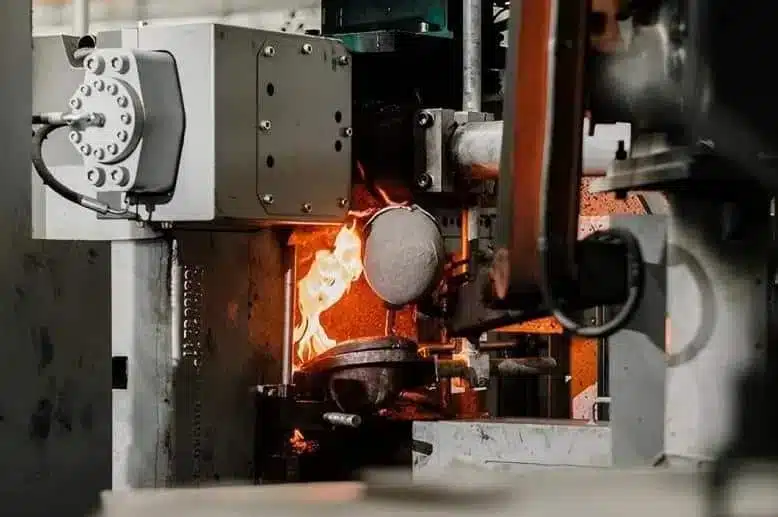
Both squeeze casting and die casting are net-shape metal forming processes, yet they diverge sharply in pressure application, porosity control, and final part performance. At MORELUX, our precision die casting factory sees buyers confuse the two when sourcing structural components. Squeeze casting – also called liquid-metal forging – adds slow, steady pressure after mold filling, blending casting and forging to cut porosity and lift mechanical strength. High-pressure die casting instead shoots molten metal into a steel die at 10,000-20,000 psi, filling complex shapes in milliseconds. The global die casting market is projected to expand at a 7.7% CAGR through 2033, underlining demand for lightweight, high-integrity parts. Choosing correctly affects cost, lead time, and field reliability, so this guide compares process mechanics, defect control, mechanical properties, and production economics to help engineers and purchasers select the right method.
Squeeze Casting vs Die Casting: How the Two Processes Work
High-pressure die casting mechanics
Today’s die casting injects molten metal into a steel die at very high speed. Machines apply injection pressures of 10,000-20,000 psi, filling thin walls and intricate features in milliseconds. As-cast tolerances hold plus/minus 0.005 in to plus/minus 0.010 in across runs. A precision die casting factory such as MORELUX runs aluminum lines on machines from 280T to 2000T, pouring at up to 700 degC to form wall thicknesses as low as 0.8 mm. Production batches of 10,000-50,000 parts make the upfront tooling cost worthwhile, and zinc, aluminum, and magnesium alloys all suit this process – the default high-volume route for complex components.
Squeeze casting mechanics
Squeeze casting fills the cavity at low speed first, then a punch applies steady mechanical pressure of 50-200 MPa through solidification. This pressure dissolves entrapped gas and feeds molten metal into shrinkage voids, yielding a dense, near-void-free structure. Direct squeeze casting uses a thick gate and large biscuit to avoid early freezing; indirect squeeze casting feeds metal through a smaller gate for tighter dimensional control. Both produce near-net shapes whose mechanical properties approach forged components – ideal for suspension knuckles, hydraulic valve bodies, and other structural parts.

Squeeze Casting and Die Casting: Porosity and Defect Control
The core difference lies in how each process manages metal flow and solidification. High-pressure die casting traps gas during fast, turbulent filling; with no steady holding pressure, those voids freeze in and block heat treatment or welding without surface damage. Squeeze casting avoids this: controlled, low-turbulence filling plus steady pressure suppresses gas bubbles and feeds contraction voids, delivering minimal porosity. A study on die cast aluminum shows fatigue failure almost always initiates at defects, which act as stress concentrators and slash tensile strength and ductility. For leak-tight or weldable parts, low porosity is decisive.
The table below summarizes how the two processes handle defects and microstructure:
| Aspect | High-Pressure Die Casting | Squeeze Casting |
| Metal flow | Fast, turbulent injection | Slow, controlled filling |
| Holding pressure | None during cooling | Steady 50-200 MPa through freezing |
| Primary defect | Gas voids limit heat treatment & welding | Near void-free; heat-treatable & weldable |
| Microstructure | Coarser, less uniform grains | Refined, uniform grains |
| Mechanical result | Lower fatigue life, leak risk | Higher density, strength, fatigue resistance |
Internal voids directly hurt performance, which is why a custom casting supplier specifies squeeze casting when fatigue life and pressure tightness lead the requirement list, and turns to high-pressure die casting for thin-wall, high-volume geometries. A study on aluminum die casting shows fatigue failure almost always initiates at defects, so low porosity is decisive for leak-tight or weldable parts.
Mechanical Properties and Cost: Squeeze Casting vs Die Casting
Strength, heat treatment, and aluminum performance
Squeeze casting beats standard die casting on mechanical properties. A356 and A357 aluminum parts made by squeeze casting reach markedly higher tensile strength and elongation than gravity-cast equivalents, thanks to refined grains and low porosity. High-pressure die casting normally cannot take T6 heat treatment – trapped gas expands and blisters the surface. Squeeze casting tolerates T6, unlocking further strength. For aluminum parts that must survive high fatigue loads or pressure-tight tests, this gap is the deciding factor.
Surface finish, tolerances, and tooling economics
Die casting wins on speed and surface quality, holding plus/minus 0.005 in to plus/minus 0.010 in as-cast, while squeeze casting needs heavier tooling to withstand sustained pressure, raising upfront cost and slowing cycles. MORELUX’s in-house tooling holds plus/minus 0.02 mm and molds rated beyond 500,000 cycles, with X-ray and CMM inspection verifying every batch. Typical aluminum mold life runs 50,000-150,000 shots; zinc tools last 500,000-1,000,000+ shots. For high-strength, low-porosity parts, squeeze casting’s per-part economics beat forging.
Tool life by alloy (shots) shows where each process pays back its tooling:
| Alloy | Typical Tool Life (Shots) | Key Influencing Factor |
| Aluminum | 50,000 – 150,000 | High thermal stress |
| Magnesium | 150,000 – 300,000+ | Moderate temperature |
| Zinc | 500,000 – 1,000,000+ | Low melting temperature |
Choosing by volume and application
High-pressure die casting suits high-volume, complex components – engine blocks, transmission cases, telecom housings, and heat sinks. For wholesale production runs of identical parts, it delivers the lowest per-unit cost. Squeeze casting fits structural parts needing low porosity: suspension components and pressure-tight housings under cyclic load. For automotive die casting programs that demand both lightweighting and fatigue resistance, the right process depends on the part’s duty cycle and order volume.
As a die casting supplier and factory, we help engineers weigh these trade-offs against real design needs. Die casting optimizes short-term production cost; squeeze casting lowers long-term lifecycle cost through reliability. Partnering with an experienced manufacturer ensures the chosen process matches both performance targets and budget.
FAQ
Which process produces stronger parts?
Squeeze casting wins on strength. Applying high pressure during solidification refines grains and lowers porosity, so squeeze cast parts achieve higher tensile strength than standard die cast parts of the same alloy.
Can die cast parts handle heat treatment?
Most high-pressure die cast parts cannot survive T6 heat treatment – trapped gas expands and blisters the surface. Squeeze cast parts have almost no voids and handle T6 without damage, which matters for automotive and aerospace components needing maximum post-treatment strength.
How should a buyer choose between them?
Part requirements decide. Leak-tightness, heat treatability, and fatigue life point to squeeze casting. Complex geometry, smooth finish, and tight tolerances point to die casting. A manufacturer or supplier can review specific needs and guide the choice.