

Zinc is widely suitable for die casting processing. Die casting is a manufacturing process that injects molten hot metal into customized molds to create high-precision finished parts. Zinc die casting delivers sturdy, intricately detailed components that comply with strict industry quality standards, making this process extensively applied to produce core components across multiple industries. MORELUX provides dependable zinc die casting alloy solutions and professional die cast services in Malaysia.
Key Takeaways
- Zinc die casting produces robust and durable parts with rich detail, longevity, and rust resistance. Therefore, many industries utilize zinc die casting.
- Hot chamber die casting technology enables the rapid and efficient production of zinc parts while ensuring high quality. This saves production time and energy.
- Zinc alloys have good fluidity, facilitating the manufacture of complex shapes and thin-walled parts, making them particularly suitable for parts requiring high-precision machining.
- Zinc die casting is inexpensive, energy-efficient, and has a long mold life, helping companies reduce costs.
- Zinc has high impact strength and is rust-resistant, making it an ideal material for industries such as automotive, electronics, and medical devices.
Can zinc be die cast?
Zinc is suitable for die casting
Zinc is suitable for die casting because it possesses certain unique properties that make it an ideal material for the die casting process. Zinc alloys have a low melting point, meaning they melt easily and flow smoothly into the mold. This helps in creating parts with very fine details. Zinc die casting can produce robust, durable, and long-lasting parts. These parts also have rust resistance and impact resistance. These advantages make zinc die casting a wise choice for many industries.
The table below lists the reasons why zinc is frequently used in die casting:
| Property | Description |
|---|---|
| Durability | Zinc die casting creates parts that last and need fewer repairs. |
| Strength-to-weight ratio | Zinc parts are strong but not too heavy. |
| Impact strength | Zinc be die cast parts can handle bumps and drops better than many metals. |
| Corrosion resistance | Zinc die casting protects parts from rust and weather. |
| Thermal conductivity | Zinc moves heat well, which helps in electronics and lighting. |
| Design capability | Zinc alloy die casting allows for complex shapes and thin walls. |
| Production efficiency | Zinc be die cast parts are made quickly because zinc melts at lower heat. |
| Non-reactivity | Zinc does not stick to molds, so parts come out clean and smooth. |
| Thin-walled designs | Zinc die casting can make walls as thin as 0.5 mm, which is hard for other metals. |
Zinc die casting also helps businesses save time and costs. The process is fast and the molds have a long lifespan. This means that factories can produce large quantities of parts before needing to replace old molds.
Common Uses of Zinc Die Casting
Many products utilize zinc die casting because it produces strong, precise, and reliable parts. Zinc can be die-cast into various shapes and sizes to meet diverse application requirements. Some of the most common uses include:
- Automotive parts like brackets, housings, and interior trim pieces
- Electronics enclosures and connectors
- Architectural hardware such as locks, handles, and hinges
- Industrial machinery components
- Telecommunications shielding housings
- Lighting and electrical system parts
- Appliance structural parts
- Security and locking systems
Zinc alloy die casting technology produces perfectly fitting and durable parts. When businesses require parts that are both robust and delicate, zinc alloy die casting is their preferred choice. Its applications are extremely wide, ranging from automotive parts to tiny connectors in mobile phones and computers.
Zinc die casting process

Hot chamber technique
Hot chamber forming is the most common method for manufacturing zinc die-cast parts. In this method, the machine melts zinc and injects it into a mold. The molten zinc alloy remains inside the machine, ready for use. This setup facilitates the rapid and convenient production of parts.
The main steps of the zinc die-casting process are as follows:
- Chamber Filling: The plunger opens the intake port so molten zinc fills the cylinder and gooseneck. This step helps stop air bubbles from forming.
- Injection: The plunger pushes the molten zinc into the die. This makes parts with smooth surfaces and fine details.
- Pressure: The machine keeps pressure on the metal. This makes the part strong and stops tiny holes from forming.
- Cooling: The zinc cools and gets hard very fast. Fast cooling means more parts can be made in less time.
- Finishing: Workers trim and polish the parts. This gives each piece a clean look and gets it ready to use.
Hot chamber forming offers several advantages in zinc alloy die casting:
- Melting and injection occur simultaneously, saving time and energy.
- Zinc has a low melting point, therefore the machine consumes less electricity. The forming cycle is much faster than with aluminum, sometimes even twice as fast.
- Zinc cools quickly, allowing more parts to be produced in less time.
- The lower temperature also helps extend the life of the mold.
MORELUX uses advanced hot chamber forming machines to produce parts. Their team inspects every step to ensure part quality. They employ rigorous quality control to find any problems.
Note: Hot chamber forming technology is ideal for rapidly producing large quantities of high-quality parts. It is ideal for industries that require a large number of precision parts.
Precision and Surface Finish
Parts manufactured using the high-pressure zinc alloy die-casting process exhibit extremely high precision and excellent surface finish. This process utilizes powerful machinery to rapidly inject molten zinc into a steel mold, ensuring that every corner and even the smallest details are fully filled.
Advantages of the high-pressure zinc alloy die-casting process include:
- Shorter cycle times than other ways, so parts are made faster.
- Very good accuracy, so parts fit together just right.
- Smooth surfaces, so there is less need for extra polishing or cutting.
- Less extra work is needed because the parts come out clean and exact.
The injection molding process uses precise pressure to inject zinc alloy into the mold, ensuring each part has sharp edges and fine details. Zinc alloy has good fluidity and low shrinkage upon cooling, contributing to the manufacture of dimensionally accurate, smooth-surfaced parts.
MORELUX utilizes high-pressure zinc alloy die-casting machines and advanced CNC machining technology to manufacture complex shapes and intricate parts. Furthermore, they offer surface treatment services such as electroplating and coating to give each part a beautiful appearance.
Zinc alloy die casting properties
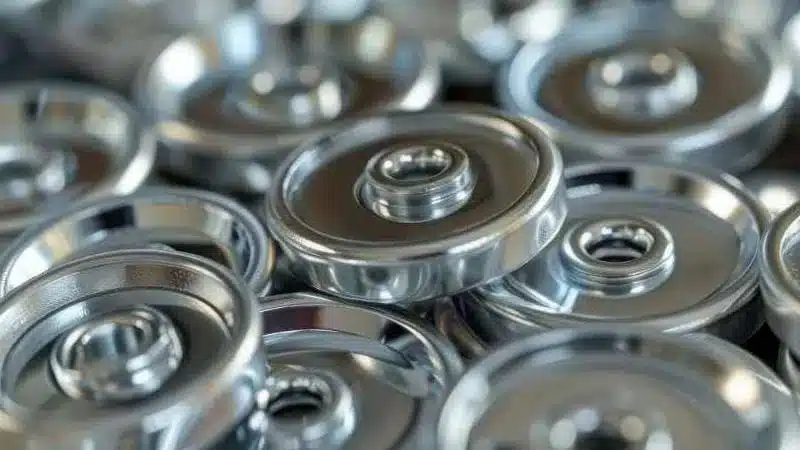
Physical and Mechanical Advantages
Zinc alloy die castings offer unique advantages due to their robust and durable properties. Zinc alloys possess excellent bending and tensile properties, making them resistant to breakage. This means that parts can withstand stress without cracking. Furthermore, zinc alloys have high impact strength, thus resisting impacts and drops more effectively than many other metals.
The following table lists the key properties of zinc alloys used in die casting:
| Property | Description |
|---|---|
| Strength | Tensile strengths range from about 280 MPa to over 400 MPa. |
| Ductility | Good ductility allows absorption of stress without fracturing. |
| Corrosion Resistance | Excellent corrosion resistance extends service life in moist environments. |
| Melting Point | Relatively low melting point (around 380–420 °C) reduces energy use. |
| Fluidity | Excellent fluidity for complex molds, reducing porosity. |
| Impact Resistance | Greater impact resistance than aluminum and magnesium die castings. |
Zinc alloy die casting allows for the creation of highly detailed shapes. Zinc alloys have excellent fluidity, filling every corner of the mold, easily shaping even thin-walled and small parts. Therefore, zinc alloy die casting is ideal for manufacturing high-strength, high-precision parts. Many industries use this process to produce robust and reliable components.
Mold Life and Energy Efficiency
Zinc alloy die casting helps extend mold life and save energy. Zinc alloy die casting molds have a lifespan of approximately 1 million cycles, far exceeding the approximately 100,000 cycles of aluminum alloy die casting molds. Longer mold life means less downtime and lower plant costs.
Zinc alloy die casting is also more energy-efficient. Zinc alloys have a lower melting point, around 419°C, while aluminum has a melting point as high as 660°C. Due to zinc’s lower melting point, less energy is required to heat the metal and the mold. This helps businesses save costs and protect the environment.
Zinc Alloy vs. Aluminum Alloy Die Casting
Material Differences
Zinc alloys and aluminum alloys differ in many ways. These differences affect their applications in die casting. Zinc alloys are heavier than aluminum alloys. Zinc has a density between 6.6 and 7.0 g/cm³. Aluminum, on the other hand, is much lighter, with a density of only 2.7 g/cm³. Zinc has a lower melting point, around 420°C, while aluminum has a higher melting point, around 660°C. This means that less energy is required to melt and cast zinc.
| Property | Zinc | Aluminum |
|---|---|---|
| Density | 6.6 to 7.0 g/cm³ (heavier) | 2.7 g/cm³ (lighter) |
| Melting Point | ~420°C (788°F) (lower) | ~660°C (1220°F) (higher) |
| Strength | High strength and toughness | Good strength (less than zinc) |
| Hardness | Generally harder | Softer, but can be alloyed |
| Applications | Suitable for high-strength parts | Ideal for mobility-focused applications |
Zinc alloys readily flow into molds due to their low melting point. Hot chamber die casting is ideal for zinc alloys because it is energy-efficient and offers high production speeds. Aluminum alloys, on the other hand, require higher temperatures and pressures, necessitating the use of cold chamber die casting machines. These machines are more energy-intensive and have longer production times.
Applications and Industry Cases
Manufacturers choose between zinc and aluminum alloy die casting based on their specific needs. Zinc alloy die casting is suitable for manufacturing small, intricate parts requiring high strength and precision. Aluminum alloy die casting is better suited for manufacturing lightweight, large parts.
| Aspect | Aluminum Die Castings | Zinc Die Castings |
|---|---|---|
| Automotive Industry | Engine parts, transmission components, body panels | Seat belt components, airbag housings, handles, trims |
| Aerospace Industry | Aircraft landing gear, structural elements | – |
| Consumer Electronics | Laptop cases, heat sinks, electronic housings | Connectors, shielding cases |
| Outdoor Equipment | Bicycle frames, camping gear | – |
| Precision Components | – | Mechanical devices, locks, gears |
| Consumer Products | – | Household appliances, toys, decorative items |
Zinc die casting is widely used in the automotive, electronics, medical device, construction, and mobile phone industries. These industries favor zinc because it can be used to manufacture thin-walled parts and intricate shapes. Zinc parts are also very strong. Aluminum die casting, on the other hand, is used in aircraft and outdoor equipment. This is because aluminum is lightweight and heat-resistant.
Advantages and Limitations
Cost and Efficiency
Many companies choose zinc die casting to save costs. Zinc molds have a longer lifespan and lower manufacturing costs. Zinc has a lower melting point, resulting in lower machine energy consumption. This means lower electricity costs for the factory and lower manufacturing costs per part. The table below compares the costs of zinc and aluminum:
| Cost Factor | Aluminum | Zinc |
|---|---|---|
| Mold Cost | Higher due to heat-resistant materials; shorter lifespan | Lower due to less expensive materials; longer lifespan |
| Die Casting Cost | More expensive due to higher energy requirements | More cost-efficient due to lower energy consumption |
| Materials Cost | Generally more expensive | Typically less expensive |
| Post-processing Cost | May require additional processing | Often requires minimal processing |
Zinc die casting is also suitable for rapid mass production of parts. Zinc has a melting point of only 419°C, resulting in lower machine operating temperatures and less energy consumption. This process enables the production of thin, intricate parts, reducing waste. These advantages help companies reduce product manufacturing costs.
Surface Finish and Thin-Wall Capability
Zinc die casting produces parts with smooth surfaces and rich details. The process fills the mold very well, so the finished product requires almost no further processing. This saves production time and costs.
Zinc die casting parts can have very thin walls. Thin walls are crucial for reducing part weight. The table below lists the minimum wall thicknesses for different metals:
| Material | Minimum Wall Thickness |
|---|---|
| Zinc | 0.5 mm (0.02 inches) |
| Aluminum | 0.5 mm (0.02 inches) |
| Magnesium | 1.5 mm – 4 mm |
Thin-walled designs can reduce material usage and part weight. This is especially important for industries such as electronics, automotive, and medical devices.
Challenges and Considerations
While zinc die casting offers numerous advantages, some considerations exist. Zinc is heavier than aluminum, so it’s not always the best choice for manufacturing lightweight parts. Designers must ensure that part shapes conform to the manufacturing process. Careful planning helps avoid errors and maintain high part quality.
Zinc die casting helps make parts that are very exact. The parts also have smooth surfaces and can save money for many companies. The table below explains why many manufacturers pick zinc for making precise parts:
| Benefit | Description |
|---|---|
| High Dimensional Accuracy | Tolerances as tight as ±0.001 inch for small parts |
| Excellent Surface Finish | Smooth finish reduces extra machining |
| Cost-Effectiveness | Ideal for high-volume production |
| Intricate Details and Thin Walls | Parts with walls as thin as 0.006 inch |
| Thermal and Electrical Conductivity | Good for heat dissipation and EMI shielding |
Manufacturers should use zinc die casting when they need complex shapes. It is also good for making parts quickly and for strong pieces. MORELUX uses new machines and cares about their customers. They give dependable zinc alloy die casting services. Companies can count on MORELUX for their next project that needs precise parts.
FAQ
What is a mold in zinc die casting?
A mold shapes molten zinc into the final part. Molds are typically made of steel because steel can withstand high pressure and high temperatures. The mold creates a fine shape and smooth surface for each zinc part.
How many times can a zinc die casting mold be reused?
Zinc die casting molds have a lifespan of up to 1 million cycles. This long lifespan stems from zinc’s low melting point. The mold maintains its strength and can continuously produce precise parts over a long period.
Why does zinc flow so well into the mold?
Zinc has a low melting point. This allows the molten metal to quickly fill every part of the mold. The mold can easily capture fine details, thin walls, and complex shapes.
How do engineers design zinc die casting molds?
Engineers use computer software to design the mold. They plan the mold based on the shape and size of the part. The mold must allow zinc to flow easily and cool quickly. Good mold design prevents defects.
What happens if the mold is poorly made?
If the mold is poorly made, zinc alloy parts may have defects. The mold can cause bubbles, rough surfaces, or weak points. Careful design and testing of molds can help avoid these problems.