
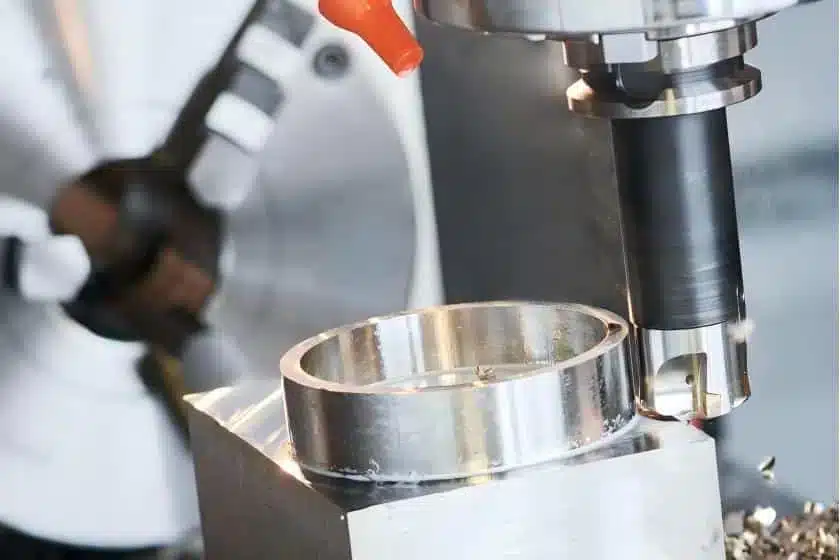
A die-casting plunger is a component that moves within the die-casting mold. It utilizes high pressure to force molten metal at high temperatures into the mold cavity, driving the critical injection phase of the die-casting process.
The plunger ensures rapid and complete filling of the mold—a speed and completeness that are essential for producing high-quality castings. Improper plunger operation leads to casting defects. The high-pressure die-casting process relies on this component to produce robust, precision parts; the proper functioning of the mold depends on the precise movement of the plunger.
Key Takeaways
- The casting piston pushes melted metal into the die using high pressure to fill every corner and prevent defects.
- The right gaps and cooling paths help the piston work well, making the mold last longer and improving the quality of the parts.
- Choose the right piston type (cold or hot chamber) for your metal and production needs, so you can cast efficiently.
Casting Piston in a Die Casting Mold

What is a die-casting piston?
A die-casting piston is a moving component within a die-casting mold assembly. It forces high-temperature molten metal into the mold cavity under high pressure. Manufacturers sometimes refer to this component as a “plunger.” The piston moves forward within a cylindrical sleeve; this sleeve both guides the piston’s movement and contains the molten metal. The piston’s movement is powered by a hydraulic system or a mechanical drive mechanism. The piston must move with precision; any hesitation or misalignment can result in defects in the final casting.
The piston operates within the die-casting machine, which secures the mold and controls the injection process. The piston is connected to a hydraulic cylinder that provides the power required for injection. The piston’s diameter matches the inner diameter of the sleeve, ensuring a tight seal. A minute clearance allows the piston to slide freely; excessive clearance leads to metal leaking backward, while insufficient clearance causes the piston to seize. Engineers carefully calculate this clearance for each specific application.
Primary function within the mold
The piston’s main task is to rapidly fill the mold cavity and maintain pressure while the metal solidifies. This pressure ensures the casting’s density and dimensional accuracy. Without consistent pressure, the metal would shrink during cooling, creating voids and porosity. The piston prevents these defects by maintaining compressive force on the metal.
Injection pressure in high-pressure die casting typically ranges from 20 to 70 MPa. Some applications require higher pressures, reaching up to 120 MPa. This pressure forces molten metal into every corner of the mold, enabling the formation of complex shapes and achieving excellent surface finishes.
The piston’s stroke length determines the volume of metal entering the mold. A longer stroke injects more metal, while a shorter stroke injects less. The stroke must correspond to the volume of the casting; engineers calculate this volume before designing the piston.
Precision die-casting manufacturers design high-performance molds to ensure optimal piston operation. They utilize advanced CAD software and flow simulation technologies. These tools predict how the metal flows within the mold and identify potential problem areas. This type of analysis helps engineers improve the design of the piston.
The filling process follows a specific order:
- The melt outlet channel is pre-filled with melted material before the casting cycle begins. This ensures the channel is already full when the piston starts its stroke.
- During the mold filling phase, the casting piston moves from a casting start position to a filling end position. It pushes melted material through the pre-filled outlet channel into the mold cavity under pressure.
- Because the channel is pre-filled, the piston needs only a shorter stroke to finish the filling. This lets it focus on high-speed injection without delays.
- In a later refilling phase, the shut-off valve opens. The piston moves back to the casting start position to pull in new melted material. The valve closes before the piston reaches its start position. This ensures steady material supply for the next cycle.
This process repeats for every casting cycle. The piston’s reliability directly affects production speed. A well-designed piston cuts cycle time. It also extends the die’s lifespan. Proper care keeps the piston working at its best. Regular checks catch wear before it causes flaws.
The casting process depends on the piston working right. Each cycle needs steady pressure and timing. Any change produces inconsistent parts. Manufacturers watch piston performance closely. They track wear patterns and adjust care schedules accordingly.
How the Piston Works in a Die Casting Mold

Injection Mechanism: Stroke and Pressure
The casting piston moves in a timed sequence. Each step controls how the melted metal enters the die. Engineers design this order for each specific part.
- Die closing and clamping: The die halves close and lock under high clamping force.
- Metal dosing: A measured amount of melted metal enters the shot sleeve.
- Slow shot (pre-fill): The casting piston moves at lower speed to control wave formation and place the metal near the gate.
- Fast shot (fill): The piston speeds up to fill the cavity with melted metal.
- Packing via intensification pressure: After the cavity fills, high pressure from the piston reduces porosity and stabilizes dimensions during solidification.
- Solidification, opening, and ejection: The casting solidifies, the die opens, and ejector pins push the part out.
The piston’s movement splits into three phases, each with its own controls. The table below shows these phases:
| Phase | Key Parameter | Description |
|---|---|---|
| Phase 1 (Low-speed injection) | Speed, Position | Low-speed (0.01–0.1 m/s) motion control of the piston plunger; meter-in flow controlled by digital proportional cartridge valve A, meter-out backpressure by valve B. |
| Phase 2 (High-speed injection) | Speed, Position | High-speed (8–10 m/s) injection with acceleration up to 900 m/s²; closed-loop position and speed control via valves A and B. |
| Phase 3 (High pressurization) | Pressure | Pressure regulation of melted alloy into the die using a hydraulic pressure intensifier; controlled by on-off cartridge valve D and digital proportional valve C. |
The stroke length decides how much metal enters the die cavity. Engineers calculate this volume before designing the piston. The stroke must match the part’s size exactly. A longer stroke delivers more metal, while a shorter stroke delivers less. The pressure during the packing phase plays a key role in part quality.
This steady pressure helps produce complex shapes with excellent surface finish. High-pressure die casting relies on this pressure to force metal into every corner of the die. Without it, the metal shrinks as it cools, creating voids and porosity. The piston keeps this pressure until the metal solidifies completely.
Key Design Features: Material, Clearance, and Cooling
Piston material directly impacts performance and service life. Under demanding operating conditions, the material must possess sufficient strength and wear resistance. Copper alloys offer excellent thermal conductivity, facilitating heat dissipation from the piston face. Material selection also influences the speed of the die-casting cycle.
The clearance between the piston and the shot sleeve requires precise calculation. For aluminum high-pressure die casting, the recommended radial clearance is 0.10–0.20 mm. This value is calculated based on operating temperatures (200–300°C) rather than room temperature. The specific value depends on the shot sleeve diameter. Before mass production, engineers must verify the clearance through thermal expansion calculations and trial runs that include temperature monitoring.
Internal cooling channels prevent the piston from overheating during continuous operation. Combining highly thermally conductive copper alloys with cooling circuits that provide a reliable heat dissipation path enables rapid heat extraction from the biscuit and gate areas. This rapid solidification shortens cycle times; simultaneously, a controlled temperature distribution minimizes thermal deformation at the piston tip, thereby maintaining optimal clearance and extending the piston’s service life.
Simulation data demonstrates the benefits of superior cooling design. A well-designed piston-head system reaches thermal equilibrium in just one cycle, whereas a standard piston requires two to three cycles. With proper cooling, temperature fluctuations at the piston face remain within 1–2 K, compared to 5–10 K for standard designs. Reduced thermal expansion at the tip prevents wear and leakage issues. These design features directly influence cycle times and die life. Pistons operating at lower temperatures last longer and yield more consistent casting quality. Maintaining stable piston temperatures across cycles enhances the overall efficiency of the die-casting process.
Types of Pistons and Die Casting Quality
Cold Chamber vs. Hot Chamber Pistons
Die casting machines use two different piston systems. Each system works for certain metal types and production needs. The choice between them affects the whole casting process.
| Aspect | Cold Chamber Piston | Hot Chamber Piston |
|---|---|---|
| Piston location | Separate injection chamber, not in the furnace | Immersed directly in molten metal within the built-in furnace |
| Metal feeding | Molten metal ladled into the chamber before piston action | Piston forces metal through a gooseneck tube from the furnace |
| Pressure mechanism | Hydraulic-powered plunger injects metal at high speed | Air pressure drives the piston to push metal into the mold |
| Cycle impact | Extra ladling step extends cycle time | Integrated system shortens cycle, raising efficiency |
Cold chamber pistons work with metals that melt at high temperatures, like aluminum alloys. These metals melt so hot that they would harm a piston dipped in them. The operator pours liquid metal into the injection chamber for each shot. This extra step takes more time but keeps the equipment safe.
Hot chamber pistons work with metals that melt at low temperatures. Zinc alloys melt at about 380–420 °C, which saves energy in die casting. The piston stays right in the liquid metal bath. Air pressure moves the piston to push metal through a gooseneck tube into the die. This setup lets the machine run fast and make more parts.
In cold chamber die casting, a pressurized plunger in a separate furnace pushes the liquid metal into the mold. In hot chamber die casting, a hydraulic-powered piston inside the machine’s own furnace pushes the liquid metal into the die.
Manufacturers with skills in aluminum, zinc, and copper die casting pick the right piston system for the metal’s traits and the part’s needs.
Impact on Mold Filling, Porosity, and Die Life
The type of plunger directly affects mold filling performance. Cold-chamber die-casting systems provide higher injection pressures, ensuring complete filling of complex cavities; while hot-chamber systems offer rapid filling speeds but lower pressures, the low viscosity (and thus high fluidity) of the molten metal compensates for the lower pressure.
Porosity levels depend largely on the condition of the plunger. Plunger wear can lead to back-leakage of molten metal, reducing the holding pressure during solidification and resulting in internal voids and gas bubbles in the final casting. Proper plunger maintenance helps prevent these defects.
Poor plunger performance can also shorten die life. Misalignment can cause the plunger to scrape the die surface, accelerating wear and reducing the die’s service life. Regular inspections help detect these issues early.
High-pressure die-casting processes require precise plunger action. Consistent pressure and timing must be maintained throughout every cycle, as any fluctuation can lead to inconsistent product quality. Manufacturers closely monitor plunger wear and adjust maintenance schedules accordingly.
Superior plunger design helps minimize defects and extend die life. Cooling channels help maintain stable temperatures, while optimal clearance prevents the plunger from seizing or leaking. These design elements directly influence casting quality; a well-maintained plunger ensures the production of dense, precision castings in every cycle.
A casting piston serves as the injection element that moves molten metal into the die. Proper design and maintenance directly affect part quality and mold longevity. Manufacturers must choose the right piston type for their machine and process, then monitor wear to avoid defects. Working with a trusted manufacturer ensures access to precision-engineered pistons and molds. This partnership supports reliable high-pressure die casting and a consistent casting process.
FAQ
What materials do manufacturers use for die casting pistons?
The piston material must give strength and resist wear inside the die. Copper alloys move heat away very well. The material you pick changes how fast the die casting cycle runs.
Why is piston clearance important in a die?
The right gap stops metal from leaking and keeps the piston from getting stuck. Engineers figure out the gap at the working temperature. A typical die casting die uses a gap of 0.10–0.20 mm. This gap affects how the die casting process works.
How does piston cooling affect the casting process?
Cooling channels pull heat off the piston face. Steady temperatures help the die last longer. Good cooling shortens the die casting cycle time. This makes the whole process work better.