
Die cast models are miniature replicas built from molten metal forced into precision steel molds. If you want to know how die cast models are made, the short answer is a five-stage chain: alloy prep, high-pressure injection, plastic detailing, multi-layer paint, and careful hand assembly. The same high-pressure technique that shapes industrial parts is scaled down for collectors, and a specialist in zinc die casting uses the identical metallurgy to produce crisp, repeatable components. This guide walks through each stage with the tolerances and data that separate a toy from a showroom replica.
Key Takeaways
- Die cast models start as ZAMAC (zinc-based) alloy injected into steel molds at high pressure.
- Plastic interiors and clear windows are added by injection molding or vacuum forming.
- Painting uses primer, color coats, and clear coat, each baked for long-term durability.
- Wheels and fine parts are fitted by hand during the final assembly stage.
- X-ray and CMM checks – the same tools industrial die-casters use – confirm quality.
How Die Cast Models Begin: ZAMAC Alloy and Steel Molds
ZAMAC composition and why zinc wins
Every miniature starts as a carefully mixed alloy. ZAMAC stands for zinc, aluminum, magnesium, and copper. Makers choose it because it flows at a moderate temperature and copies sharp edges precisely. The workhorse grade, Zamak 3, is about 96% zinc with 4% aluminum, plus trace magnesium and copper. Aluminum adds strength, copper raises hardness, and magnesium controls intergranular corrosion. For a precision die-casting manufacturer, the same grade discipline applies to aluminum die casting, where A380-type alloys balance heat resistance and castability for automotive and electronics parts. Tight composition limits – set by ASTM B240/B86 and EN1774/EN12844 – keep the metal flowing identically shot after shot, which is exactly what thin model panels demand.
Zamak 3 composition is held inside narrow international bands so the alloy behaves the same every run:
| Standard | Al (% min-max) | Cu (max %) | Mg (% min-max) |
| ASTM B240 (ingot) | 3.9-4.3 | 0.10 | 0.025-0.05 |
| ASTM B86 (cast) | 3.5-4.3 | 0.25 | 0.025-0.05 |
| EN 1774 (ingot) | 3.8-4.2 | 0.03 | 0.035-0.06 |
| EN 12844 (cast) | 3.7-4.3 | 0.10 | 0.025-0.06 |
Zn is the balance in every grade above.
High-pressure injection and cooling
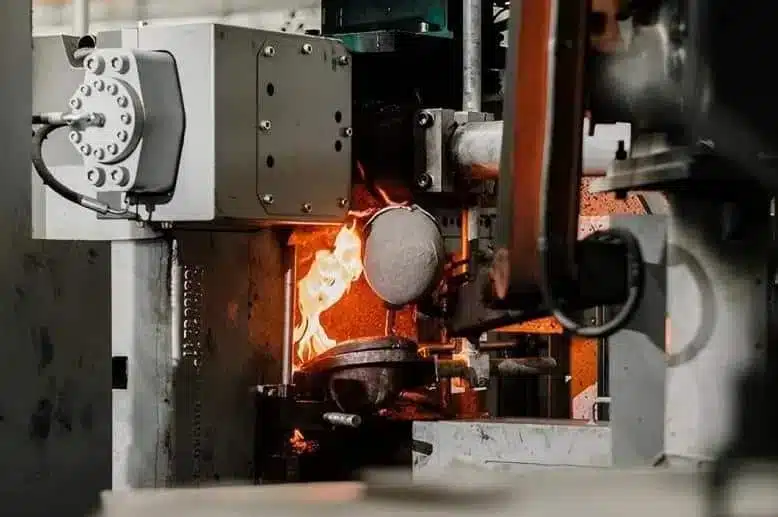
Steel molds are the heart of the build. Engineers design them in CAD and CAE with mold-flow simulation before cutting steel, testing gate positions, runner layouts, and cooling channels. Injection then runs five steps: tool clamping, injection, cooling, ejection, and trimming. Molten zinc fills the cavity in seconds at 10,000-20,000 psi (about 70-140 MPa under NADCA standards), copying panel lines thinner than gravity casting allows. Ejector pins push the part out, and workers trim runners and flash for remelting. Good cooling-channel design cuts warping and porosity, keeping cycle times short and dimensional consistency high. A well-simulated mold also reduces material waste before a single ingot is poured.
How Plastic Parts and Paint Shape Die Cast Models
Injection-molded interiors and vacuum-formed windows
A metal shell alone is not a replica. Seats and dashboards come from injection molding, where ABS pellets melt and fill a steel mold – the method scales from hundreds to millions of identical parts once tooled, so it suits mass production. Clear windows and headlights use vacuum-formed polycarbonate for large, simple curves. A precision die-casting supplier applies the same material logic to industrial transparent and structural parts, where flow and wall thickness decide the result. Both routes give the crisp, see-through look collectors expect without hand-cutting each piece.
Layered painting and tampo printing
Paint turns metal into a lifelike miniature. Surface prep – clean and sand – comes first, then primer (20-30 microns), two to three color coats (15-25 microns), and a clear coat (40-50 microns). Modern car finishes use a phosphate base near 5 microns and e-coat near 20 microns, found on roughly 95% of vehicles. Each coat is baked to harden. Fine badging comes from tampo printing: UV-cured ink with 0.05 mm registration and lines down to 0.3 mm, sealed by a UV clear that survives 500 rubs and 1.5 m drop tests. Finishing is one of MORELUX’s core precision die-casting capabilities, covering plating, painting, anodizing, and KTL for industrial castings. The same layering discipline is why a model’s livery stays sharp for years.
Assembling, Inspecting, and Sourcing Die Cast Models
Hand assembly versus robotics
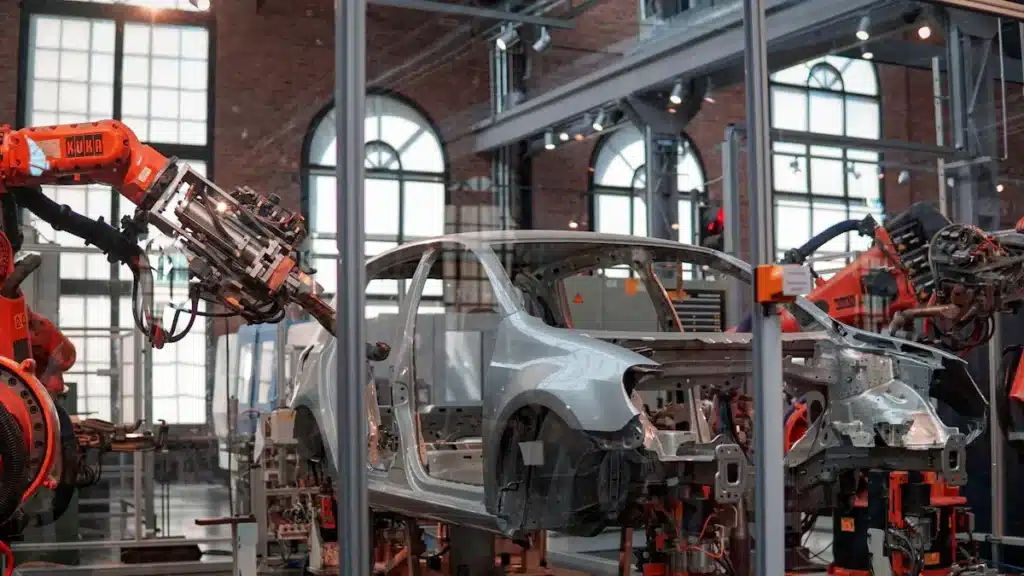
Painted shells meet plastic parts in final assembly. Premium replicas are built by hand – wheels, axles, mirrors, and antennas fitted in order to avoid scratches. Mass-production factories automate trimming, quenching, and sorting to cut cost and shield workers from heat, yet skilled hands still own the delicate final steps. The balance is the same one an automotive die-casting supplier strikes on the line: automate the repetitive, protect the precise.
Quality control the industrial way
Inspectors check every model by eye; top makers add X-ray and CMM verification – the same gauging an automotive die-casting supplier uses for structural parts. MORELUX runs X-ray, CMM, and optical emission spectrometry on production castings, a level of control that explains why a 1:18 model can carry undercarriage, brake calipers, and plates worthy of a collector shelf.
Material density (g/cm3) – the gap is why die cast models feel heavier than plastic kits:

Figure 1. ZAMAC is roughly 6x denser than ABS plastic – the source of a die cast model’s weight and realism.
What brands and buyers should look for
Scale choices – 1:18, 1:24, 1:64 – trade size for detail. For brands commissioning custom runs, the lesson from industrial casting holds: validate the factory’s alloy control, tooling, and QC before a full batch. A precision die-casting manufacturer that offers tooling, machining, finishing, and assembly under one roof shortens lead time and protects tolerances from melt to shipment. Model brands and wholesale distributors sourcing from certified factories get repeatable fit and finish, while collectors get the weight and realism that only metal delivers.
