
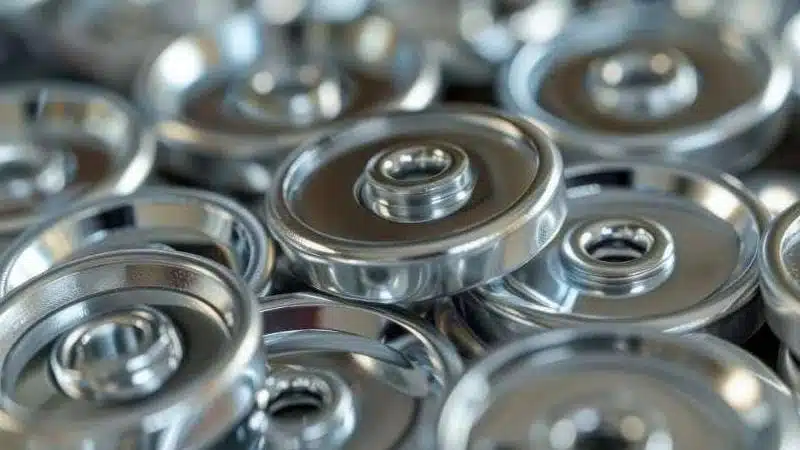
Zinc alloy die casting is a process that shapes metal into precise parts. These parts are crucial for manufacturing many of today’s products. The process uses high pressure to inject molten zinc alloy into a specialized mold. Companies like MORELUX manufacture custom parts for automotive and electronics products. They can produce parts with extremely high dimensional accuracy.
Die casting manufacturers choose zinc alloy die casting because it can create complex shapes while maintaining tight dimensional tolerances. This is essential for products that require high performance.
Key Takeaways
- Zinc alloy die casting creates strong parts. It uses high pressure to inject molten zinc into a mold. This helps create precise and durable parts.
- Good mold design is crucial. It saves time and materials and ensures the quality of the parts.
- Choosing the right zinc alloy makes parts stronger and perform better. This makes them suitable for a wide range of applications.
- Post-processing steps like deburring and plating make parts look good and extend their lifespan.
- Zinc alloy die casting is cost-effective and efficient. Many industries use it, such as automotive and electronics companies.
Zinc Alloy Die Casting Process
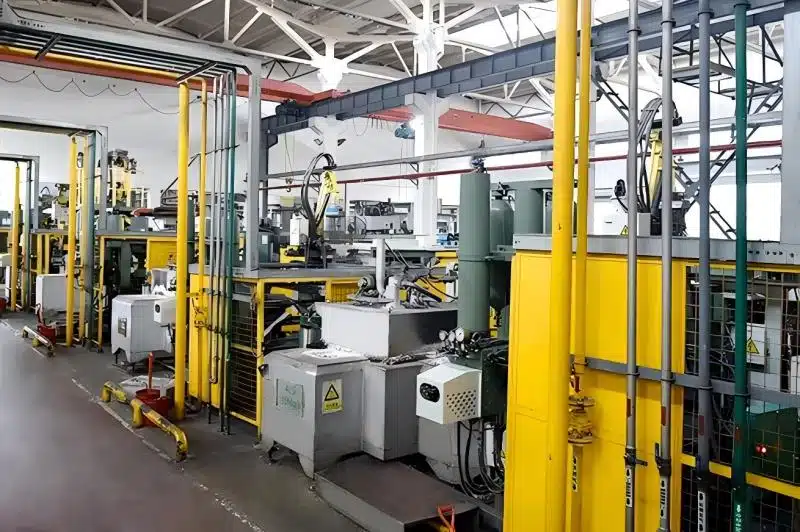
The zinc alloy die casting process transforms raw materials into precise parts. The process utilizes advanced technology and strict quality control. It helps companies like MORELUX manufacture high-performance parts suitable for a wide range of applications.
Zinc Alloy Mold Design
Mold design is the first step in zinc alloy die casting. Engineers carefully plan and use computer programs to simulate the part before manufacturing. This step helps identify problems early, such as air bubbles or weak points. It helps extend tool life and reduce repair costs.
Tip: Good mold design helps ensure smooth production and reduces waste.
When designing molds, engineers consider the part’s application, annual production volume, surface appearance, and how the part will be assembled. The table below shows how these factors influence mold design:
| Design Consideration | Impact on Mold Design |
|---|---|
| Product application & industry | Determines the precision, strength, and tolerance requirements of the part |
| Annual Production Volume | Affects the number of cavities and durability of the mold |
| Appearance & surface treatment | Influences surface smoothness and venting methods |
| Assembly fit | Requires extremely high alignment accuracy |
Draft angles, parting lines, and critical dimensions are also important. These features help the part release easily from the mold. They also reduce subsequent processing and lower costs. The mold includes important components such as the runner and gating system. These components guide the molten metal into the mold cavity.
Zinc Alloy Melting
The next step is melting the zinc alloy. Workers place the alloy in a furnace and heat it to a set temperature, usually between 380°C and 420°C. This temperature allows the alloy to have good fluidity, ensuring it fully fills the mold.
Safety is paramount. Workers wear safety protective equipment and keep the work area clean. They use fans to maintain air circulation and stay away from fumes. They also keep flammable materials away from heat sources and follow fire safety regulations.
Zinc Alloy Injection and Clamping
Injection and clamping are critical steps in zinc alloy die casting. The machine injects the molten zinc into the mold at high pressure (typically between 100 and 200 MPa). This ensures the metal fills every part of the mold. It helps in manufacturing complex shapes that are difficult to form and ensures dimensional accuracy.
Clamping force keeps the mold closed during the injection process. Insufficient clamping force can lead to problems such as overflow or incomplete filling. Good clamping force ensures part quality and protects the mold.
Zinc Alloy Cooling and Ejection
After injection, the metal cools and solidifies. The mold remains closed during this process. The cooling time depends on the size and shape of the part. Once the metal solidifies, the mold opens.
Ejector pins push out the finished part. Ejector cylinders drive these pins, allowing for easy removal of the part. This prevents damage to the part and improves production efficiency.
Zinc Alloy Trimming and Finishing
The final step is removing excess metal and improving the appearance of the part. Workers use trimming dies, saws, or machines to cut off excess material. Vibratory deburring and barrel polishing remove rough edges and smooth the part surface.
Note: Good trimming and finishing result in better-looking and better-performing parts.
This entire process helps companies like MORELUX manufacture specialized and robust parts for automobiles, electronics, and medical devices. High-pressure zinc alloy die casting is ideal for manufacturing strong, precise, and aesthetically pleasing parts.
Zinc Die Casting Materials
Zamak Alloys
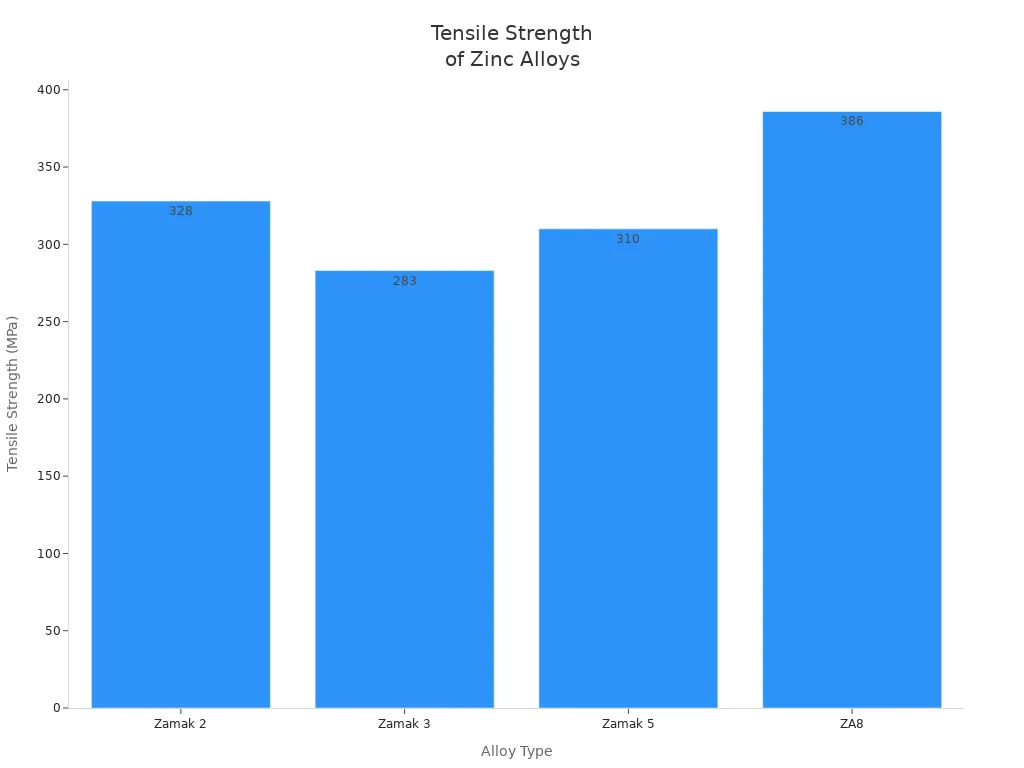
Zamak alloys are very important in zinc alloy die casting. Manufacturers choose these alloys because of their strength and reliability. Zamak is an acronym for zinc, aluminum, magnesium, and copper. Each Zamak alloy is best suited for specific applications.
| Alloy Type | Aluminum (%) | Copper (%) | Magnesium (%) | Tensile Strength (MPa) |
|---|---|---|---|---|
| Zamak 2 | 3.8–4.3 | 2.7–3.3 | 0.035–0.06 | 328 |
| Zamak 3 | 3.8–4.3 | <0.03 | 0.035–0.06 | 283 |
| Zamak 5 | 3.8–4.3 | 0.7–1.1 | 0.035–0.06 | 310 |
| ZA8 | 8.2–8.8 | 0.9–1.3 | 0.02–0.035 | 386 |
Zamak 3 is used the most in North America. It makes about 85% of zinc die cast parts. Zamak 5 has more copper, so it is stronger for hard jobs. Zamak 2 is very strong and hard, so it is good for exact parts. ZA-8 is great for smooth finishes and looks nice.
Tip: Choosing the right Zamak alloy helps various industries achieve optimal results.
Zinc Alloy Material Properties
These alloys possess special properties that make the zinc die casting process popular. Zamak alloys are strong, ductile, and easy to cast. These characteristics help engineers manufacture complex shaped parts with tight tolerances.
| Property | Description |
|---|---|
| Strength | Provides stability and durability to parts |
| Conductivity | Allows parts to have good thermal and electrical conductivity |
| Corrosion Resistance | Prevents rusting and extends the lifespan of parts |
| Melting Point | Lower melting point makes casting safer and faster |
| Cost | Saves costs during mass production |
Zamak alloys also have good mechanical properties. For example, Zamak 3 has a tensile strength of 41,000 psi and a hardness of 82. ZA-8 is even stronger, making it suitable for manufacturing robust and durable parts.
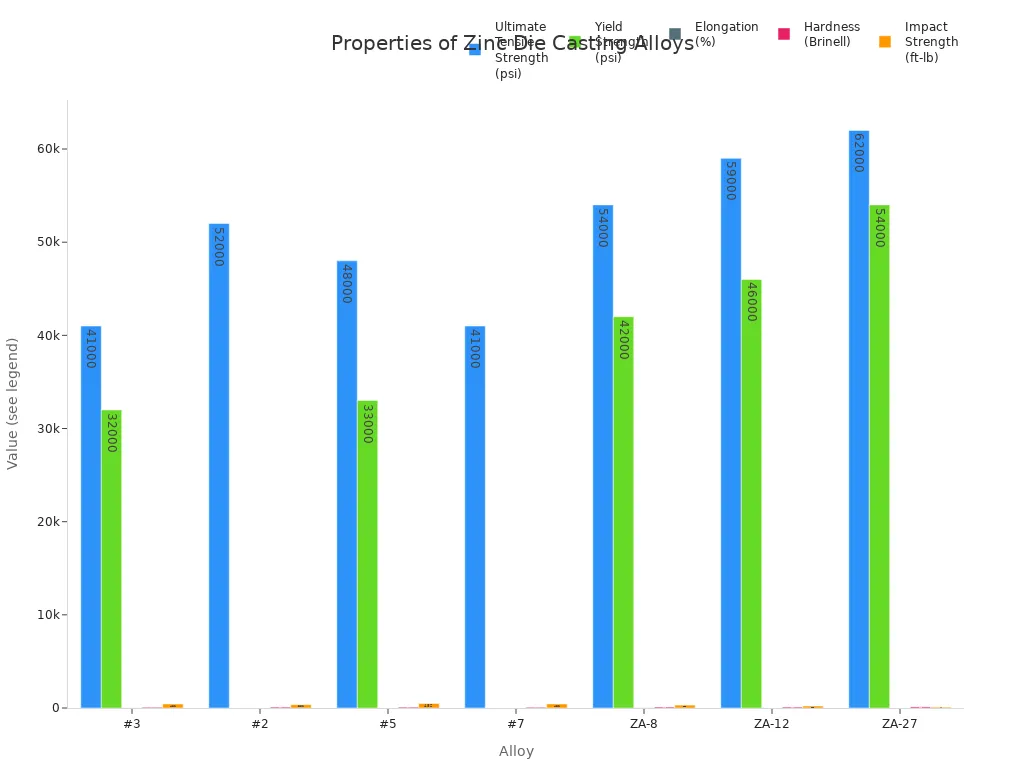
These excellent properties help companies like MORELUX produce zinc die castings that meet stringent standards. Choosing the right alloy ensures that each part performs its function perfectly.
Finishing and Surface Treatments of Zinc Alloy
Zinc Alloy Deburring
Deburring is an important step in the zinc die casting process. After the parts are removed from the mold, workers remove sharp edges and burrs. This makes each part safer to handle and helps improve its performance. Machines such as tumbling or vibratory tools can smooth rough surfaces and clean the surface. These machines make the parts look brighter and feel better to the touch.
Deburring helps prepare the parts for subsequent finishing steps. A smooth surface allows coatings and platings to adhere better. This results in a final product that is aesthetically pleasing and durable.
Zinc Alloy Plating and Coating
Electroplating and coating help protect zinc die castings. They also make the parts look aesthetically pleasing. Companies use different methods to surface treat these parts:
- Electroplating: Adding layers of copper, nickel, or chromium. These metals make the parts shiny and strong. Nickel plating provides water and chemical resistance and prevents rust. Chrome plating provides a mirror-like finish and prevents scratching.
- Powder coating: Forms a hard, brightly colored coating on the surface of the part. This prevents chipping and provides waterproofing.
- Spray painting: Offers a variety of color options and a smooth finish. The paint adheres well to the zinc surface.
- Sandblasting: Creates a uniform surface before other coating treatments. This helps the coating adhere better.
- Tumble polishing: Smooths and polishes parts before final surface treatment.
Good electroplating and coating require a clean surface. Workers clean, rinse, and sometimes polish parts before adding any surface treatment.
Zinc die castings with these surface treatments are widely used in automobiles, electronics, and home appliances. These surface treatments make the parts aesthetically pleasing and durable. They extend the lifespan of the parts, even in harsh environments.
| Plating/Coating Type | Main Benefit | Common Use |
|---|---|---|
| Nickel Plating | Stops rust and chemicals | Electronics, hardware |
| Chrome Plating | Shiny look, resists scratches | Automotive, appliances |
| Powder Coating | Colorful, tough finish | Outdoor, medical devices |
| Painting | Custom colors, smooth finish | Consumer products |
Surface treatments prepare zinc die castings for use. They make the parts perform better and look better. This helps companies like MORELUX provide high-quality solutions.
Advantages of Zinc Die Casting
Zinc Alloy Precision and Strength
Manufacturers choose zinc alloy die casting because it produces parts with high precision and strength. Parts produced by this process fit tightly and maintain consistent quality. Engineers use zinc alloy die casting to create thin-walled and complex-shaped parts that other processes cannot achieve. The parts produced by this process are tough and durable, able to withstand strong external forces, making them ideal for high-intensity operations.
The table below lists the differences between zinc die casting and aluminum die casting:
| Advantage | Zinc Die Casting | Aluminum Die Casting |
|---|---|---|
| Higher Precision | Yes | No |
| Smaller Draft Angle | Yes | No |
| Thinner Walls Can Be Manufactured | Yes | No |
| Higher Tensile Strength | Yes | No |
| Higher Impact Strength | Yes | No |
| Better Machinability | Yes | No |
| Lower casting costs | Yes | No |
| Higher Sealing Performance | Yes | No |
| More Surface Finish Options | Yes | No |
| Spark-Free | Yes | No |
The advantage of zinc die casting lies in its ability to manufacture parts with extremely high dimensional precision and strength. This means less additional machining work can be done.
Zinc Alloy Efficiency and Cost
Zinc die casting helps businesses save time and costs. Machines can do most of the work, allowing for rapid production of large quantities of parts. This reduces the need for workers and avoids delays. Zinc die casting molds have a long lifespan, up to 1 million uses. Aluminum molds have a much shorter lifespan. Durable molds help businesses save costs in the long run.
This process makes efficient use of materials. Thin walls and precise shapes mean less waste. Faster production and fewer delays help businesses complete orders on time and maintain smooth operations.
| Advantage | Description |
|---|---|
| High Production Speed | Fast production means large orders can be completed quickly. |
| Reduced Labor Costs | More efficient machines require less manpower. |
| High Dimensional Accuracy | Precise parts mean less rework. |
| Minimized Downtime | Fast production cycles ensure continuous operation. |
| Efficient Material Usage | Reduce waste and conserve resources. |
In 2023, the global zinc die-casting automotive parts market was worth $7.5 billion. Experts predict that this figure will grow to $12.9 billion by 2032. There is a demand for lighter, stronger parts. This demonstrates that zinc alloy die-casting processes can save costs and improve efficiency.
Applications of Zinc Alloy Die Casting
Automotive Components
Automakers use zinc alloy die casting to manufacture many critical components. They choose this process because it produces parts that are strong yet lightweight. These components contribute to improved vehicle safety and performance. Companies like MORELUX produce specialized parts for a wide range of car models and styles.
Some automotive components manufactured using zinc alloy die casting include:
- Interior trim and trim pieces
- Engine and under-hood components
- Power steering and braking system components
- Air conditioning and fuel system components
- Door lock housings, pawls, and return gears
- Seat adjusters, pulleys, and camshaft components
- Sensor housings, thermostat housings, and valve bodies
Automakers also use zinc alloy die casting to manufacture transmission housings, brackets, and steering column components. These components help reduce vehicle weight and improve fuel economy. Zinc alloy die casting provides automakers with the strength, rigidity, and perfect fit they require.
Automakers rely on zinc alloy die casting because it produces parts that must perform well and be durable.
Electronics and Medical Devices
Zinc alloy die casting is crucial in the electronics and medical device industries. This process allows manufacturers to produce components with fine details and seamless fits. These properties are essential for such products. Zinc alloys are stronger than some plastics, resulting in longer device lifespans and better performance.
In electronics, applications of zinc alloy die casting include:
- Housing for precision equipment
- Connectors and shielding components
- Complex mesh housings
Medical device manufacturers use zinc alloy die casting to manufacture:
- Housing for surgical instruments
- Frames for medical devices
- Precision components requiring smooth surfaces
Zinc alloys possess self-lubricating properties and dimensional stability. These properties contribute to better operation of handheld medical devices and electronic equipment. Zinc also offers excellent electrical and shielding properties, protecting sensitive circuitry.
MORELUX customizes die castings for various industries, including telecommunications and medical devices. Their team helps customers design components that meet stringent requirements for precision, surface finish, and lifespan.
Companies in the automotive, electronics, telecommunications, and medical sectors choose zinc alloy die casting because of its flexibility and ability to deliver superior results.
Zinc alloy die casting is an ideal choice for manufacturing parts. It produces robust, precise, and reliable components. Businesses can reap numerous benefits:
- Parts are tough and durable, able to withstand impacts.
- Smooth and aesthetically pleasing surfaces.
- Low manufacturing costs.
- Designs can be tailored to specific needs.
- Reusable materials and environmentally friendly.
MORELUX is committed to helping customers achieve superior results through zinc alloy die casting. They ensure the precision of parts and meet customer requirements. This means higher quality products and more satisfied customers.
FAQ
What are the advantages of zinc alloy die casting compared to other methods?
Zinc alloy die casting can produce parts with high precision and strength. Manufacturers can create parts with complex shapes and smooth surfaces. This method is both time-saving and cost-effective. Many businesses choose zinc alloy die casting precisely because of its significant results.
How does MORELUX ensure the quality of die-cast parts?
MORELUX uses advanced equipment and maintains strict quality control. Their team rigorously inspects the dimensions and surface finish of each part. Customers receive parts that meet international standards.
Can zinc die casting be used to customize parts for different industries?
Yes. Zinc die casting technology enables companies to create custom designs. MORELUX helps customers manufacture parts for industries such as automotive, electronics, mobile phones, and medical devices. Their solutions meet the specific needs of each project.
Are zinc die-cast parts environmentally friendly?
Zinc alloys are recyclable. The die-casting process generates less waste. Companies like MORELUX are taking smart steps to protect the planet.
What surface treatments are available for zinc die-cast parts?
Manufacturers offer a variety of surface treatments, such as electroplating, powder coating, and painting. These processes not only enhance the appearance of the parts but also protect them from damage.