
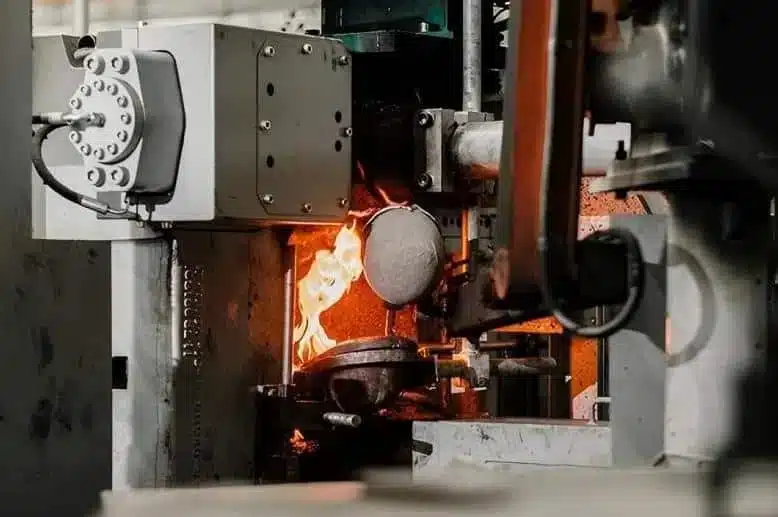
Squeeze casting and high-pressure die casting are two methods for forming metal parts. Squeeze casting hardens molten metal in one step by applying direct pressure, producing parts with high strength and few defects. In contrast, high-pressure die casting rapidly presses metal into a mold at extremely high pressure, enabling the rapid production of parts with complex shapes.
Key Takeaways
- Squeeze casting applies stable pressure during the metal’s cooling process. This method can produce parts with high strength, great thickness, and virtually no porosity.
- High-pressure die casting rapidly presses metal into a mold. It can quickly produce many fine parts, but it creates more small pores.
- Squeeze casting is suitable for high-strength parts that need to withstand heavy loads. It is also suitable for parts with very high dimensional accuracy requirements.
- If you need to produce a large number of parts quickly, choose high-pressure die casting. It is ideal for machining complex shapes and intricate details.
- Both methods save metal and reduce waste. Squeeze casting is slower and best suited for medium-volume production. High-pressure die casting is faster and best suited for mass production.
What is squeeze casting?

Overview of Squeeze Casting
Squeeze casting is a metal forming process that combines the advantages of casting and forging. In this process, molten metal is poured into a high-temperature metal mold, and then the metal is shaped within the mold under high pressure. This produces parts with high strength, high density, and virtually no porosity. A key feature of squeeze casting is the application of pressure during the metal’s cooling and hardening process, which helps expel trapped gases and prevents shrinkage. The final product is a tough, durable part with a smooth internal structure.
The steps of squeeze casting are as follows:
| Process Step / Feature | Squeeze Casting | Other Casting Methods |
|---|---|---|
| Molten Metal Pouring | Melted metal is poured into a hot metal mold | Gravity casting lets metal flow by itself; HPDC pushes metal in fast; sand and investment casting use other molds and ways to pour metal |
| Pressure Application | High pressure is used while the metal hardens to stop holes and shrinking | Gravity casting does not use pressure; HPDC uses fast, strong pressure; sand and investment casting do not use pressure when metal hardens |
| Solidification Control | Pressure stays on until the metal is fully hard | Other ways do not control holes and density as well; HPDC can trap gas; sand casting makes rougher parts |
| Mold Type | Uses metal molds that are heated up | Sand casting uses sand molds; investment casting uses ceramic molds; HPDC uses metal molds but fills them differently |
| Mechanical Properties | Parts are almost as strong and dense as forged ones, with few holes | Other ways make parts with more holes, less strength, and less even quality |
| Surface Finish and Tolerances | Parts look smoother and fit better because of pressure and metal mold | Sand casting makes rougher parts; investment casting looks good but takes longer and is harder to do |
| Production Volume and Speed | Takes a medium amount of time, good for making a fair number of parts | HPDC is faster and makes more parts; sand and investment casting are slower but can make different shapes |
Squeeze casting uses slow, continuous pressure to form the metal in one step, maintaining pressure until it hardens. This method produces parts with high strength and few defects.
Types of squeeze casting
Squeeze casting is mainly divided into two types: direct squeeze casting and indirect squeeze casting. In direct squeeze casting, the worker pours molten metal directly into a hot mold. After pouring, the machine immediately applies high pressure downwards. This helps the part cool sufficiently, reducing porosity and thus increasing strength.
Indirect squeeze casting is different. In this casting method, the worker injects clean molten metal into the mold. This process applies continuous pressure during the metal hardening process, helping to prevent the formation of porosity.
There is also a special squeeze casting method called liquid metal forging. It uses even higher pressure. Parts produced by this method have strength almost as high as forged parts. The specific squeeze casting method used depends on the application of the part and the required quantity.
What is high-pressure die casting?

Overview of high-pressure die casting
High pressure die casting is a method for rapidly manufacturing metal parts. A machine forces molten metal quickly and forcefully into a steel mold. The metal diffuses and fills every part of the mold. This method can produce parts with complex shapes and smooth surfaces. High pressure die casting is often chosen when rapid production of large quantities of parts is required.
It is best suited for metals such as aluminum, zinc, and magnesium. Many companies, such as automotive and electronics companies, use high pressure die casting to manufacture robust and reliable parts.
Types of high-pressure die casting
There are several types of high pressure die casting, each with its own advantages. The main types help in manufacturing more parts, achieving better surface quality, and using different metal materials. The table below lists the advantages of high pressure die casting:
| Type of Die Casting | Advantages |
|---|---|
| High-Pressure Die Casting | – Makes many parts quickly, good for big jobs. |
| – Parts are the right size and look nice, so less fixing is needed. | |
| – Can make parts with hard shapes and small details. | |
| – Works with metals like aluminum, zinc, and magnesium, each with special traits. | |
| – Wastes less metal because extra metal is used again. | |
| – Makes parts that are strong and last longer. |
Squeeze Casting and High-Pressure Die Casting: Key Differences
Pressure and Solidification
Pressure is crucial in both squeeze casting and high-pressure die casting. In squeeze casting, a steady pressure is applied as the metal cools. This helps heat transfer from the metal to the mold more quickly, resulting in faster cooling and higher strength and density. In squeeze casting, higher pressure generally leads to better part quality and a lower probability of problems. High-pressure die casting works differently. It rapidly presses the metal into the mold and cools it quickly, but it’s difficult to maintain consistent heat transfer every time.
Metal Flow Rate
The speed at which molten metal fills the mold also differs. High pressure die casting forces the metal into the mold at an extremely high speed. While this fills the mold quickly, it can easily lead to metal vortices and trapped air bubbles.
Squeeze casting, on the other hand, allows the metal to flow into the mold slowly and smoothly. This helps prevent vortices and avoids air bubbles.
The difference in speed affects the quality of the final part. Choosing between squeeze casting and high pressure die casting depends on whether you value speed or the smoothness of the part more.
Part Quality and Properties
The final result of the part depends on the casting method used. The table below compares the two methods:
| Property | High-Pressure Die Casting | Squeeze Casting |
|---|---|---|
| Porosity Level | Higher, due to potential gas entrapment | Very low to virtually non-existent |
| Mechanical Strength | Good | Superior (higher tensile strength and ductility) |
Squeeze Casting vs High-Pressure Die Casting: Pros and Cons
Advantages of squeeze casting
Squeeze casting offers numerous advantages in manufacturing high-strength parts. It applies stable pressure during metal cooling, expelling air and making the metal dense and tough. Squeeze casting allows workers to precisely control the size and shape of parts, resulting in smooth surface finishes. Furthermore, the molds are simple in structure, low in cost, and reusable.
Disadvantages of squeeze casting
Squeeze casting also has some drawbacks. It is time-consuming because pressure must be maintained during the metal cooling process. This slow process is not suitable for rapid production of large quantities of parts. Squeeze casting is not suitable for manufacturing complex shapes. Compared to other methods, squeeze casting is less effective at handling complex designs.
Advantages of high-pressure die casting
High-pressure die casting is fast and ideal for mass production. It can press molten metal into a mold very quickly. This means that parts cool quickly, allowing for the production of large quantities of parts in a short time. High-pressure die casting is ideal for manufacturing complex shapes. The parts have smooth surfaces and typically require no further machining.
| Advantage | Description |
|---|---|
| Quicker Filling | Metal fills the mold fast, so parts are made quickly. |
| High-Volume Production | Many parts can be made at once. |
| Excellent Surface Finishes | Parts look smooth and often do not need more work. |
| Detailed Components | High pressure helps fill every small part of the mold. |
| High Efficiency | The process is quick and uses machines, good for big jobs. |
| Lower Per-Unit Costs | Making lots of parts at once saves money. |
| Intricate Shapes | Can make parts with hard shapes and small details. |
| Lightweight Components | Good for cars and electronics that need light, detailed parts. |
| Material Efficiency | Not much metal is wasted because parts are made close to the right shape. |
| Recyclability | Metals can be used again and again without getting worse. |
Disadvantages of high-pressure die casting
High-pressure die casting has several disadvantages. The rapid die casting process can cause air to become trapped inside the part, creating voids and reducing its strength. Parts with voids are unsuitable for heat treatment or welding, and errors are more likely to occur if the metal injection rate is too high. The process is energy-intensive, but using recycled metals helps protect the environment.
Applications of Squeeze Casting and High-Pressure Casting
When to Use Squeeze Casting
Squeeze casting is best suited for manufacturing parts requiring extremely high strength, but it’s also suitable for situations where part quality requirements are very low. This process is commonly used to manufacture components that need to withstand heavy loads or possess extremely high strength.
Some common applications of squeeze casting include: manufacturing automotive frame and suspension components; manufacturing aluminum steering knuckles, joints, and brackets; manufacturing motorcycle parts that should be free of air bubbles; manufacturing small turbine blades and aircraft propellers; and manufacturing brake components and lightweight yet robust parts.
Squeeze casting can also manufacture metal matrix composites containing high-strength additives. This enhances the strength of the parts and extends their lifespan.
When to Use High-Pressure Die Casting
High pressure die casting is a good option when you need to produce large quantities of parts quickly. It is also ideal for manufacturing parts with complex shapes. High pressure die casting is often used when large quantities of aluminum, zinc, and magnesium parts need to be produced at once. It is suitable for electronics, lighting, light automotive parts, and medical devices.
MORELUX provides precision die casting solutions for these needs. Their team uses advanced equipment to ensure the quality and performance of parts, manufacturing specialized die-cast parts for automobiles, electronics, mobile phones, and medical devices.
Industry Examples
Many companies use both casting methods simultaneously. Squeeze casting improves product performance in many ways. In the automotive industry, it is used to manufacture suspension components, control arms, steering knuckles, brake components, and pistons containing high-strength ceramic fibers. In the aircraft industry, it is used to manufacture lightweight aluminum-magnesium alloy parts and small turbine blades. In the electrical industry, it is used to manufacture radiators, motor housings, and enclosures. In factories, it is used to manufacture pump housings and hydraulic components.
FAQ
Which metals are best suited for squeeze casting?
Aluminum and magnesium alloys are ideal for squeeze casting. These metals can be used to create high-strength, durable parts. Engineers choose them for manufacturing automobiles and aircraft.
Can high-pressure die casting create parts with complex shapes?
High-pressure die casting can create parts with complex shapes and intricate details. The process uses rapid pressure to completely fill the mold. Manufacturers use it in the manufacture of electronics, automobiles, and medical devices.
Why does squeeze casting reduce porosity?
Squeeze casting applies steady pressure during the metal’s cooling process. This expels air and gases trapped in the mold. The resulting part has a moderate thickness and virtually no small pores.
How does MORELUX ensure the quality of its die-cast parts?
MORELUX uses new machines and careful checks. Their team looks at each part to make sure it is right and strong. They make special parts for many different jobs.