

Die casting uses molds and high pressure to shape metal parts. 3D printing, on the other hand, manufactures objects by adding layers one by one. MORELUX is a company with expertise in die casting, producing precision metal parts for numerous companies. Understanding the differences between the two processes in terms of workflow, cost, and applications can help businesses make informed choices.
Key Takeaways
- Die casting is suitable for rapid, mass production of identical metal parts, and large-volume orders are relatively inexpensive.
- 3D printing is flexible and fast, capable of creating complex and customized parts without molds, making it ideal for prototyping and small-batch production.
- Choosing between die casting and 3D printing depends on several factors, such as the number of parts required, the complexity of the design, and production speed. Understanding these factors helps in selecting the optimal production method.
Die Casting vs 3D Printing: Quick Comparison
Process Differences
Die casting and 3D printing are two different methods of manufacturing metal parts. Die casting shapes metal by pressing it into a die casting mold under high pressure. 3D printing, however, prints parts layer by layer based on a computer-generated design. The following brief introduction will help you understand how these two methods work.
The table below lists the main differences between die casting and 3D printing:
| Aspect | Die Casting | 3D Printing |
|---|---|---|
| Part Design | Best for simple shapes; difficult to create complex shapes due to mold limitations. | Excellent for creating complex and intricate shapes. |
| Accuracy | Capable of producing parts with small errors, but problems may arise during cooling and assembly. | Capable of producing high-precision, finely detailed parts with fewer assembly issues. |
| Production Quantities | Suitable for mass production of parts due to the need for molds. | Best for small-batch production of parts; no special tools required. |
| Lead Times | Making parts can take over a year because molds take time. | Parts can be made in days, especially small ones. |
Die casting and 3D printing also differ in how they handle part shapes. Die casting is best suited for simple shapes. 3D printing can create very intricate and complex parts. Die casting typically requires additional steps to complete the part machining process, while 3D printing can complete the finished product in one step.
MORELUX is an excellent company in die casting. They use new technologies to manufacture robust and precise metal parts. They serve automotive, electronics, and medical companies. MORELUX’s case demonstrates that die casting can meet stringent requirements for precision and strength.
Setup and Investment
Die casting and 3D printing have different setup and costs. Die casting requires special molds called die casting molds. Making these molds takes time and money. Therefore, die casting is suitable for mass production of parts. While the initial cost is higher, the cost per part decreases as production volume increases.
3D printing does not require molds or special tools. You only need a computer-generated design and a printer. This makes 3D printing ideal for small-batch production or custom parts. Setup is quick and less expensive than die casting.
Die casting is the best choice when you need a large quantity of the same parts. 3D printing is better suited for small quantities of special parts or testing new ideas. This brief overview can help businesses choose the best part manufacturing method.
MORELUX utilizes intelligent tools and computer testing to set up their die casting process. Their approach saves costs while producing high-quality parts for large orders. This indicates that die casting is a wise choice for businesses requiring a large number of high-strength parts.
Tip: Businesses should consider the required number of parts and the complexity of the design before choosing die casting or 3D printing.
Die Casting Process and Applications
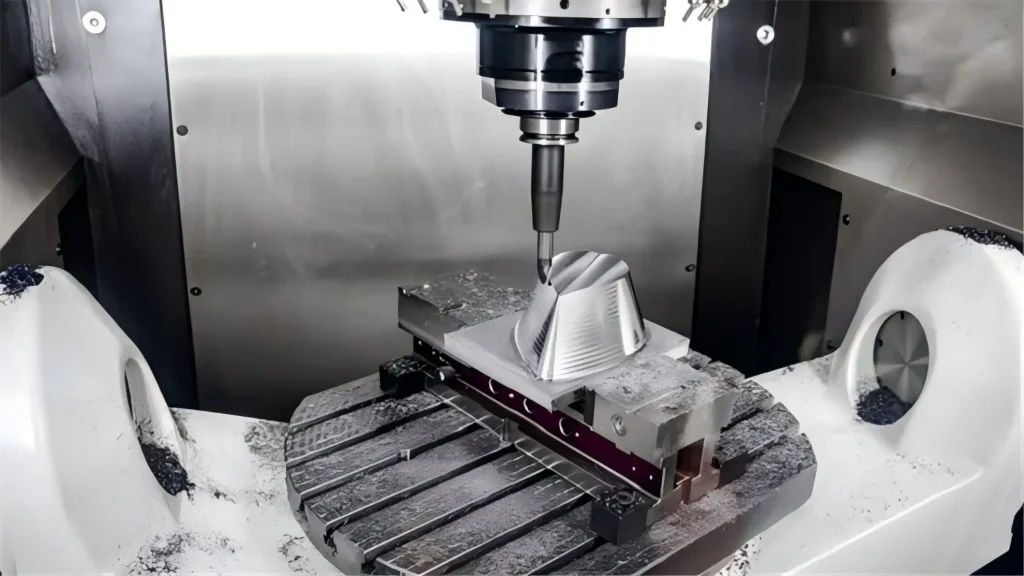
How Die Casting Works
Die casting is a common method for manufacturing metal parts. First, the designer creates a model of the part. Then, workers prepare the casting mold. They melt the metal into a liquid state. Next, they pour the molten metal into the mold. After the metal cools and solidifies, it forms the shape of the mold. Afterward, workers clean the part and check its quality. The following table lists the main steps of die casting:
| Step | Description |
|---|---|
| Pattern Creation | Designers make a pattern for the mold. |
| Mold Preparation | Workers get the mold ready for casting. |
| Melting and Pouring | Metal is melted and poured into the mold. |
| Cooling | Metal cools and forms the part. |
| Finishing | Workers clean and check the part for quality. |
Precision and Quality
Precision and quality are paramount in die casting. Companies like MORELUX use new tools to manufacture extremely precise parts. They follow strict rules and checklists, testing materials and measuring parts. Non-destructive testing allows for inspection without breaking the parts. Each part must be aesthetically pleasing and robust. The machines ensure consistency in every production process. The company is constantly working to improve its products, inspecting the dimensions and appearance of each part to ensure it meets standards.
Industry Uses
Many businesses use die casting to manufacture strong and precise parts. Automakers use it to manufacture engine blocks and other large components. Electronics companies use it to manufacture housings and connectors. Other products, such as handles and faucets, are also manufactured using this process. Die casting helps improve vehicle safety and saves energy. Companies choose this process when strong, durable, and high-quality parts are required.
3D Printing and Metal 3D Printing

How 3D Printing Works
3D printing builds objects by adding layers one by one. It begins with a computer design. The printer reads the file and adds thin layers one by one. It continuously adds layers until the part is complete. There are various methods for 3D printing, applicable to both plastic and metal parts. Some common methods are as follows:
| Method | Description |
|---|---|
| Fused Deposition Manufacturing (FDM) | Adds melted plastic one layer at a time. |
| Stereolithography (SLA) | Uses UV light to make liquid resin hard in layers. |
| Selective Laser Sintering (SLS) | Uses a laser to join powder, even metal, into shapes. |
| Laser Powder Bed Fusion (LPBF) | Uses a laser to melt metal powder and make complex parts. |
| Electron Beam Melting | Melts metal powder with an electron beam for big projects. |
| Direct Energy Deposition | Feeds metal wire or powder and melts it with a laser or beam. |
| Binder Jetting | Spreads metal powder, adds a binder, then heats the part. |
Metal 3D Printing Overview
Metal 3D printing technology can create strong, durable, and complex-shaped parts. It uses metal powder to build parts layer by layer, enabling engineers to create shapes impossible with casting. Metal 3D printed parts are nearly as strong as ordinary metals, making them especially suitable for demanding tasks. Unlike casting, it requires no molds, thus enabling faster production of small batches and specialized parts.
Flexibility and Speed
3D printing technology is fast and flexible. Businesses can quickly change designs and print new parts without waiting for molds. This helps industries like aerospace and healthcare quickly test various ideas. The table below compares 3D printing and die casting processes:
| Aspect | 3D Printing | Die Casting |
|---|---|---|
| Prototyping Speed | Fast, easy to change designs | Slower, needs molds |
| Design Flexibility | High, good for custom parts | Limited by molds |
| Lead Time | Short, good for small batches | Longer, best for big orders |
3D printing helps businesses quickly test a variety of parts. It is easy to create new shapes and modify designs, saving time and costs, especially for small or custom parts.
Note: 3D printing and metal 3D printing technologies enable engineers to explore more design options and obtain results faster than traditional methods.
Casting And 3D Cost and Speed Comparison
Upfront Investment
Businesses typically consider upfront costs before choosing a manufacturing method. Die casting requires expensive molds and specialized equipment, resulting in higher initial costs, but it is suitable for large-scale production. Metal 3D printing and metal 3D printing have lower start-up capital. They use computer-aided design and printers, making setup quick and inexpensive, suitable for small-batch production or prototyping.
| Process | Upfront Cost | Cost Efficiency |
|---|---|---|
| 3D Printing | Lower for small runs and prototyping | Expensive for large-scale production |
| Die Casting | High upfront cost | Economical for mass production |
Per-Unit Cost
The cost per part varies with the number of parts. Die casting has a lower unit cost when businesses produce large quantities of products. 3D printing and metal 3D printing have higher unit costs, especially in mass production. The table below compares unit costs for low and high production volumes.
| Production Method | Per-Part Cost (Low Volume) | Per-Part Cost (High Volume) |
|---|---|---|
| 3D Printing (FDM/SLS/DMLS) | Low ($5–$100) | N/A |
| Die Casting | Low ($1–$5 at scale) | N/A |
| Injection Molding | Very Low (<$1 at high volume) | N/A |
Tip: Businesses should consider production costs and their impact before choosing a production method.
Production Speed
Die casting is suitable for mass production and is fast. Once the mold is ready, the machine can quickly produce thousands of parts. 3D printing and metal 3D printing are suitable for large orders but are slower. They build parts layer by layer, taking longer. For small batches or customized products, 3D printing can be completed quickly. For large orders, die casting can save time and costs.
Scalability is critical to cost impact. Die casting is best suited for mass production with low unit cost. 3D printing and metal 3D printing are suitable for small-batch production, prototyping, or custom designs. Businesses should choose the appropriate process based on their needs.
Casting And 3D Design Complexity and Scalability
Part Complexity
Die casting and additive manufacturing handle complex parts differently. Die casting uses molds, making it best suited for simple shapes. Molds limit the realization of complex designs. If a business needs parts with a lot of detail, die casting may not be suitable. Additive manufacturing (such as 3D printing) provides engineers with more options. They can create parts with curves, holes, and even internal moving parts. Changing part designs in 3D printing is very easy without having to rebuild molds. This method can create finely customized parts that die casting cannot achieve.
- Metal 3D printing can create shapes that die casting cannot achieve.
- 3D printing allows for quick and economical design changes.
- Die casting is limited by molds, while 3D printing offers greater design freedom.
Customization
Customization is crucial for many businesses. Die casting is suitable for mass production of identical parts. If a part needs to be changed, a new mold is required. This is both time-consuming and expensive. Additive manufacturing is ideal for custom parts. Businesses can replace each part without additional tools. The table below compares the two methods:
| Limitation | Die Casting | 3D Printing |
|---|---|---|
| Material Selection | Only works with certain alloys | Works with fewer high-performance materials |
| Performance Stability | Usually stays the same | Mechanical properties can change |
| Production Speed | Fast for big batches | Slower for lots of parts |
| Batch Quality Consistency | Parts are very similar in each batch | Quality can change in big batches |
Volume Production
Die casting is ideal for rapidly producing large quantities of identical parts. It can produce thousands of parts with the same appearance. The process is easily scaled up. Additive manufacturing (or 3D printing) is slower for high-volume production. It requires more time and sometimes more workers. New technologies such as automation and artificial intelligence help improve 3D printing performance. However, die casting remains the best choice for mass production of parts. Businesses typically choose additive manufacturing for small batch production or when special shapes and custom parts are required.
Tip: Businesses should consider the complexity, customization level, or scale of their orders before choosing a process.
Choosing Between Die Casting and 3D Printing
Application Needs
Manufacturers must choose between die casting and 3D printing. Each method is best suited for different jobs. Die casting is ideal when a company needs a large quantity of the same parts. It uses molds to quickly and precisely shape metal. Companies prefer die casting for large orders because it saves time and money. MORELUX is dedicated to manufacturing robust, precise parts for automotive, electronics, and medical devices. Their new technology ensures that every part is flawless.
3D printing is better suited for special shapes or small batches of parts. Engineers use 3D printing to test ideas or create custom parts. This method builds parts layer by layer from computer-aided designs. It doesn’t require molds, so modifications are quick and easy. Companies use 3D printing to create samples, small batches of parts, or parts with complex shapes. 3D printing is very flexible if a project requires rapid modifications or special designs.
Tip: Companies should choose the appropriate method based on their needs. For large orders with simple shapes, die casting is the best choice. For small batches or parts with complex shapes, 3D printing is more suitable.
Decision Factors
Choosing the best process depends on several factors. Manufacturers need to consider the materials used, the number of parts required, the shape of the parts, and the delivery speed. The table below illustrates the importance of these factors:
| Decision Criteria | Description |
|---|---|
| Material Selection | The type of materials each way can use, which affects how the part works. |
| Part Quantity | How many parts are needed, which helps pick between making a few or many. |
| Part Geometry | How hard the part shape is, with 3D printing good for tough shapes. |
| Project Schedule | How fast the parts are needed, with 3D printing faster for samples. |
Material selection is crucial because different processes use different metals. Die casting uses metals such as aluminum, zinc, and magnesium. 3D printing uses metal powders, but not all metals are suitable. The number of parts required is also important. Die casting is best suited for rapid production of large quantities of parts. 3D printing is better suited for small batches or situations where each part is unique.
The shape of the parts is also an important factor in the decision. Die casting is best suited for simple shapes. 3D printing can easily create complex or intricate shapes. The speed at which parts are needed is also a factor to consider. Die casting is time-consuming because molds must be made first. 3D printing starts quickly, especially suitable for prototyping or small-batch production.
MORELUX helps companies that need a large number of robust and precise parts. Their die-casting products produce robust and reliable parts that meet a variety of demanding application requirements. When projects require a large number of identical and precise parts, MORELUX has the skills and tools to assist in completion.
Note: Manufacturers should consider factors such as material, quantity, shape, and time before choosing a production method. The right choice can lead to better results and cost savings.
Die casting is ideal for producing large quantities of parts at once. It saves costs, produces precise parts, and provides robust surfaces. Manufacturers should do the following: First, they need to understand the function of the product. Second, they should explore different production methods. They also need to consider costs and existing tools. Using project management tools helps ensure projects proceed as planned. They should monitor the production process and make adjustments as necessary.
| Advantage | Description |
|---|---|
| Cost Efficiency | Each part costs less when making many. |
| Precision | Makes parts that fit together very well. |
FAQ
What are the main advantages of die casting?
Die casting can quickly produce strong metal parts. Companies like MORELUX use it to handle large-volume orders.
Tip: Die casting is best suited for producing large quantities of identical parts.
Can 3D printing create metal parts as strong as die casting?
Metal 3D printing can create strong parts, but die casting generally offers higher strength and a better surface finish.
| Method | Typical Strength |
|---|---|
| Die Casting | High |
| 3D Printing | Moderate to High |
When should companies choose 3D printing over die casting?
Companies should use 3D printing for prototyping, custom designs, or small-batch production.
- 3D printing allows for rapid modifications.
- No molds required.