
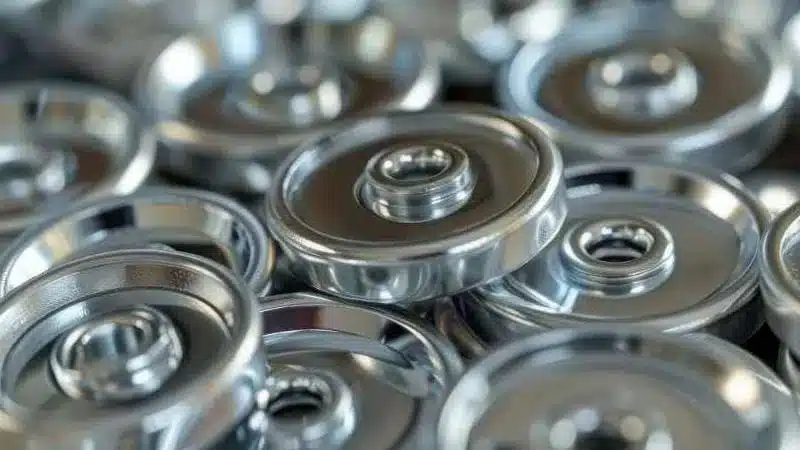
Die casting is a metal manufacturing process that injects molten metal into a steel mold (die) under high pressure, while zinc alloy is a specific type of material frequently utilized in die casting. Understanding the distinction between die cast vs zinc alloy is essential for engineers to make informed decisions. This choice significantly impacts the strength, accuracy, and aesthetic appeal of the final product. Zinc alloys are widely used in die casting applications such as automotive components, electronics housings, plumbing hardware, and consumer products. Manufacturers typically evaluate both the casting process and the material properties when selecting the most suitable production method.
Key Takeaways
- Die casting is a manufacturing process that shapes molten metal into precise forms using high pressure and a steel mold.
- Zinc alloy is a material, not a process, and it is commonly used in die casting because of its excellent castability.
- Zinc alloys offer good strength, durability, and dimensional stability, making them suitable for complex and high-precision components.
- The low melting temperature of zinc alloys helps reduce energy consumption and extends mold life in the die casting process.
- Zinc die casting enables fast production with high accuracy, and most parts require minimal secondary machining.
- Understanding the difference between die casting and zinc alloy helps engineers choose the right manufacturing method and material for their projects.
What Is Die Casting?

Definition of die casting
Die casting is a way to shape metal using high pressure. In this process, hot liquid metal goes into a special mold called a die. First, the metal gets heated until it melts. Then, machines push the melted metal into the die. This method makes parts that are very smooth and have exact shapes. Zinc alloys such as ZAMAK and ZA series are commonly used in die casting because they provide good strength, excellent castability, and fine surface finish. Zinc die casting helps make parts that need to be very accurate and look nice. Many manufacturers specialize in high-precision zinc die casting for automotive, electronics, and medical industries. They make small, detailed parts for cars, electronics, and medical tools.
Working principle of die casting
The die casting process has several steps to make sure parts are good quality and work well.
The die casting process has important steps that most factories follow. These steps include making a special die, melting the alloy, putting the hot metal into the die, letting it cool, and taking out the finished part.
Manufacturers do these steps:
- They make a special die for each part.
- They heat and melt the zinc alloy.
- They close the die tightly with a machine.
- They push the melted metal into the die.
- The metal cools and gets hard inside the die.
- They take the finished part out of the die.
This process allows manufacturers to produce complex components with tight tolerances and consistent repeatability. This process is fast and can make the same part many times. Zinc die casting also makes parts with smooth surfaces, so they look good and work well. MORELUX uses new zinc die casting methods to make parts that meet rules all over the world. Their skill helps every project work well and gives great results.
What Is Zinc Alloy?

Definition of zinc alloy
Zinc alloy is a mix of zinc and other metals. Makers add metals like aluminum, copper, or magnesium to zinc. This makes the material stronger than pure zinc. These alloys are good for die casting. They are strong, last a long time, and are easy to shape. Engineers pick zinc alloys for parts that must be tough and exact.
Composition of zinc alloy
There are many kinds of zinc alloys. Each one has its own mix of metals. The most used alloys in die casting are:
- Zamak 3: Used a lot in North America and has good strength.
- Zamak 5: Has about 1% copper, which makes it stronger.
- Zamak 2: Has 3% copper, so it is the hardest and strongest.
- Zamak 7: Uses nickel, which helps the metal flow better.
- ACuZinc: Made by General Motors, with 5% copper and 3% aluminum.
- EZAC: Very strong and easy to cast.
- ZA-8, ZA-12, ZA-27: These have more aluminum, so they are stronger and lighter.
Each alloy’s mix changes how it works in die casting.
Zinc Die Casting Properties
Zinc alloys have special features that make them great for die casting. The table below shows some important ones:
| Property | Description |
|---|---|
| Mechanical Strength | Very strong and can take hard hits. |
| Dimensional Stability | Keeps its shape and size after casting. |
| Thermal Properties | Melts at a low temperature, so molds last longer and use less energy. |
| Machinability | Easy to make smooth and exact parts. |
| Recyclability | Can be recycled without losing strength or quality. |
Zinc alloys typically melt at around 380–420 °C, significantly lower than aluminum alloys which melt around 660 °C. This makes casting easier and helps molds last longer. Zinc alloys flow well, so they fill molds all the way. Dimensional tolerances in zinc die casting can reach ±0.05 mm depending on part geometry and tooling design. Zinc die castings have smooth surfaces, so they do not need much polishing. There are many ways to finish them, like powder coating and plating. These features help engineers make strong, nice-looking, and long-lasting products.
Die Cast vs Zinc Alloy
Process vs Material
The phrase die cast vs zinc alloy often confuses people. Die casting is a process. Zinc alloy is a material. When engineers talk about die cast vs zinc alloy, they compare how a part is made to what it is made from. Die casting uses high pressure to force melted metal into a mold. This process shapes the metal quickly and with great detail. Zinc alloy, on the other hand, is a mix of metals that includes zinc and other elements like aluminum or copper.
Here are some ways the die casting process stands out from other metal forming methods:
- Die casting enables high-volume production, with cycle times often ranging from 30 to 60 seconds per part depending on size and complexity.
- The cost of making the mold pays off when making more than 50,000 parts.
- Die casting uses almost all the metal, so there is little waste.
- It can make complex shapes for less money than cutting or machining.
- Most parts need little work after casting, which saves time and money.
When people compare die cast vs zinc alloy, they need to remember that one is a way to make things, and the other is what things are made of.
How They Work Together
Die cast vs zinc alloy is not just about choosing one over the other. These two work together to make strong, precise parts. The die casting process uses zinc alloy because it melts at a low temperature and flows easily into molds. This helps make parts that are both tough and exact.
The table below shows how die casting and zinc alloy complement each other:
| Benefit | Description |
|---|---|
| Low Melting Point | Reduces energy costs and wear on molds. |
| Dimensional Stability | Allows for highly precise and repeatable components. |
| Durability | Withstands wear and impact, making it ideal for demanding applications. |
When engineers look at die cast vs zinc alloy, they see that using zinc alloy in die casting gives the best of both worlds. The process makes parts fast and with little waste. The material gives strength and long life. This combination works well for industries that need many parts that must fit together perfectly.
Key Differences Between Die Cast and Zinc Alloy
Type
Die casting is a manufacturing process, whereas zinc alloy is a material used in that process. Zinc alloy is a kind of metal. Die casting shapes hot metal with high pressure. It pushes the metal into a mold to make parts. Zinc alloy is used a lot in die casting. It is strong and lasts longer than many other metals. Other metals can be used, but zinc alloy is best for making tricky shapes. It helps make parts with more detail.
Characteristics
Zinc alloy parts are very strong and do not break easily. They do not rust much. Zinc alloy components generally provide higher strength and better wear resistance than aluminum or magnesium die cast parts, although they are typically heavier. Zinc alloys melt at lower heat. This means factories use less energy and tools last longer. Making zinc die cast parts costs less because of these savings. Zinc alloys can make thin parts. Thin parts weigh less and use less metal. Even after recycling, zinc alloys stay strong. This helps the environment. The price for zinc die casting stays low because of these good things.
| Aspect | Zinc Alloys | Aluminum Alloys |
|---|---|---|
| Energy Consumption | Lower energy use when making parts | Uses more energy because it melts hotter |
| Recyclability | Can be recycled many times | Harder to recycle |
| Carbon Footprint | Makes less pollution | Makes more pollution |
Applications
Today, zinc die casting is widely used in industries that require precise and durable metal components. People wanted to make lots of car parts fast. Companies like Doehler-Jarvis started using die cast zinc alloy for car parts. They made things like throttle parts and carburetor bodies. When home appliances like vacuum cleaners and radios became common, die casting was used for those too. This showed that die casting could be used for many things.
Car makers use zinc alloy parts for door handles and fuel parts. They also use them for sensor covers. These parts need to be tough and last a long time. Electronics, phone, and medical companies also use zinc die casting. They need parts that are exact and have special shapes. Using zinc alloy in die casting makes strong parts that last a long time in all these uses.
When To Choose Die Cast or Zinc Alloy
When to Choose Zinc Alloy
Engineers pick zinc alloy for strong and accurate parts. Zinc alloys are good for making shapes that are tricky. They work well for thin parts. Zinc alloy melts at a low temperature. This helps molds last longer and saves money. Zinc alloy is great for projects needing exact sizes and smooth surfaces. Designers use zinc alloy for big jobs because molds last much longer than aluminum ones. This means companies save a lot of money over time.
Zinc alloy is often preferred when projects require high dimensional accuracy, complex geometry, and long tool life. It is also good when tool life and fast production are important.
Typical Uses
Many industries use zinc alloy die casting for their products. Car makers use zinc alloy for door handles, fuel parts, and sensor covers. Electronics companies make connectors, heat sinks, and battery cases with zinc alloy. Plumbing companies use zinc alloy for faucets, valves, and connectors. Furniture makers use zinc alloy for handles and lights. Machines use zinc alloy for gears, bushings, and pump parts. People use zinc alloy for zippers, buckles, and toy parts.
Car parts are often made with high pressure die casting. This makes strong and exact parts fast and easy.
Factors to Consider
Engineers need to think about many things before picking die casting or zinc alloy:
- How tricky the part is and if it needs to be strong and exact.
- The wall thickness and how close sizes must be.
- How many parts will be made and how long tools will last.
- What physical and mechanical features the part needs.
- The cost, including how long molds last and how fast parts are made.
Designers should follow rules for zinc die casting. They can use walls as thin as 0.3 mm. They should use small draft angles. They can add features like cast-in threads and bosses. These steps help cut down on extra work and save money.
| Limitation | Implication |
|---|---|
| Mechanical property mismatch | Parts may crack early and not stay strong. |
| Corrosion risk in certain environments | Protective coatings such as plating or powder coating may be required. |
| Application-specific requirements | Picking the wrong alloy can stop production. |
MORELUX helps car, electronics, and medical companies with special die-casting solutions. Their skill helps clients pick the best process and material. This makes sure every project gets good, reliable results.
Die casting uses high pressure to shape metal. Zinc alloy is the material used in this process. Zinc die casting lets designers make many shapes. It is strong and lasts a long time. Zinc alloys provide good impact strength and durability, making them suitable for both functional and decorative components. They save money and have smooth surfaces. Aluminum alloys are lighter than zinc alloys. They do not rust easily, but they cost more to make. The table below shows how zinc and aluminum die casting compare:
| Method | Cost Comparison | Performance Characteristics |
|---|---|---|
| Zinc Die Casting | Costs less to make parts | Strong, tough, lasts a long time |
| Aluminum Die Casting | Costs more at first | Light, does not rust |
MORELUX helps engineers pick the right process and material for their work.
FAQ
What is the main advantage of zinc alloy in die casting?
Zinc alloy melts when it gets less hot than other metals. This means molds last longer and use less energy. Zinc alloy also makes parts that are strong and have smooth surfaces.
Can die casting use materials other than zinc alloy?
Yes, die casting can use other metals too. It works with aluminum, magnesium, and copper alloys. Each metal has its own strengths and is good for different jobs.
How does die casting improve part accuracy?
Die casting uses high pressure to fill the mold. This helps make parts that are very exact and always the same shape. Engineers use die casting when they need parts that fit just right.
Is zinc alloy safe for medical equipment?
Zinc alloys offer good corrosion resistance and are commonly used in regulated industries when appropriate surface treatments and standards are applied. Makers use it for medical tools because it is strong and lasts a long time.
What industries benefit most from zinc die casting?
Car, electronics, phone, and medical companies use zinc die casting. They need parts that are strong, exact, and not too expensive.