

Gravity Die Casting (GDC, permanent mold casting) is a widely adopted metal forming process per ISO 8062 casting standards. It delivers high dimensional consistency, fine surface finish, and low internal porosity. The process supports reusable metal molds, stable batch quality, cost efficiency, and minimal material scrap. It is compatible with aluminum, zinc, magnesium, and copper alloys for industrial and structural component manufacturing.
| Advantage | Description |
|---|---|
| High Quality | Makes high-quality aluminum castings with smooth surfaces and good accuracy. |
| Consistent Quality | Keeps the same part quality even in big batches. |
| Cost-Effectiveness | Saves money by working fast and needing little extra work. |
| Less Scrap | Makes less waste because there are fewer mistakes and less cutting. |
| Material Versatility | Can use different metals for many industry jobs. |
Key Takeaways
- Gravity die casting achieves fine as-cast surface finish and tight dimensional control, greatly reducing secondary machining workload.
- It features low material waste and balanced cycle time, ideal for small to medium batch production.
- Permanent mold design allows flexible structural optimization and minor design adjustments with low modification cost.
- Compatible with heat-treatable aluminum alloys; T6 treatment remarkably boosts mechanical strength and structural durability.
- Stable mold cooling and standardized processes deliver consistent batch quality, meeting global industrial quality benchmarks.
Mechanical properties of gravity casting

Gravity die casting delivers superior mechanical integrity thanks to controlled molten metal filling and steady mold cooling. It forms a fine, dense grain structure with low internal porosity, outperforming conventional sand casting in strength and fatigue resistance.
For common A356 aluminum alloy:
- As-cast tensile strength: 180–220 MPa
- After T6 heat treatment: tensile strength rises to 260–320 MPa, with elongation reaching 6–12% (per industry casting test data).
The refined microstructure improves load-bearing capacity and anti-fatigue performance, making GDC suitable for high-stress structural components in automotive, industrial and medical equipment.
Gravity die casting gives parts a smooth surface and correct size. This means less extra work is needed.
The table below shows how gravity die casting and sand casting compare:
| Property | Gravity Die Casting | Sand Casting |
|---|---|---|
| Tensile Strength | 180–220 MPa (as-cast); 260–320 MPa (T6) | 150–200 MPa (lower overall) |
| Heat Treatment | Supports T5/T6 for obvious strength upgrade | Limited heat treatment effect |
| Elongation | 6–12% | 2–8% |
| Fatigue Resistance | Higher (denser grain, low porosity) | Lower (coarse grain, more voids) |
Gravity die casting makes parts with less porosity. This means fewer flaws and better quality.
Surface finish of gravity casting
Gravity die casting helps factories make parts with smooth surfaces. Factories use metal molds again and again in this process. These molds help every part look the same. The surface roughness is usually Ra 1.6 to 6.3 μm. This smoothness works for many jobs and needs no extra polishing.
Gravity die casting with permanent steel molds delivers stable surface roughness of Ra 3.2–6.3 μm (ISO standard range). The consistent smooth finish reduces polishing and CNC machining allowance, ensuring reliable assembly and corrosion resistance.
It is widely applied to automotive structural parts (cylinder heads, brake components) and electronic enclosure castings. Uniform surface quality enhances both service durability and product appearance for mass batches.
A steady surface finish makes products look nice and work better. This helps buyers like the products and makes them work well. Factories trust gravity die casting because it gives steady results for many parts.
Factories like gravity die casting because it makes fewer mistakes and less waste. Metal molds used again and again help each part meet tough rules. This helps factories check quality in jobs where looks and use matter. Sellers and factories pick gravity die casting because it works fast and is dependable.
Gravity die casting is good at making parts with the same surface quality. Factories can count on this process to meet world rules. MORELUX uses new machines and careful checks to make parts that look good and work well. This process works with many materials, so it fits many jobs.
Gravity casting design flexibility
Gravity die casting offers excellent design flexibility for complex geometries, thin-wall structures and fine mounting features. The reusable metal mold supports rapid design adjustment and low-cost prototype iteration.
It is highly suitable for customized aluminum castings in automotive, telecom and industrial equipment, balancing structural complexity, dimensional accuracy and batch stability.
Factories use gravity die casting to make parts with special features. They can add thin walls, small curves, and special spots for mounting. These features help products work better and fit together well.
This process is good for making small batches. Factories can change molds without spending a lot. This saves money and time. It helps when they need to change designs for different buyers or jobs.
The table below shows how gravity die casting and single-cavity prototyping compare for design changes:
| Feature | Gravity Die Casting | Single-Cavity Prototyping |
|---|---|---|
| Mold Modification Cost | Low | High |
| Development Lead Time | Shorter | Longer |
| Design Iteration Flexibility | Easy to adjust | Restricted modification |
Gravity die casting helps factories make parts fast and easy. They can meet short deadlines and give custom parts to buyers.
Factories trust gravity die casting because it handles hard designs and many changes. This process lets them try new ideas and meet many needs. With gravity die casting, factories can make custom, high-quality parts that stand out.
Gravity casting heat treatable
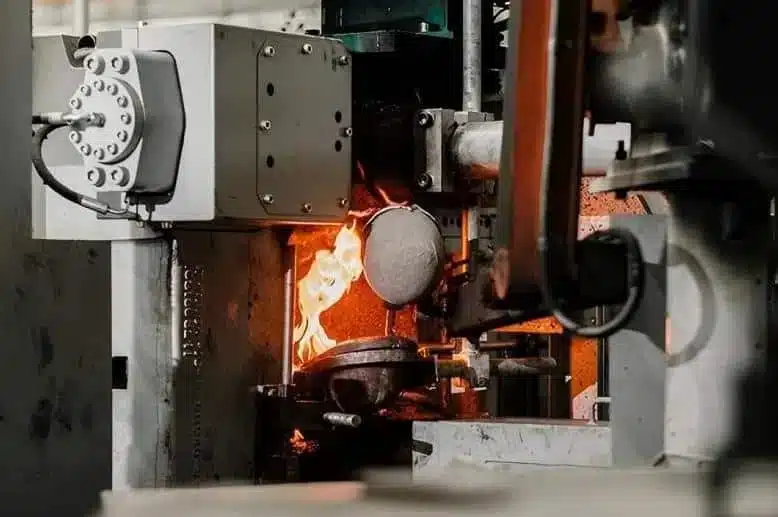
A key advantage of gravity die casting is full compatibility with heat-treatable aluminum alloys including A356, A319 and A206. Unlike high-pressure die casting, GDC produces low-porosity castings that can undergo T5/T6 heat treatment without structural failure.
Heat treatment refines internal grain distribution, significantly improving tensile strength, hardness, wear resistance and dimensional stability, ideal for high-load mechanical and medical component applications.
Factories use heat treatment to make parts fit special jobs. They can make parts stronger, harder, and more flexible. This helps parts handle stress and last longer. Heat treatment also helps parts resist repeated use. Parts can work again and again without breaking. Machinability and wear resistance improve too. This makes finishing and using parts easier.
Note: Heat treatment helps gravity die casting parts keep their shape and size. It also lowers stress inside the metal. This means parts stay steady during use.
The main good points of heat treating gravity die casting parts are:
- Higher strength and hardness
- Better flexibility and fatigue resistance
- Easier to finish and use
- Steadier shape and less stress inside
Factories can change gravity die casting parts to fit different needs. This helps makers and sellers give high-quality products to many industries. Car, electronics, and medical makers all get these benefits.
MORELUX’s team knows how to use heat treatment for the best results. This skill helps clients trust the quality and performance of each part.
Dimensional accuracy of gravity casting
Factories and sellers like gravity die casting for its accuracy. This process helps make parts that fit well and work right. Gravity die casting uses metal molds again and again. These molds control the shape and size of each part. Factories can get tolerances from ±0.1 to ±0.5 mm for every 100 mm. These numbers depend on how the mold changes with heat and cold.
The table below shows common tolerance ranges:
| Tolerance Range | Description |
|---|---|
| ±0.1–0.5 mm per 100 mm | Usual for gravity die casting. Mold changes with heating and cooling. |
Gravity die casting gives better accuracy than sand casting. Factories often see accuracy between ±0.3 and ±0.5 mm. Bigger or thicker parts may have more changes. High-pressure die casting can get tighter tolerances. Gravity die casting still meets most needs in factories.
Note: Gravity die casting gives better accuracy for car, electronics, and medical parts. Factories use this process for parts that must fit and work well.
The table below shows accuracy differences:
| Casting Method | Dimensional Accuracy |
|---|---|
| Gravity Die Casting | ±0.5% |
| Sand Casting | ±1-2% |
Gravity die casting helps factories make fewer mistakes and less waste. Buyers and factories trust this process for steady results.
Factories pick gravity die casting because it balances accuracy and speed. This process lets sellers give parts that match the design. Factories can count on gravity die casting to make parts with steady sizes. This helps every batch meet quality and work well.
Comparison of Gravity Casting with Other Methods
Gravity die casting is a trusted way to make parts. Factories use it when they need parts with tricky shapes and exact sizes. This method is used for cars, planes, electronics, and medical tools. Gravity die casting lets factories make special parts for each job. Wholesale buyers can get parts that fit their needs.
Gravity casting vs. high pressure die casting
Factories often look at gravity die casting and high pressure die casting. Both use molds that last a long time. But they are different in how fast they work, how much they cost, and how strong the parts are.
| Aspect | Gravity Die Casting | High Pressure Die Casting |
|---|---|---|
| Tooling Cost | Generally lower | Higher initial tooling cost |
| Per-Part Cost | More economical for medium-sized runs | Lower per-part cost at higher volumes |
| Production Volume | Economical for small to medium runs | Most cost-effective for high-volume production |
| Cycle Times | Longer cycle times | Faster cycle times due to automation |
Gravity die casting makes parts that are strong and can bend more. The slower speed helps the metal fill in well. This makes the inside of the part solid and cuts down on holes. High pressure die casting is good for making lots of parts fast. It also gives a very smooth outside.
- Gravity die casting makes parts that are tough and last.
- High pressure die casting is best for making many parts quickly.
Factories pick gravity die casting when they want good quality and exact sizes.
Gravity casting vs. sand casting
Factories also compare gravity die casting with sand casting. They look at how much it costs, how fast it is, and how much waste it makes.
- Gravity die casting costs less to start.
- Gravity casting can make 10 to 10,000 parts.
- Sand casting is good for 10 to 5,000 parts.
- Gravity casting is faster, taking 30 seconds to 5 minutes for each part.
- Sand casting takes at least 10 minutes for each part.
| Casting Method | Scrap Rate (%) |
|---|---|
| Gravity Die Casting | 2-5 |
| Sand Casting | 5-15 |
Gravity die casting makes less waste and keeps the quality the same. Factories like that they can make the same part again and again. The sizes are close to perfect.
Factories trust gravity die casting because it makes strong, exact, and efficient parts. This process works with many metals and for many jobs.
Gravity die casting helps factories make tricky shapes and exact parts for many uses.
Gravity die casting is great because it makes strong parts. The parts look good and are always the same. This process helps factories save money. Factories throw away less metal because there is less scrap. They can use the same molds many times. Gravity die casting works with different metals. New machines and better mold designs help factories work faster. These changes also make the parts more exact. Gravity die casting is good for the Earth. It lets factories recycle and make less trash. MORELUX uses smart machines and knows a lot about gravity die casting. They help factories get good parts every time. Big buyers and factories like gravity die casting. It makes parts that last, fit well, and are made quickly.
| Alloy Type | Characteristics | Applications |
|---|---|---|
| Aluminum Alloys | Lightweight, corrosion-resistant | Automotive, aerospace |
| Magnesium Alloys | High strength-to-weight ratio | Industrial equipment |
| Zinc Alloys | Dimensional stability, surface finish | Fluid and gas industry |
Factories that want good parts, fast work, and to save money pick gravity die casting for their jobs.
FAQ
What industries use gravity die casting?
Factories use gravity die casting in cars, electronics, phones, and medical tools. They pick this process for parts that must be strong and exact. The parts also need to look smooth. Big buyers trust gravity die casting because it gives steady quality every time.
How does gravity die casting improve part quality?
Gravity die casting uses metal molds again and again. These molds help factories make parts with close sizes and smooth surfaces. Quality checks make sure each batch meets world rules. This process cuts down on mistakes and helps buyers trust the parts.
Can gravity die casting handle high production volume?
Factories use gravity die casting for making many parts. They can make thousands of parts with the same quality. Suppliers like this process because it works fast and makes less waste.
What materials can be used in gravity die casting?
Gravity die casting works with aluminum, zinc, and magnesium alloys. Factories pick these metals because they are strong and light. They also resist rust. Factories can choose the right metal for each job.
Is gravity die casting cost-effective for manufacturers?
Gravity die casting saves money by making less waste. Factories use the same molds many times, so tooling costs go down. Suppliers get fast production and steady quality. This makes gravity die casting a smart choice for big orders.