

Aluminum die castings are precision metal parts made by forcing molten aluminum into a hardened steel mold under high pressure. This high-pressure method produces lightweight, strong components with tight tolerances and repeatable quality, making it ideal for mass production. As a dedicated aluminum die casting manufacturer, MORELUX supplies these components to automotive, lighting, telecom, and electronics customers across global markets. Engineers prefer aluminum die casting because it cuts material waste versus machining, resists corrosion in harsh environments, and scales from low-volume prototypes to millions of units per year. In the sections below, we explain how the process works, why it beats alternatives for high-volume programs, and where leading factories apply it today. Most guides stop at the definition – so we go further, into the production numbers and design rules that decide whether aluminum die casting is right for your part.
What Are Aluminum Die Castings and How the Process Works
Tooling and the Cold-Chamber Method
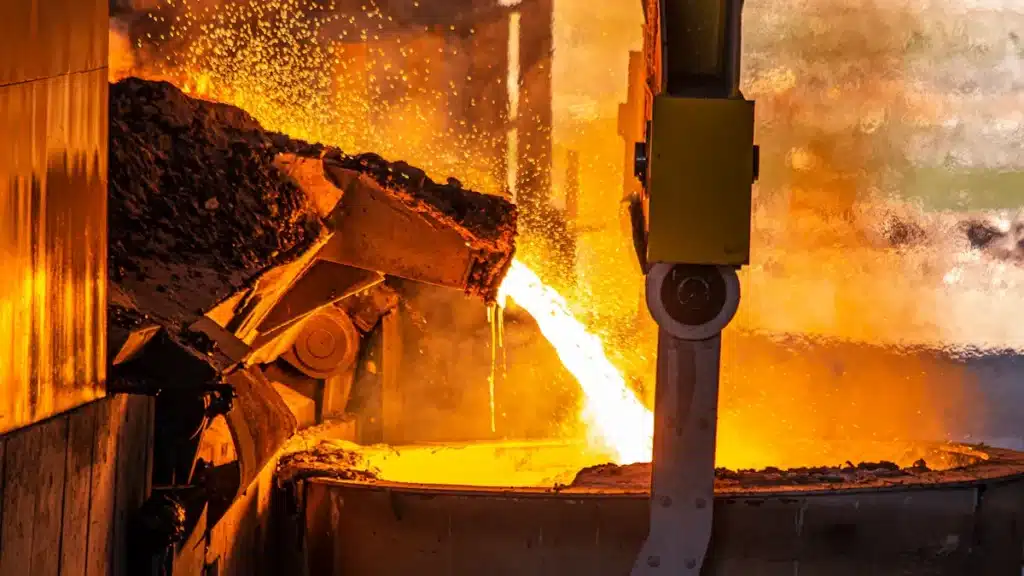
The aluminum die casting process starts long before metal meets the mold. MORELUX’s tooling engineers design each die in CAD with flow simulation, holding dimensional tolerance at ±0.02 mm and building hardened-steel molds rated for over 500,000 casting cycles. Tooling typically takes about 15 days, including simulation tests that reduce defects before production begins. Cold-chamber machines are the supplier’s primary method for aluminum. They pour molten metal into a cold shot chamber and inject it into the die at temperatures up to 700°C, using clamping forces from 280 to 2,000 tons. Aluminum oxidizes fast at molten temperature, so keeping it in a separate cold chamber limits exposure – the reason aluminum uses cold-chamber while lower-melt metals such as zinc use hot-chamber. Across 20+ years on 280-2,000T machines, we see dies reach 500,000+ cycles only when clamping pressure and cooling stay within limits; that discipline is what protects per-part cost at scale. That range lets one custom precision die-casting partner serve both tiny intricate brackets and large structural panels from a single factory.
From Casting to Finished Part
After injection and cooling, the part is ejected and routed to secondary operations that turn a raw casting into a ready component. These steps are also why one die-cast part can replace several stamped or welded pieces, cutting assembly labor for the buyer.
- CNC machining holds ±0.01 mm and drills holes as small as 1 mm; roughly 80% of castings are machined in-house.
- Surface finishing such as anodizing grows a ~15-micron protective layer, with Ra below 0.8 µm and RoHS-compliant chemistry.
- Assembly lines complete up to 5,000 units per day, verified by torque and electrical-continuity tests.
- Every batch is inspected with X-ray, CMM, and spectrometer checks before it ships – the quality backbone of a reliable supplier.
Good gating, venting, and overflow design keep porosity out of load-bearing sections; we confirm soundness with X-ray before shipping. This one-stop flow – tooling, casting, machining, finishing, and assembly – shortens lead time and keeps quality consistent from the first shot to the last.
Design Rules That Protect Cost and Quality
The same part can be cheap or costly to cast depending on a few design choices. These are the rules our engineers apply on every quote:
Use thin ribs instead of thick sections – uniform thin walls cut material use and porosity risk.
Keep wall thickness uniform (down to about 0.8 mm); sudden steps cause fill and warpage problems.
Add 1-3 degrees of draft on every face so the part releases the die without sticking or scoring.
Avoid undercuts and side holes where possible; they need slides that raise tooling cost and lead time.
Place the parting line so critical dimensions sit on one die half, holding tolerance stable over long runs.

Key Advantages of Aluminum Die Castings for B2B Buyers
For wholesale, OEM, and engineering teams, aluminum die castings win on three fronts: performance, cost, and sustainability. The strength-to-weight ratio is strong, with tensile strength above 270 MPa, while a self-forming oxide layer gives natural corrosion resistance. Thin walls as slim as 0.8 mm are possible without losing structure. Finishing chemistries are RoHS-compliant, and full material traceability supports automotive and medical programs.
- Cost at scale: tooling investment spreads across large orders, and typical batches of 10,000-50,000 parts drive the per-unit price down.
- Break-even: versus sand casting, die casting breaks even near 1,300-2,000 units and pulls further ahead as volume rises.
- Sustainability: scrap runners and rejects return to the furnace without losing quality; recycled aluminum needs only about 5% of the energy of primary metal.
- Lead time: one supplier for tooling, casting, and machining avoids multi-vendor handoffs, so new programs reach first articles faster.
A quick way to decide the process: below roughly 1,300 parts, sand casting or CNC machining is usually cheaper; past about 2,000 units, die casting wins on per-part cost; for walls under 1.5 mm or tight tolerance at volume, it is often the only economical route.
Process selection at a glance:
| Process | Sweet spot | Watch-out |
| Die casting | High volume, 2,000+ parts | High tooling cost up front |
| CNC machining | Low volume, fine detail | Slow, material-heavy per part |
| Sand casting | Low volume, large parts | Rough surface, ~±0.5 mm typical |
Energy to produce 1 kg of aluminum – recycled metal cuts use by roughly 95%:

Figure 1. Primary aluminum needs ~45 kWh/kg; recycled aluminum ~2.8 kWh/kg (~95% saving).
Alloy choice shapes the final part. MORELUX works with proven grades, each matched to the application and its load, environment, and finish needs:
| Alloy | Key property | Best use |
| A360 | Corrosion resistance + mechanical strength | Automotive, electrical parts |
| A380 | Most popular; strength + castability + finish | General enclosures |
| A383 | Higher silicon; better fluidity | Thin, complex parts |
| A413 | Higher strength / toughness | Structural components |
Aluminum vs Zinc and Magnesium
Buyers often weigh aluminum against zinc and magnesium. Aluminum leads on strength-to-weight – its tensile strength exceeds 270 MPa, while magnesium reaches only 150-200 MPa. Zinc gives a finer finish with less energy, but aluminum wins for structural parts that must stay light and resist heat and corrosion.
Where Aluminum Die Castings Are Used Across Industries
Few processes cover as many sectors as aluminum die casting. From its Malaysian automotive die-casting factory, MORELUX delivers parts that meet strict industry specifications across four main markets:
- Automotive: engine blocks, transmission cases, and brackets where lighter weight improves fuel efficiency and durability.
- Lighting: street-lamp and fixture housings; a quality powder coat survives 10-20 years in coastal air.
- Telecom & Electronics: signal enclosures, base-station housings, device frames, and heat sinks built on aluminum’s thermal conductivity.
- Medical: diagnostic housings and surgical components needing corrosion resistance and tight tolerance.
Because one supplier handles tooling through finishing, buyers avoid coordinating multiple vendors and keep traceability for safety-critical parts – a practical edge for automotive and medical programs.
Aluminum die castings stay the default choice for high-volume, lightweight, corrosion-resistant metal parts. With 20+ years of die casting experience, an experienced manufacturer and supplier can take your program from prototype to mass production – tooling, machining, finishing, and assembly under one roof. Requesting a sample batch is the fastest way to validate wall thickness, finish, and tolerance before committing to full production.