
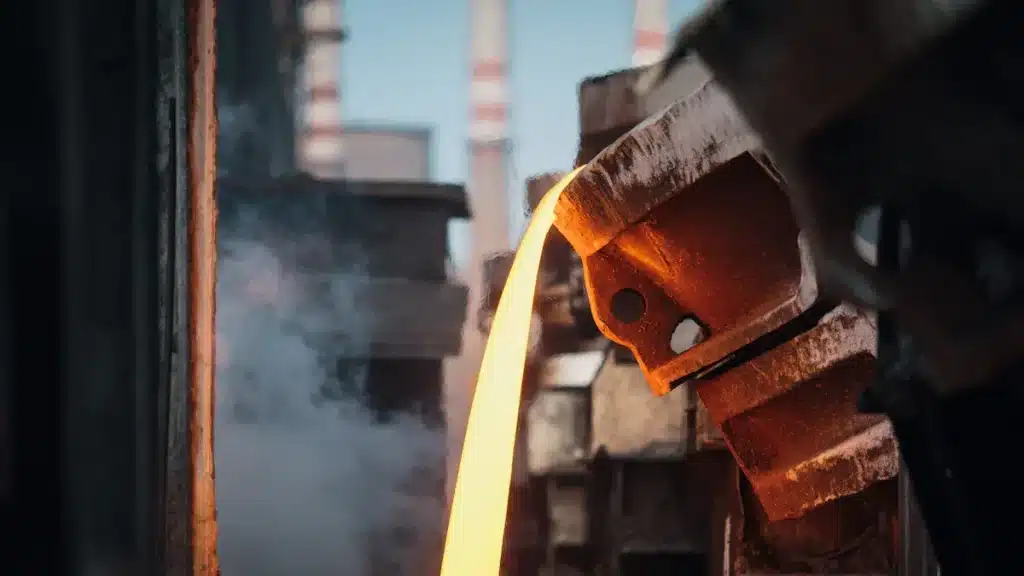
Die cast aluminum material is special because it possesses many excellent features. It is lightweight yet strong, and it resists rust effectively. Numerous companies utilize die cast aluminum due to its ability to maintain shape under various conditions. Additionally, it remains robust even at elevated temperatures. These characteristics make alloy die casting ideal for producing parts with intricate shapes while ensuring high-quality standards. Electronics die casting also employs this material, as it facilitates efficient heat and electricity conduction. Furthermore, it is non-magnetic and can be recycled, making it a sustainable choice.
Key Takeaways
Die cast aluminum is light but also strong. It works well in cars and planes. This helps cars use less gas. It also lowers pollution.
The material does not rust easily. It lasts longer in tough places. This makes it good for outdoor and factory use.
Die cast aluminum lets heat and electricity move fast. It works well in electronics and heat sinks. This helps devices work better.
The die casting process makes parts with exact sizes. It can make parts with tricky shapes. This helps parts fit together right. This is important for making good products.
Die cast aluminum can be recycled. This is good for the environment. Recycling saves energy. It also cuts down on waste when making things.
Key Properties of Die Cast Aluminum Material
Mechanical Strength & Durability
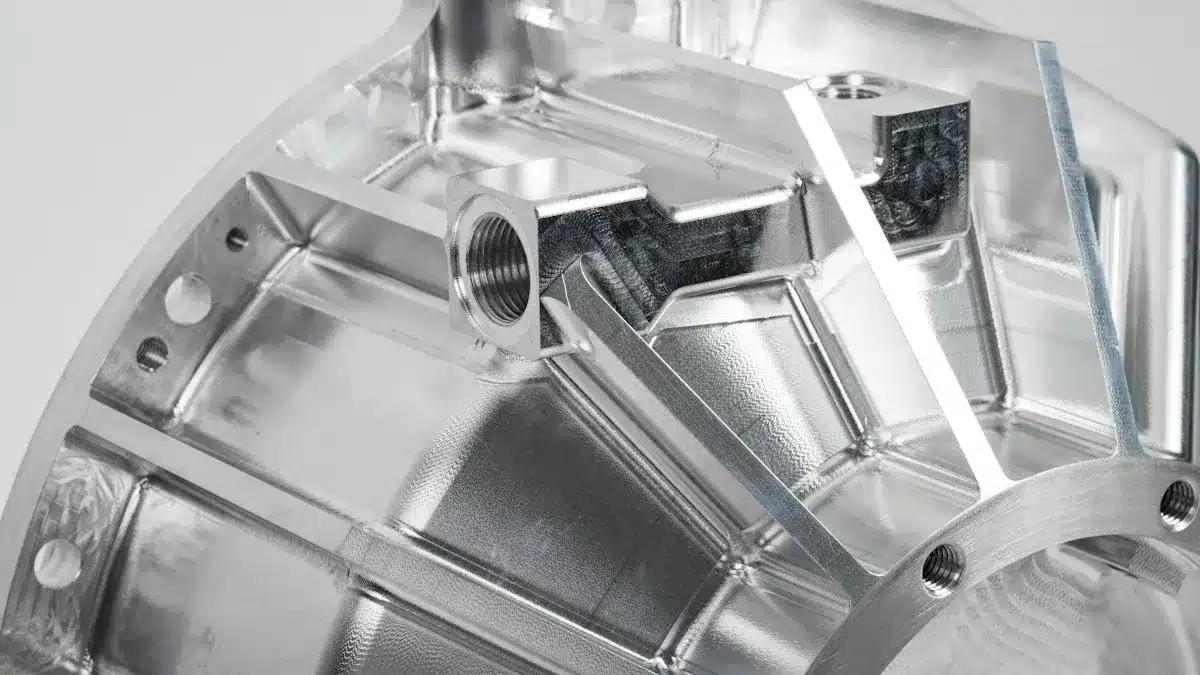
Die cast aluminum material is known for being very strong. Engineers use alloys like A380 to get a tensile strength of about 47 ksi (324 MPa). This means the material can handle heavy loads and does not bend easily. Die cast aluminum is also tough compared to other metals. Cast iron and steel are strong, but die cast aluminum is lighter and does not rust easily. It is less likely to break or become weak. The die casting process makes the material dense, so parts last longer even in tough places.
Material | Tensile Strength (ksi) | Tensile Strength (MPa) |
|---|---|---|
A380 Aluminum Casting | 47 | 324 |
Material | Durability | Weight | Corrosion Resistance | Impact Resistance |
|---|---|---|---|---|
Die Cast Aluminum | Moderate | Lightweight | High | Good |
Cast Iron | High | Heavy | Prone to rust | Brittle |
Steel | High (when treated) | Heavy | Moderate | Tough |
MORELUX uses modern machines and checks quality carefully. This helps every die cast aluminum part stay strong and last a long time.
Lightweight & Low Density
Aluminum die casting alloys are not heavy. Their density is about 2.7 grams per cubic centimeter. This makes die cast aluminum much lighter than steel or cast iron. Because it is light, products weigh less. This is important for cars and airplanes. Vehicles with aluminum parts use less fuel and pollute less. The good strength-to-weight ratio lets designers make strong but light parts.
Die cast aluminum alloys have a density of about 2.7 g/cm³.
Low density gives aluminum a great strength-to-weight ratio.
Cars with aluminum parts are lighter and save fuel.
Lighter cars pollute less and work better.
Evidence Description | Impact on Transportation and Energy Efficiency |
|---|---|
Lightweighting through aluminum reduces production and operating costs of electric vehicles | A lighter vehicle needs fewer batteries and less electricity to travel the same distance |
Aluminum provides CO2 emission savings in both ICE and EV | The aluminum electric vehicle emits 1.5 tons less of greenhouse gases over its complete life cycle |
Corrosion Resistance
Die cast aluminum material does not rust easily. Adding elements like zirconium, chromium, and rare-earth metals makes it even better at fighting corrosion. Chromium helps the material stay strong and resist rust. The die casting process forms a thin layer on the surface. This layer protects the metal from water and chemicals. That is why die cast aluminum works well outdoors and near water.
Adding 0.1 wt% zirconium (Zr) to Al-Si5Cu2-Mg alloy helps stop corrosion.
Chromium (Cr) makes Al-Si-Cu-Mg alloys stronger and more resistant to rust.
Rare-earth elements like lanthanum (La) also help prevent corrosion.
MORELUX treats the surface and uses good alloys. This makes every product resist rust and last longer.
Thermal & Electrical Conductivity
Aluminum die casting alloys move heat and electricity well. This makes die cast aluminum good for electronics, heat sinks, and car parts. Aluminum has a thermal conductivity of 237 W/m·K, which is higher than steel. Its electrical conductivity is between 35 and 38 MS/m. This is good for connectors and cases.
Material | Thermal Conductivity (W/m·K) |
|---|---|
Copper | 401 |
Aluminum | 237 |
Carbon Steel | 45-58 |
Stainless Steel | 15-30 |
Die cast aluminum has electrical conductivity of 35 to 38 MS/m.
This is enough for many electronic parts, like connectors and cases.
Aluminum is cheaper than copper for low and medium current uses.
Dimensional Accuracy
The die casting process makes parts with very exact sizes. Makers can get tolerances as close as ±0.002 inches for the first inch and ±0.001 inches for each extra inch. This lets them make complex shapes that fit together well. Using advanced controls, like automatic checks and temperature control, helps keep this accuracy.
Dimension (inches) | Tolerance (inches) |
|---|---|
First inch | ±0.002 |
Each additional inch | ±0.001 |
Example for 5” feature | ±0.006 |
Process Control Factor | Impact on Dimensional Accuracy |
|---|---|
Mold Design | Makes sure the final part has the right shape and size. |
Temperature Control | Keeps the material properties the same during casting. |
Automated Monitoring Systems | Finds and fixes problems quickly, making parts more precise. |
MORELUX uses special measuring machines and real-time checks. This ensures every aluminum die casting part is the right size.
Surface Finish Options
Die cast aluminum material can have many different surface finishes. These finishes make the material look better and work better. Common finishes are anodizing, powder coating, chromate conversion coating, electrophoretic painting, and polishing. Anodizing adds color and protects against rust. Powder coating gives a smooth, strong surface in many colors. Polishing makes the surface shiny and easy to clean.
Surface Finish Technique | Aesthetic Impact | Performance Impact |
|---|---|---|
Anodizing | Adds bright colors and a shiny look | Makes the surface harder and more resistant to rust |
Powder Coating | Many colors and a smooth finish | Protects against rust and is affordable |
Chromate Conversion Coating | Keeps the original look of the surface | Good base for paint and protects the metal |
Electrophoretic Painting | Covers well and resists rust | Hard to coat deep areas |
Polishing | Makes the surface shiny like a mirror | Helps stop rust and makes cleaning easier |
Powder coating stops chipping, scratching, and fading, and comes in many colors.
Anodizing makes a hard, scratch-resistant layer that protects against rust.
Anodizing is good for the environment and helps paint stick better.
MORELUX offers many finishing choices. This makes sure every die cast aluminum part looks good and works well.
Note: MORELUX checks quality at every step. They use advanced tools like CNC machines, X-ray detectors, and spectrographs. Their ISO 9001:2015 certification shows they care about quality and making customers happy.
Applications of Die Cast Aluminum
Automotive Components
Car makers use aluminum die casting for many car parts. They make engine blocks, transmission cases, wheels, and brackets this way. These parts are both strong and light. Lighter cars need less energy to move. This helps cars use less fuel and make less pollution. Using aluminum also makes cars handle and speed up better. Electric cars can go farther because they weigh less.
Benefit | Description |
|---|---|
Better fuel economy | Lighter vehicles consume less fuel, leading to improved fuel efficiency. |
Lower emissions | Reduced weight results in fewer emissions during operation. |
Enhanced performance | Lightweight components improve vehicle handling and acceleration. |
Increased battery range | Lighter vehicles enhance the range of electric vehicles. |
MORELUX makes die casting parts for cars. They make sure every part is safe and works well.
Electronics & Electrical Uses
Many electronics use aluminum die casting to stay cool and safe. Big data servers need die cast heatsinks to keep working well. Solar power inverters and wind power systems use special aluminum heatsinks. These parts help control heat and make machines last longer.
Big data servers use die cast heatsinks for better uptime.
Photovoltaic inverters rely on custom aluminum heatsinks for efficient solar power.
Wind power systems need durable aluminum heatsinks for harsh conditions.
Aluminum die casting lets companies make small and exact parts for electronics. Tight fits make sure cases and connectors work right. This helps make devices smaller and lighter. Die casting gives strong parts that last a long time.
Consumer & Industrial Products
Die cast aluminum is used in many things people and factories use. Makers use it for power tools, kitchen appliances, and lights. The aerospace industry likes aluminum for plane parts that are light and strong. Renewable energy systems use aluminum for brackets and frames. Farm machines, medical tools, and sports gear also use die cast aluminum because it is tough.
Process/Service | Description |
|---|---|
Aluminum Alloy Selection | Choosing the right alloy based on application for optimal performance and cost-effectiveness. |
Precision CNC Machining | Advanced machining for tight tolerances, ensuring parts meet specifications. |
Surface Treatments | Various treatments to enhance corrosion resistance and aesthetics, including plating and coating. |
Assembly and Sub-Assembly | Custom assembly services to streamline production and reduce supply chain complexity. |
Quality Control Measures | Strict quality checks at every stage, including raw material inspection and process monitoring. |
MORELUX makes special die cast aluminum parts for each job. Their careful work and checks make sure products are good for every industry.
Note: Die cast aluminum is used in many ways because it is strong, light, and easy to shape. It helps make new things in cars, electronics, and products people use.
Factors Affecting Aluminum Die Casting Properties
Alloy Selection
Picking the right aluminum alloys is very important. Each alloy has different elements like silicon, copper, or magnesium. These elements change how strong or heat-resistant the alloy is. Engineers pick alloys based on what the final product needs. Some alloys are stronger. Others stop rust better.
If you raise the casting temperature, the alloy gets less dense and does not move heat as well. This happens because the metal takes in more gas.
Higher temperatures also make the alloy less bendy. This means it can crack more easily.
The best strength and toughness happen at a certain temperature, usually about 650 °C. If the temperature goes up more, the crystals get bigger. Then, the alloy does not work as well.
Aluminum alloys must fit what the job needs. Car parts need alloys that are strong and light. Electronics need alloys that let electricity flow well. MORELUX uses special tests to pick the best alloy for each job.
Process Variables
Process variables are very important for making good die cast aluminum parts. Things like temperature, pressure, and mold design change how the part turns out. Workers must watch the pouring temperature, mold temperature, and injection pressure. If they do not, the part can crack or look bad.
Controlling these things helps make parts that are always good. MORELUX uses smart machines to control every step. Automatic systems watch the process and change settings to keep everything just right.
Quality control is very important in aluminum die casting. Companies use special tools to find and stop problems. They try to prevent mistakes before they happen and check everything carefully. This keeps quality high and saves money later. MORELUX follows strict rules and uses X-ray detectors and spectrographs. This makes sure every aluminum part is good.
A table below shows how process variables affect aluminum alloys:
Process Variable | Effect on Aluminum Alloys |
|---|---|
Pouring Temperature | Changes how dense and heat-conducting the alloy is |
Mold Temperature | Changes how smooth the surface is and how big the crystals are |
Injection Pressure | Changes how strong the part is and how many mistakes happen |
Aluminum alloys act differently when process variables change. Careful control makes sure the products are strong and high-quality.
Die Cast Aluminum Material Quick Reference
Summary Table of Key Properties
This table lists important facts about die cast aluminum. These numbers help engineers and designers pick the right material for their work.
Property | Value |
|---|---|
Density (ρ) | 2.70 g·cm⁻³ (≈2700 kg·m⁻³) |
Typical as-cast tensile strength | ~70–300 MPa |
Typical heat-treated tensile strength | ~200–350+ MPa |
Thermal conductivity | 100–180 W·m⁻¹·K⁻¹ |
Electrical conductivity | ≈ 37 ×10⁶ S·m⁻¹ |
Melting point | 660°C |
Die cast aluminum weighs less than cast iron and steel. It melts at a lower temperature, so casting uses less energy.
Key Benefits of Die Cast Aluminum:
Lightweight but strong: Aluminum parts make vehicles and machines lighter.
Great corrosion resistance: Aluminum lasts longer in tough places.
High thermal conductivity: Aluminum helps cool electronics and engines.
Cost-effective: Aluminum is cheap and easy to recycle.
Exact shapes and sizes: Aluminum die casting makes detailed and accurate parts.
These properties make aluminum a top choice for cars, electronics, and factories. Aluminum gives strength, durability, and efficiency. This helps new ideas grow in many industries.
Die cast aluminum has many good points for makers and engineers. It is light, strong, and does not rust easily. Many industries like that it moves heat and electricity well. It can also be shaped into detailed parts with great accuracy.
Makers can make lots of parts quickly and recycle old ones. This saves money over time.
Car, plane, and electronics companies use die cast aluminum for tough and exact parts.
Picking die cast aluminum and teaming up with a trusted company like MORELUX helps businesses get parts that work well and last long.