
The typical pressure for the high pressure die casting process ranges from 10 to 200 MPa, allowing molten metal to be forcefully injected into molds. This advanced technique enables the creation of complex shapes, thin-walled components, and parts with exceptional dimensional accuracy. By minimizing air bubbles, the process enhances the strength and integrity of each piece. High pressure die casting process applications include lighting die casting and copper die casting, making it ideal for producing components for automotive, electronics, and medical devices. At MORELUX, our modern machinery and expert team ensure every project is completed with precision and care.
The table below highlights the special features of the MORELUX HPDC Die Casting product:
Unique Feature | Description |
|---|---|
Advanced Equipment | Machines from 180T to 2,000T support a wide range of high pressure die casting process applications. |
Experienced Team | Over twenty years of expertise in alloys and process control, including lighting die casting and copper die casting. |
Quality Control System | Rigorous standards guarantee superior performance for all die castings. |
One-Stop Service Approach | Comprehensive services including die casting, CNC machining, anodizing, powder coating, and assembly. |
High Dimensional Accuracy | Rapid cooling delivers smooth finishes and outstanding precision. |
Strong Mechanical Properties | Durable castings suitable for demanding applications, such as lighting die casting and copper die casting. |
Key Takeaways
High pressure die casting uses pressure from 10 to 200 MPa. This helps make strong and exact parts. The process can make shapes that are hard to create. It also makes thin-walled pieces. This is good for car and electronics companies. Picking the right material and pressure is very important. It helps make better castings with fewer mistakes. High pressure die casting works faster than other ways. It also makes parts with smooth surfaces and correct sizes. New machines at MORELUX can use pressure up to 30,000 psi. This makes sure parts are strong and dependable.
High Pressure Range in Die Casting
Standard and Maximum Pressures
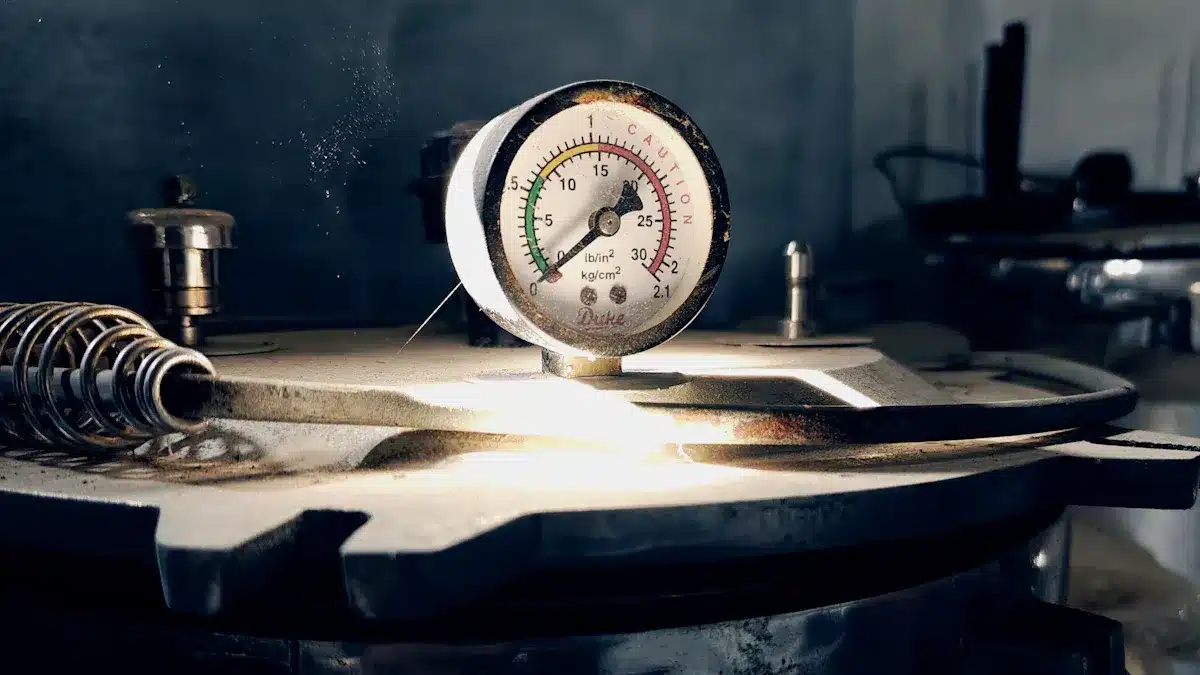
High pressure die casting uses different pressures to shape metal parts. The pressure needed depends on the machine and the part’s design. Most machines use between 150 and 1200 bar. This is about 2,200 to 17,400 psi. Many machines work best at 300 to 700 bar. That equals 4,350 to 10,150 psi. Some advanced machines can go even higher. This is helpful for thin or detailed parts.
The table below shows the usual pressure ranges for high pressure die casting:
Pressure Range | Typical Value (bar) | Typical Value (psi) |
|---|---|---|
Minimum | 150 | 2,200 |
Maximum | 1200 | 17,400 |
Common Value | 300-700 | 4,350-10,150 |
MORELUX machines can reach up to 30,000 psi. This helps make strong and accurate parts. The process uses high pressure to push molten metal into the mold fast. This fills every part of the mold, even small or thin areas.
Why High Pressure is Needed
High pressure casting is important for many reasons. It pushes molten metal into the mold quickly. This helps fill every space, even tiny corners. High pressure die casting lets us make parts with tricky shapes and small details.
High pressure fills the mold completely for complex shapes.
It helps the metal cool quickly, keeping the casting strong.
Cooling is even, so there are fewer defects like air bubbles.
The process gives better surface finish, density, hardness, and strength.
High pressure die casting also helps the metal flow better. The pressure helps the metal reach all parts of the mold. This makes parts with smooth surfaces and exact sizes. It also lowers the chance of problems like air bubbles or shrinking.
High pressure helps make a fine structure inside the metal. This makes the parts strong but not heavy. Keeping the pressure steady while the metal cools is important for good quality.
High pressure die casting is used in many fields. These include cars, planes, electronics, and medical devices. The process helps companies make strong and reliable parts. High pressure casting makes parts with tight sizes and great strength.
High pressure die casting is special because it is fast, accurate, and strong. The process at MORELUX uses modern machines to meet tough pressure needs. This makes sure every part is high quality and works well.
High Pressure Die Casting vs Other Methods
Low Pressure Die Casting Comparison
Low pressure die casting uses much less pressure than high pressure casting. The pressure for low pressure die casting is between 0.7 and 1.5 bar. High pressure die casting uses much higher pressure, from 700 to 2500 bar. This big difference changes how each process works and what parts they can make.
Die Casting Type | Pressure Range (bar) |
|---|---|
Low Pressure Die Casting | 0.7 to 1.5 |
High Pressure Die Casting | 700 to 2500 |
In low pressure die casting, molten metal moves slowly into the mold. This makes parts with fewer air pockets and allows for bigger castings. High pressure casting pushes metal in very fast. This helps make small, thin, and detailed parts quickly. The table below shows more ways these two methods are different:
Low-Pressure Casting | High-Pressure Casting (Die Casting) |
|---|---|
Pressure is low, less than 0.08 MPa, up to 0.15 MPa in rare cases. | Pressure is much higher, reaching hundreds of MPa. |
Metal flows slowly, about 150mm/s. | Metal flows very fast, up to 120m/s. |
Mold material requirements are low. | Mold must be strong, only metal dies are used. |
Can make small, medium, and large castings. | Best for small and medium-sized castings. |
No porosity inside the casting. | Some porosity may occur. |
Longer casting cycle, slower production. | Shorter cycle, faster production. |
Lower operating cost. | Higher equipment cost. |
Gravity Die Casting Comparison
Gravity die casting uses normal air pressure. The molten metal flows into the mold by gravity. The pressure for gravity die casting is much lower than high pressure casting. The table below compares both methods:
Casting Method | Pressure Range | Cycle Time | Wall Thickness | Porosity | Tolerance |
|---|---|---|---|---|---|
High Pressure Die Casting (HPDC) | 150-1200 bar | 30-180 seconds | 1.5-6mm | 2-8% | ±0.1-0.3mm |
Gravity Die Casting (GDC) | Atmospheric pressure | 2-15 minutes | 3-25mm | 0.5-3% | ±0.2-0.8mm |
High pressure die casting is great for making tricky shapes and thin walls. It uses high pressure to push metal into every part of the mold. This method is good for parts that need exact sizes and smooth surfaces. High pressure casting is also fast and very accurate.
High pressure die casting makes thin-walled parts.
The process gives strong and tough parts.
It makes parts with exact sizes and smooth surfaces.
High pressure casting is best for making lots of small or medium parts.
The fast process helps make lighter parts.
Note: High pressure die casting uses more energy than other ways. Factories may use millions of kilowatt-hours each year. Making less scrap helps save energy and lower pollution.
High pressure casting has many benefits over low pressure and gravity casting. It is best for making strong, light, and detailed parts quickly. The pressure in die casting is very important for the quality and features of the finished part.
Factors Affecting Pressure Selection
Material and Alloy Type
The material you pick is very important in high pressure casting. Each alloy acts differently during the process. Some alloys need more force to fill the mold. Others can flow into the mold more easily. For example, aluminum A380 is good for many parts and uses medium pressure. Aluminum A383 flows better, so it needs less pressure for thin walls. Aluminum A390 is tough and needs higher pressure to make strong parts. Zinc alloys are very accurate, but the pressure depends on the part’s design. Magnesium is very light and needs the pressure to be watched closely.
Alloy Type | Characteristics | Impact on Pressure |
|---|---|---|
Aluminum A380 | General applications | Moderate pressure required |
Aluminum A383 | Good fluidity for thin walls | Lower pressure needed for filling |
Aluminum A390 | High wear resistance | Higher pressure for durability |
Zinc Alloys | High dimensional accuracy | Varies by design |
Magnesium | Lightest weight | Careful pressure management |
Engineers also think about things like strength, rust resistance, weight, surface look, and cost. Picking the right material helps make better castings and keeps the process working well.
Part Complexity
The shape and size of a part change how much pressure is needed. Parts with thin walls or lots of details need more pressure. This helps the metal fill every small space in the mold. Simple shapes or thick parts do not need as much pressure. High pressure die casting is best for parts that need exact sizes and smooth surfaces. Meeting these needs makes the castings better and lowers mistakes.
Thin walls need more pressure.
Detailed shapes need steady pressure.
Simple parts can use less pressure.
Machine Capabilities
The machine must be able to handle high pressure casting. Machines have limits for how hard they can clamp and inject. Clamping force keeps the mold shut tight. Injection force pushes the metal into the mold. Both are needed for good casting.
Parameter | Description |
|---|---|
Clamping Force | Keeps the die closed and prevents leaks during injection. |
Injection Force | Depends on cylinder size and sets the maximum pressure for the process. |
New machines can use higher pressures than old ones. They use strong steels and smart designs for better results. The right machine helps meet all the needs for high pressure die casting and keeps everything running smoothly.
Pressure and Product Quality
Surface Finish and Accuracy
High pressure die casting helps make parts that are high quality. The process uses high pressure to push molten metal into the mold. This fills every small space and lowers the number of air bubbles. The method makes strong castings with smooth surfaces and exact sizes. Many companies use this process because it gives good parts right from the mold. Most of the time, there is no need for extra work after casting. When engineers choose the right pressure, the surface looks better and the size is more accurate. If the pressure is not set right, problems can happen. Some common problems are:
Gas porosity, which means bubbles get trapped and make the part weak.
Flash or burrs, which happen when too much metal leaks out from high pressure.
Cold shut, which is when the metal does not join well and leaves weak lines.
Good high pressure die casting needs careful control of the process. Setting the pressure right helps stop problems and makes strong castings. The process also works better with good cooling and strong molds. These keep the temperature even and make the parts more reliable. Experts say that having even metal inside and fewer bubbles is important for making good parts every time. If the metal is mixed well, it spreads stress and stops cracks from forming.
If defects are not spread out evenly, parts can break early. Even metal and fewer bubbles help spread stress and make the part better.
Common High Pressure Die Casting Process Applications
Many industries use high pressure die casting to make good parts. Car companies use it to make engine blocks, gearbox cases, and cylinder heads. These parts must be light and strong to help cars use less fuel and work better. Airplane engineers use high pressure casting for brackets, frames, and landing gear. Electronics makers use it for cases and heat shields. Medical device makers use high pressure die casting for covers and small, exact parts.
Application Sector | Pressure Range (MPa) | Pressure Range (psi) |
|---|---|---|
General Die Casting | 10 to 175 | 1,500 to 25,400 |
Automotive | 30 to 120 | 4,351 to 17,400 |
High pressure die casting lets companies make tricky shapes with good quality and accuracy. The process means fewer parts are needed, so building things is easier and costs less. High pressure casting is good for making lots of parts fast and gives strong, reliable castings for tough jobs. MORELUX uses new technology to meet the high standards for cars, planes, electronics, and medical devices.
High pressure die casting uses strong pressure to make parts very accurate and strong. This method is special because it can make parts with tight sizes, thin walls, and smooth surfaces. The table below shows how high pressure die casting is better than other ways for making parts with good quality:
Aspect | Pressure Die Casting | Gravity Casting | Other Methods |
|---|---|---|---|
Dimensional Accuracy | Superior | Inferior | Varies |
Tolerances | ±0.1mm | Wider | Varies |
Control over Metal Flow | High | Low | Varies |
Consistency of Dimensions | High | Low | Varies |
Manufacturers pick high pressure die casting when they need strong parts with tricky shapes, quick production, and parts that always turn out right. MORELUX uses HPDC to make sure every part is made well and stays strong.