
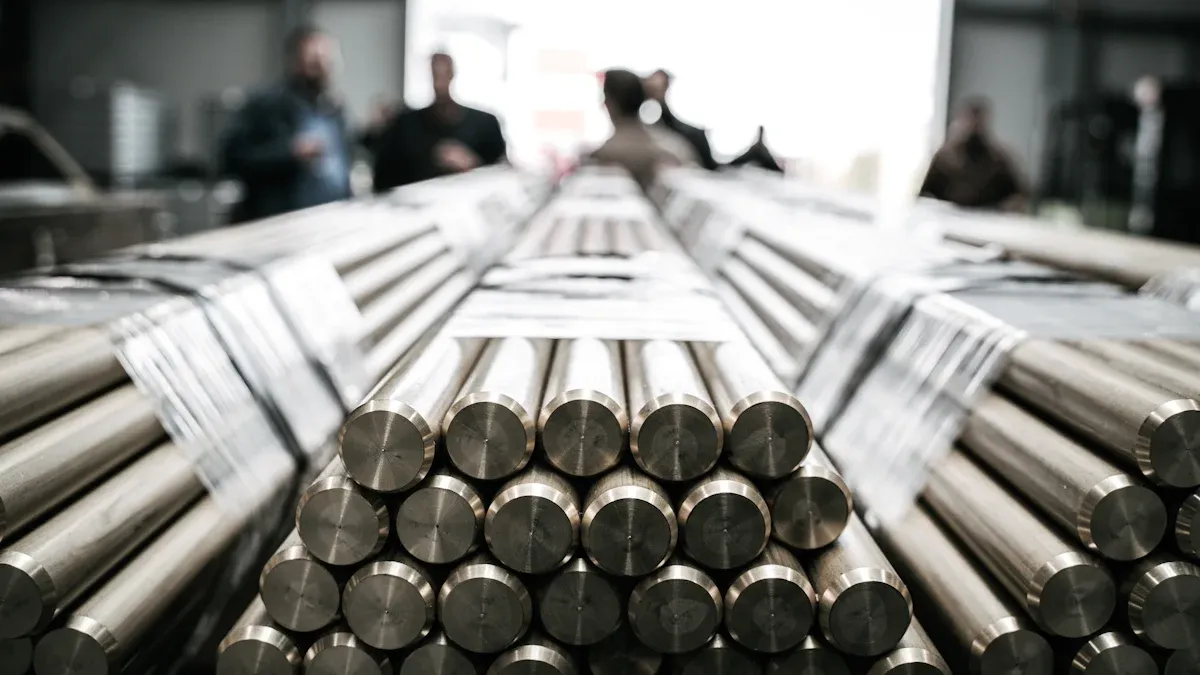
HPDC die casting utilizes non-ferrous alloys for precision and efficiency. The most popular aluminum die casting materials include aluminum, zinc, magnesium, and copper alloys.Manufacturers select these materials due to their lightweight nature and excellent strength-to-weight ratio. These materials are easy to cast, resistant to rust, and recyclable. For instance, aluminum die casting produces strong and lightweight components that are widely used in automotive and electronic applications. Additionally, copper die casting offers exceptional conductivity, making it ideal for industrial settings. With over 20 years of experience, MORELUX is dedicated to maintaining high quality in every project.
Key Takeaways
High pressure die casting mostly uses non-ferrous alloys. These include aluminum, zinc, magnesium, and copper. These metals are light and strong.
Aluminum alloys like A380 and A356 are very popular. They are strong but not heavy. They do not rust easily. This makes them good for cars and electronics.
Zinc alloys are good for making detailed shapes. They do not cost much. People use them for small gears and electronic cases.
Magnesium alloys are the lightest choice. They are strong and save energy. They work well in planes and cars.
Picking the right material is very important. It helps make sure die-cast parts are good and work well. You must think about strength, weight, and what you need the part to do.
Main Die Casting Materials

Aluminum Die Casting Alloys
Aluminum is a very common die casting material. It is strong, light, and does not rust easily. Aluminum die casting alloys are simple to shape. They also look smooth when finished. Many car and electronics parts use these alloys. They can make detailed shapes with great accuracy.
Some popular aluminum alloys for HPDC are A380, A356, A413, and A360. Each alloy has its own mix of elements and special features. The table below lists some well-known aluminum die casting alloys and their main traits:
Alloy Type | Composition (wt%) | Notes |
|---|---|---|
A380 | 8.5% Si, 3.5% Cu | Most common for die casting |
A356 | 7% Si, 0.45% Mg, 0.35% Cu | Used in aircraft and automotive |
A413 | 12% Si, 1% Cu | Good resistance to hot cracking |
A360 | 8.5% Si, 0.5% Mg | Good corrosion resistance |
ADC12 | 12% Si | Excellent mechanical properties |
Aluminum die casting alloys are used in many fields. Some common uses are:
Transmission cases
Cylinder tops
Engine blocks
Control arms
Structural frames
Gears
Pistons
Housings
Electronic housings
Connectors
These materials help make cars and electronics lighter. They also help save fuel and keep things cool.
Zinc Alloys
Zinc alloys are another key group for die casting. Types like Zamak 2, Zamak 3, Zamak 5, and ZA 8 are often used in HPDC. These alloys are strong and tough. They are also easy to cast into small, detailed parts.
The table below lists some common zinc die casting alloys and their features:
Alloy Type | Elongation (%) | Tensile Strength (MPa) | Yield Strength (MPa) | Hardness (HB) | Density (g/cm³) | Melting Point (°C) |
|---|---|---|---|---|---|---|
Zamak 2 | 7 | 359 | 283 | 100 | 6.60 | 385 |
Zamak 3 | 10 | 268 | 221 | – | 6.60 | 384 |
Zamak 5 | 7 | 331 | 228 | 91 | 6.60 | 383 |
Zamak 7 | 13 | 283 | 221 | 80 | 6.60 | 384 |
ZA 8 | 10 | 374 | 290 | 103 | 6.30 | 390 |
Zinc alloys have many good points:
Can make detailed shapes
Flexible for design changes
Strong and tough
Do not rust easily
Conduct heat and electricity well
Save money
Make dies last longer
Give a nice finish
Zinc die casting alloys are used for small gears, connectors, and hardware. They are also used for electronic housings. Their low melting point helps dies last longer and saves energy.
Note: Zinc alloys let you cast very detailed shapes. They flow well and fill thin spaces. This helps make parts with tight fits.
Magnesium Alloys
Magnesium is the lightest metal used in die casting. Magnesium die casting alloys, like the AZ series and Mg-Zn-Zr alloys, are strong and bend without breaking. They are easy to cast and cut. Magnesium alloys melt at lower temperatures than aluminum. This saves energy when making parts.
The table below compares magnesium die casting alloys with other metals:
Alloy Type | Properties | Applications |
|---|---|---|
Mg-Zn-Zr Alloys | Good casting properties, hot working properties, corrosion resistance | Used in aviation for high-strength parts like aircraft hubs and engine seats |
AZ Series Alloys | High strength, good ductility, excellent casting characteristics | Commonly used in automotive and electronics industries |
Aluminum Alloys | Higher melting point, good strength-to-weight ratio | Widely used in various industries including automotive and aerospace |
Zinc Alloys | Good corrosion resistance, lower strength compared to magnesium alloys | Often used in die casting for parts requiring good surface finish and corrosion resistance |
Magnesium alloys are used in many areas. Some examples are:
Car parts
Airplane parts
Electronic housings
Textiles
Building materials
Military gear
Magnesium die casting alloys have many benefits:
Very light (about 1.8g/cm³)
Strong for their weight
Conduct heat well (150-180 W/m·K)
Over 90% can be recycled
These features make magnesium alloys great for parts that must be strong but light, like wheel hubs and engine parts.
Copper-Based Alloys
Copper-based alloys, such as brass and bronze, are used for special HPDC jobs. These alloys are strong and conduct heat and electricity very well. Brass is tough and does not wear out fast. It is often used in plumbing and electrical parts.
The table below shows some copper-based die casting materials and what they are used for:
Alloy Type | Characteristics | Applications |
|---|---|---|
Brass | High wear resistance, excellent conductivity | Plumbing fittings, electrical components, industrial |
Bronze | High strength, excellent conductivity | Specialized HPDC, medical applications |
Copper-based alloys are used in:
Electrical parts
Plumbing fixtures
Marine equipment
Industrial machines
The main good points of copper-based die casting materials are:
Carry electricity well
Do not rust easily
Kill germs, which helps in plumbing
MORELUX has many die casting materials, like strong aluminum, zinc, magnesium, and copper-based alloys. Their products always meet or beat industry standards for quality and performance.
Why Choose These Materials
Key Properties for HPDC
Picking the right materials is important for hpdc die casting. Each alloy has special features that help make strong and detailed parts. Aluminum alloy is known for being easy to pour and very strong. This means the melted metal can fill tricky molds fast and evenly. The table below shows how different aluminum alloys compare in important ways:
Alloy Type | Fluidity | Strength | Thermal Conductivity | Additional Properties |
|---|---|---|---|---|
Al-Si Alloys | Very good | Good | Moderate | Wear-resistant, corrosion-resistant |
Al-Si-Cu Alloys | Good | Better | High | Handles high thermal loads |
Al-Mg Alloys | Moderate | Superior | High | Lightweight, excellent corrosion resistance |
A413 | Superior | Moderate | Enhanced | Reduced porosity, improved fluidity |
These features help the alloys make thin parts that stay strong. High fluidity lets the metal reach every part of the mold. Good thermal conductivity helps parts cool down fast and evenly. Corrosion resistance keeps parts working well, even in hard places.
Application Advantages
Manufacturers pick these materials for high pressure die casting because they work for many jobs. Aluminum alloy and other non-ferrous materials are used to make car parts, electronics, and more. Some common uses are:
Automotive components: transmission housings, engine brackets, structural supports, heat sinks
Consumer electronics housings: laptop bodies, mobile device frames, speaker enclosures
These materials have many good points:
They help make lots of parts quickly and cheaply
Thin parts stay light and strong
Parts look smooth, so less extra work is needed
There are fewer mistakes and less waste, which saves money
Tools last longer and need less fixing
The features of these materials help meet world quality rules. The table below shows how they help:
Property | Contribution to Quality Standards |
|---|---|
High Strength | Ensures durability and reliability in critical applications |
Excellent Fluidity | Allows for precise filling of molds, enhancing surface finish |
Corrosion Resistance | Extends the lifespan of components, meeting durability standards |
These features make hpdc die casting a great choice for companies that need good quality and fast work.
Mold Materials in High Pressure Die Casting

Common Mold Materials
Manufacturers need strong mold materials to make good HPDC parts. Most HPDC molds use special steel grades. Tool steel is the best choice for molds. It can take high heat and be used many times. H13 steel is used a lot because it is very hard and handles heat well. P20 steel is also common and works for medium-size jobs.
The table below explains why tool steel is important for HPDC molds:
Property | Description |
|---|---|
Exceptional hardness | Tool steel stays sharp and keeps its shape for many uses. |
Temperature stability | Hot-work steel stays strong even when it gets very hot. |
Wear resistance | Carbide in steel helps molds last longer and keep parts good. |
Dimensional reliability | Steel does not bend and keeps parts the right size. |
Toughness | Some types, like S7, can take hits and do not crack. |
Heat-treat flexibility | Tool steel can be made harder or softer for different jobs. |
Some molds use beryllium-copper alloys for inserts. These alloys help cool the mold and make it last longer. But steel is still the main mold material. It gives the best mix of strength, toughness, and price.
Mold Selection Criteria
The right mold material depends on how many parts you need and how hard the part is to make. For small jobs, makers use aluminum or soft steel molds. For medium jobs, pre-hardened P20 steel is a good pick. For big jobs, hardened tool steel like H13 is best.
Production Volume | Recommended Mold Material |
|---|---|
Low (under 1,000 parts) | Aluminum or soft steel |
Medium (up to 500k) | Pre-hardened P20 steel |
High (500k+) | Hardened tool steel (H13, stainless grades) |
MORELUX uses special ways to get molds ready and check quality. Their team watches every step to stop mistakes. They use sensors and pressure checks to make the process better. These steps help every mold meet tough rules and make good parts each time.
Tip: Using good mold materials and careful work helps molds last longer and make better parts.
Material Selection for HPDC Die Casting
Application Requirements
Choosing the right material for hpdc die casting depends on what the part must do. Engineers think about how strong and light the part should be. They also look at how the part will be used. Car and airplane parts need to be strong but not heavy. HPDC can make parts with tricky shapes and high detail. This is important for cars and planes.
The table below shows what matters most when picking materials for different jobs:
Factor | Description |
|---|---|
Material Properties | Strength, ductility, and weight help parts work well in cars and planes. |
HPDC Process Efficiency | Making complex shapes and precise parts is key for design needs. |
Alloy Selection | Picking aluminum or magnesium alloys changes how the part performs and its cost. |
Process Parameters | How the die casting process is set up affects the quality of the finished part. |
Lightweight Materials | Lighter parts help cars and planes use less fuel and work better. |
Non-Heat Treatable Alloys | Some alloys do not need extra heat treatment, saving time and money. |
Sustainability is important too. Many companies use recycled aluminum in hpdc. This helps the earth and saves energy. New tools like digital simulation and 3D printing help design better molds. These tools also help cut down on waste.
Tip: Always pick a material that fits the part’s job. This makes products strong, safe, and efficient.
Material Limitations
Every material has some limits in hpdc. Some common problems are porosity, cold shuts, and shrinkage defects. These problems can make parts weaker or less smooth. The table below lists some usual issues:
Defect Type | Description | Impact on Manufacturing |
|---|---|---|
Porosity | Small holes from trapped gas | Makes parts weaker |
Cold Shuts | Metal does not fill the mold completely | Causes weak spots |
Shrinkage Defects | Material changes size as it cools | Can lead to wrong part sizes |
Flash Formation | Extra material leaks out of the mold | Needs extra cleaning |
Surface Defects | Marks or rough spots on the part | May look bad or not work as needed |
Misruns | Metal does not fill the mold | Part is incomplete |
Die Erosion | Mold wears out over time | Lowers accuracy and raises costs |
Soldering | Metal sticks to the mold | Hard to remove parts |
MORELUX fixes these problems with special solutions. They use smart tools like simulation software and X-ray checks. Vision systems help find and fix problems early. Their team picks the best material for each job. They use aluminum for cars, zinc for electronics, and copper for plumbing. They also use recycled materials and save energy to help the planet.
The main materials used in hpdc die casting are aluminum, magnesium, and zinc. Each one has its own special benefits:
Material | Properties |
|---|---|
Aluminum | Lightweight, strong, corrosion-resistant |
Magnesium | Lightweight, good mechanical properties |
Zinc | Great for thin-walled parts, high stability |
Picking the right material helps parts work as they should. It also makes sure the parts meet quality rules. This stops problems and keeps prices down. If you need help, MORELUX can give advice for your project.