
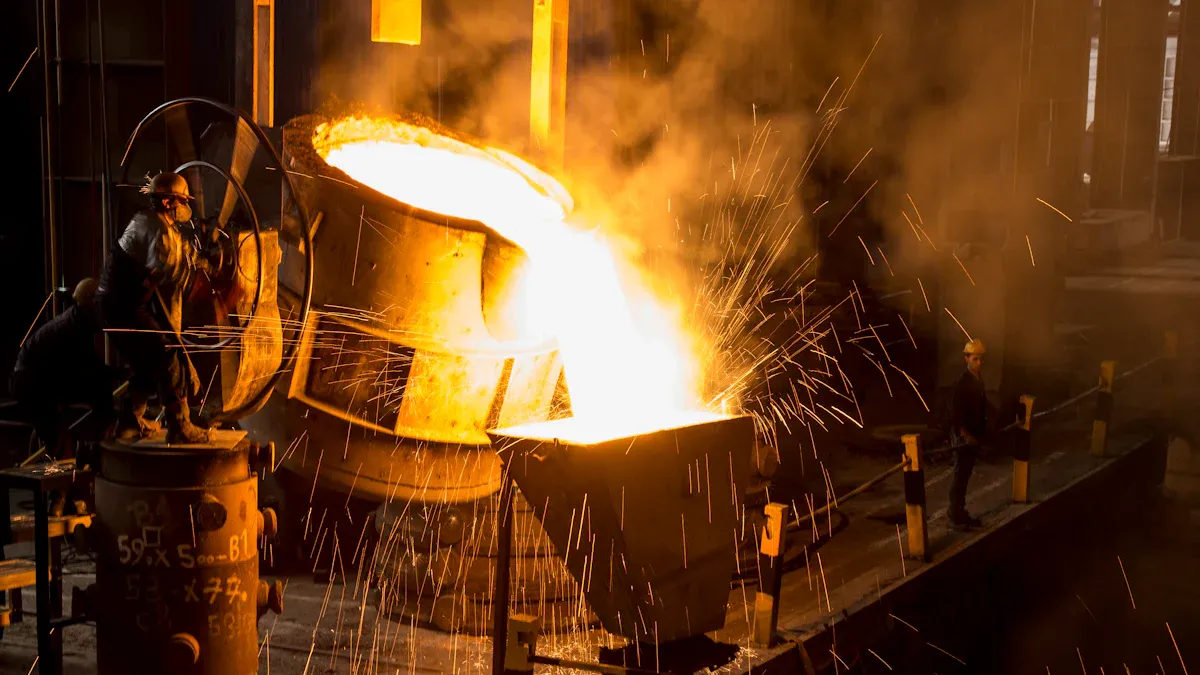
You can stop defects in high pressure aluminum die-casting by watching the process closely and making gating and venting better. Always check the temperature during the die casting process. Regular checks help you find casting problems early. Knowing why defects like porosity happen helps you fix them. When you work on making the process better, you make casting quality higher and have fewer problems in your finished die casting products, which is critical for demanding items like medical die-castings and automotive die-castings.
Key Takeaways
- Watch the die casting process very carefully to spot problems early. This helps make the quality better.
- Keep the metal and mold at the same temperature. This stops problems like porosity, cold shuts, and shrinkage.
- Make sure gating and venting systems are designed well. This lets gases get out and keeps the metal moving smoothly.
- Use materials that are clean and dry. Handle them the right way to stop impurities and gas bubbles.
- Check castings often and use tools like simulation and X-rays. These help find and fix problems early.
Common Defects in High Pressure Die Casting

Why Defects Occur
When you use high pressure die casting, you might see many kinds of problems. These problems can show up inside or outside the casting. Some common defects are porosity, inclusions, cold shuts, flash, flow marks, blisters, and misruns. Each problem happens for a different reason. Most of the time, these problems come from not controlling the process, not taking care of machines, or not handling materials right.
Here is a table that lists the most common die casting defects, what they are like, and what causes them:
| Defect Type | Description & Nature | Causes & Contributing Factors |
|---|---|---|
| Porosity | Small holes inside the casting | Gas trapped during injection, metal shrinkage, poor venting, uneven cooling |
| Inclusions | Foreign materials inside the casting | Dirty raw materials, bad melt prep, machine wear, unclean die |
| Cold Shuts | Metal flows do not join fully | Low metal temperature, slow injection, poor gating, trapped air, uneven die temperature |
| Flash | Extra metal along die lines | Worn die, low clamping, high injection pressure, die misalignment |
| Flow Marks | Wavy or spiral surface patterns | Temperature changes, metal viscosity, uneven injection, bad venting, uneven cooling |
| Blisters | Raised spots on the surface | Gas pockets, oxidation, lubricant gases, high die temperature |
| Misruns | Incomplete filling, missing features | Low metal or die temperature, poor gate location, bad venting, slow injection |
You might see more defects if you do not watch the metal temperature, injection speed, or mold design. Problems like die halves that do not line up, worn die surfaces, and dirty metal also make more defects.
Impact on Quality
Casting defects can make your finished products worse. Porosity means there are small holes that make the casting weak and let gas go through. Cold shuts make the metal weak where it did not join, so the part can break easier. Shrinkage defects make empty spaces that lower strength and can break under pressure. Surface defects like blisters and cracks make the casting look bad and not as strong. Inclusions are bits of other stuff inside the casting, and they make it weaker and not good for important uses. Misruns mean the mold is not filled all the way, so the casting might have thin spots or missing parts.
Here is a table that shows how these defects can hurt your casting and how long your products last:
| Defect Type | Impact on Mechanical Properties and Service Life |
|---|---|
| Porosity | Reduces strength, allows gas passage, weakens product |
| Cold Shut | Weak bonding, higher fracture risk, poor durability |
| Shrinkage Defects | Lowers structural integrity, causes failure under stress |
| Surface Defects | Lowers appearance and strength, increases rejection rate |
| Inclusions | Weakens structure, not good for precision parts |
| Misruns | Creates weak points, not fit for performance use |
| Die Erosion | Poor finish, short mold life, higher costs |
| Hot Cracking | Cracks from heat, lowers strength, higher failure risk |
| Soldering | Surface defects, die wear, poor product quality |
Tip: If you keep your process settings right and your equipment clean and in good shape, you can have fewer casting problems and better castings.
Preventing Porosity in High Pressure Die Casting
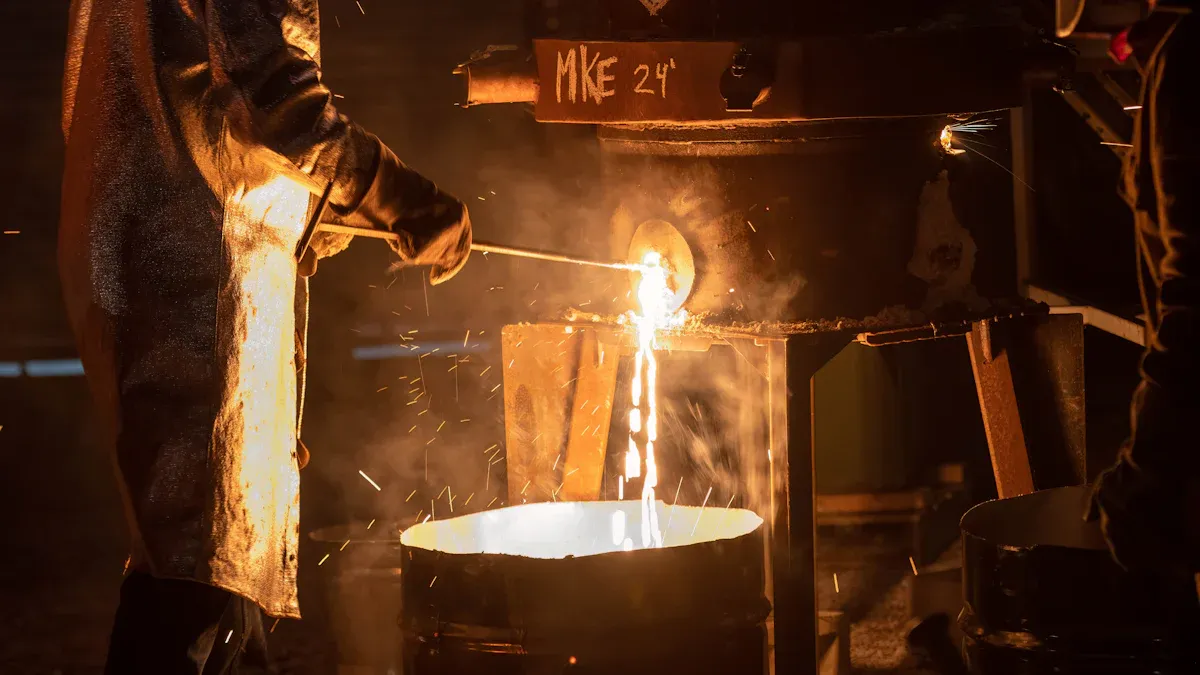
Primary Causes and Contributing Factors of Porosity in High Pressure Die Casting
Porosity is a very common problem in the die casting process. Porosity means there are tiny holes inside the casting. These holes can make the part weak and lower its quality. In high pressure die casting, porosity happens more than in other methods. This is because the process uses fast speeds and high pressure. These can trap air and make gas bubbles in the metal.
There are three main types of porosity in hpdc. They are spherical gas porosity, interdendritic porosity, and flow line porosity. These usually form just under the surface of the casting. The main reasons for porosity are:
- Gas Entrapment: When you inject molten metal fast, air can get trapped. If the mold or core has moisture, it can turn into gas and make more holes. Aluminum alloys can also take in hydrogen from the air or wet things, which makes more gas bubbles.
- Shrinkage Porosity: When metal cools and turns solid, it gets smaller. If you do not add enough molten metal, shrink porosity forms. Bad cooling, opening the mold too soon, or pouring metal too hot can make this worse.
- Improper Gating and Venting: If the gating system is not good, the metal can lose pressure and slow down. This makes the metal cool too early and leaves holes. Bad venting keeps gases inside, making more porosity.
- Contaminants and Impurities: Dirty materials, oxide films, and other particles can also cause holes and other problems.
Note: HPDC usually has more porosity than gravity or low-pressure casting. This means it is not always good for parts that need to be very strong or heat treated. You must watch the process closely to stop mistakes and keep the casting good.
Effective Strategies for Preventing Porosity in High Pressure Die Casting
You can use many ways to stop porosity and other problems in hpdc. Here are the best ways:
- Optimize Process Parameters
- Change injection speed and pressure to stop air from getting trapped.
- Use the right metal temperature to keep the flow smooth and stop early hardening.
- Keep the mold temperature even to stop shrink porosity and holes.
- Improve Gating and Venting Systems
- Make gating channels the right size and shape to keep metal moving fast.
- Put vents across from the ingate so gases can get out.
- Do not use sharp turns or sudden changes in the flow path, as these can make more holes.
- Control Cooling and Solidification
- Use a good cooling system to keep the mold temperature even.
- Do not open the mold too soon. Wait until the casting is fully solid to stop shrink porosity.
- Lower pouring temperatures if you can, but keep them high enough for good flow.
- Use Vacuum-Assisted Casting
- Vacuum systems take air out of the die before you inject the metal. This lowers gas porosity a lot.
- Studies show that more vacuum means fewer holes and stronger castings.
- Vacuum-assisted hpdc helps you make stronger, better parts.
- Handle Materials Properly
- Always use clean, dry materials to stop gas from moisture or dirt.
- Store alloys in dry places and heat them up if needed.
- Take off oxide films and other dirt before melting.
- Regular Inspection and Simulation
- Use simulation tools to guess where porosity might happen.
- Check castings often to find problems early and fix the process.
| Prevention Step | How It Helps Prevent Porosity and Voids |
|---|---|
| Adjust injection speed | Stops air from getting trapped and making bubbles |
| Optimize gating/venting | Lets gases out and keeps metal moving well |
| Control temperature | Stops early hardening and shrink porosity |
| Use vacuum assistance | Takes out trapped air and lowers porosity |
| Clean material handling | Stops gas from moisture and dirt |
| Inspect and simulate | Finds problems early and helps control process |
🛠️ Tip: If you use these ways, you can lower the chance of porosity and other problems. This helps you make stronger, better die castings with fewer holes.
Other Die Casting Defects and How to Prevent Them
Preventing Cold Shut and Misrun Defects in High Pressure Die Casting
Cold shut and misrun defects often appear when the molten metal does not fill the die cavity completely. You might see lines or incomplete areas on the casting. These weak spots can break easily and lower the strength of your part.
Why do cold shut and misrun defects happen?
- Low molten metal temperature makes the metal harden before it fills the mold.
- Too much cooling before the metal fills the cavity.
- Poor gating design slows down the flow.
- Metal solidifies too soon.
- Gas gets trapped inside the cavity.
- Bad venting keeps air inside.
These defects can make your casting weak and cause it to fail during use.
How can you prevent cold shut and misrun defects?
- Keep the pouring temperature high enough so the metal stays liquid.
- Use good die lubrication to stop the metal from cooling too fast.
- Change the runner and gate size or placement to help the metal flow better.
- Make the gating system simple and avoid narrow paths.
- Shorten the flow path so the metal reaches all parts of the mold quickly.
- Improve the mold’s gas permeability to let air escape.
Actionable Tips:
- Check and adjust the metal temperature before each pour.
- Inspect the gating system for blockages or sharp turns.
- Use a coarser grain size in the mold if possible.
- Make sure vents are clean and open.
Common Surface Defects in High Pressure Die Casting
Surface defects change how your casting looks and can also affect its strength. Some surface defects happen more often than others. You need to know what causes them to stop them from forming.
| Defect Type | Description | Causes | Frequency / Occurrence |
|---|---|---|---|
| Flow Marks | Streaks or veins on the surface that look like lines. | Slow filling, low mold temperature, bad supply channels. | Very common; hard to remove completely. |
| Blistering | Small bubbles under the surface that push up the metal. | Air trapped during filling, gas expands during ejection or heat. | Happens often; can be reduced with vacuum molding. |
| Sink | Depressions or dips on the surface, usually near thick parts. | Shrinkage during cooling, hot spots in the mold. | Common; depends on design and cooling. |
How can you prevent surface defects?
- Raise the mold temperature to help the metal flow smoothly.
- Increase the filling speed so the metal does not cool too soon.
- Design supply channels to avoid sharp turns and keep the flow steady.
- Use vacuum systems to remove trapped air.
- Cool thick sections slowly to stop sink marks.
Tip: If you control the mold temperature and filling speed, you can reduce most surface defects in your castings.
Preventing Inclusions and Impurities in High Pressure Die Casting
Inclusions and impurities are unwanted materials inside your casting. These can make your part weak and lower its quality. You need to keep your metal and equipment clean to stop these defects.
Where do inclusions and impurities come from?
- Oxides, slag, and scum in the molten metal.
- Dirt or pollution during melting.
- Blockages in the injection port or flow channels.
- Too much lubricating oil or leaks from water or oil systems.
- Poor gating design that traps gases or lets dirt in.
- Wrong metal mix, like too much iron.
How can you prevent inclusions and impurities?
- Use pure metal charges and avoid dirty scrap.
- Clean ladles and dies often to remove old material.
- Remove slag from the molten metal before pouring.
- Control or avoid graphite-based mold release agents.
- Check and clean the injection port and flow channels.
- Make sure the gating system does not trap air or dirt.
Actionable Tips:
- Inspect your metal before melting.
- Clean all tools and equipment after each use.
- Watch for leaks in the mold water or oil systems.
- Test your metal mix to keep the right balance.
🛡️ Note: Good smelting and cleaning practices help you avoid many casting defects and improve the quality of your die casting products.
Avoid Defects in Hot Chamber HPDC
Optimizing and Controlling Process Parameters to Minimize Defects
You can stop defects in hot chamber hpdc by watching the process closely. The most important things are die-casting pressure, piston speed, and injection speed. These settings change how the metal fills the mold and how problems start. If you use more die-casting pressure, you get less porosity. The right piston speed makes the part stronger. If the injection speed is too slow, the mold might not fill all the way. If it is too fast, air can get trapped and cause more problems.
The table below shows how each setting changes defects and quality:
| Process Parameter | Influence on Defect Formation / Quality Measure | Contribution (%) |
|---|---|---|
| Die-casting pressure | Porosity | 42.9 |
| Piston speed (2nd phase) | Tensile strength | 46.7 |
| Piston speed (1st phase) | Tensile strength | 21.6 |
| Die-casting pressure | Tensile strength | 24.6 |
You can see that both pressure and piston speed are very important for making better parts.

Optimizing Gating and Venting Systems for Superior Defect Prevention
You should make the gating and venting systems help the metal flow well and let air out. Use more than one gate for big or tricky parts. This stops the metal from swirling and helps it spread out evenly. Make runners with smooth changes so the metal keeps moving. Add venting channels so air can leave the mold. This lowers porosity and other problems. For important castings, use vacuum-assisted hpdc to pull out air before you add the metal.
Simulation software can help you try out different gating ideas. It shows how the metal will fill the mold and where problems might happen. By using simulation, you can find risks like uneven flow or hot spots. This helps you make better choices and stop defects in your castings.
Tip: A good gating and venting system means less scrap and stronger, better-looking castings.
Advanced Temperature Management Techniques for Reducing Defects
You need to control both injection speed and die temperature to stop defects. Studies say that an injection speed of about 5 m/s and a die temperature near 200 °C can lower porosity and shrinkage, especially in thick parts. If you keep the mold temperature steady, you stop quick cooling that can cause cracks or missing spots.
Good temperature control also means using the right smelting and overflow launders. These steps keep the metal clean and at the right heat before you inject it. Checking the die often helps you find hot spots or worn places that can cause problems.
🛠️ Keep your injection speed and die temperature in the right range. This easy step can really help you make better hpdc castings.
Casting Defects Prevention Best Practices
Selecting the Right Materials to Minimize Casting Defects
You should pick good materials for die casting. Clean alloys help stop many casting problems. Pure metals lower the chance of gas bubbles and weak spots. Good materials also help you meet quality rules. Check your raw materials for dirt or water before melting. This helps you find problems early. The right design works best with good materials. If you use recycled metal, make sure it has no oil or rust.
Utilizing Simulation Tools and Conducting Thorough Inspection for Defect Prevention
Simulation tools let you test your ideas on a computer. You can see how metal moves and where problems might show up. These tools help you fix issues before making real parts. Here is a table with some popular simulation tools for die casting:
| Simulation Tool | Key Strengths and Features | Application in HPDC Defect Prediction and Prevention |
|---|---|---|
| FLOW-3D Cast | Models fluid flow and gas; easy to use | Finds turbulence, gas inclusions, and flow issues |
| ProCAST | Simulates thermal stress and shrinkage | Predicts solidification and thermal defects |
| ADSTEFAN | Fast porosity prediction | Best for high-volume production |
| MAGMASOFT | Advanced process optimization | Detailed defect prediction and process control |
| Other Tools | Specialized features | Fits different industries and needs |
You should check the casting at every step. Regular checks help you spot cracks or tool problems. Use X-ray or other machines to find hidden defects. If you inspect often, you catch problems early and keep things under control.
Comprehensive Mold Maintenance Strategies for Preventing Die Casting Defects
You need to keep molds clean and in good shape. Clean the mold after each shift or batch. Use cleaners that do not hurt the mold. Look for cracks or damage and fix them fast. Use mold release agents before each use to help parts come out. Keep special coatings on the mold if needed. Store your tools in a dry, cool place to stop rust.
| Maintenance Activity | Frequency / Timing | Purpose / Notes |
|---|---|---|
| Cleaning | Every shift or cycle | Removes metal and dirt; prevents mold damage |
| Stress Relief Tempering | After 3,000-5,000 cycles, then every 10,000 | Prevents cracking and extends mold life |
| Inspection and Repair | Regularly | Finds and fixes cracks, wear, and damage |
Tip: If you clean, handle, and check your tools well, you can stop casting problems and keep your die casting process working smoothly.
You can make castings without defects if you follow some important steps in high pressure die casting:
- Make sure the mold has good venting so gases can get out and there are fewer holes inside.
- Control how fast the casting cools to stop shrinking and make the casting better.
- Use clean materials so nothing dirty gets in.
- Keep the metal at the right temperature so it flows well.
- Use steady pressure during the whole process.
- Check the castings often so you can find problems early.
New tools, like computers that look at data right away and machine learning, help you make better castings and have fewer problems as time goes on. Always watch the process and check your work to keep your castings strong.
FAQ
What is the most common cause of porosity in die casting?
You often see porosity when air gets trapped in the molten metal. Fast injection or poor venting lets gas stay inside. You can lower porosity by improving gating and venting systems.
How can you check for hidden defects in castings?
You can use X-ray machines or ultrasonic testing. These tools help you find holes or cracks inside the casting. Regular inspection helps you catch problems early.
Why does die temperature matter in high pressure die casting?
Die temperature controls how the metal flows and cools. If the die is too cold, the metal hardens too soon. If it is too hot, you get more defects. Keep the die at the right temperature for best results.
Can you use recycled metal in die casting?
You can use recycled metal, but you must clean it well. Remove oil, rust, and dirt before melting. Clean recycled metal helps you avoid inclusions and other defects.
What is the role of simulation software in defect prevention?
Simulation software lets you test your process before making real parts. You can see where defects might form. This helps you change your design or process to prevent problems.