
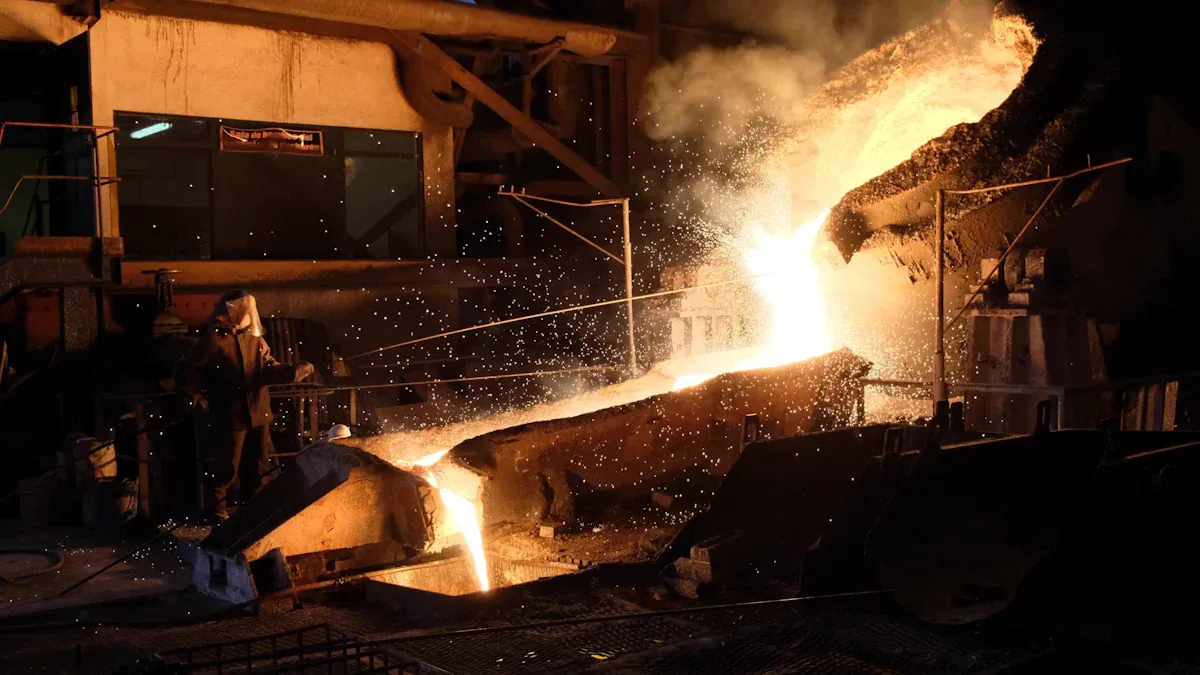
Choosing the best way to shape metal affects how products perform and endure. Copper die-casting is especially valuable for jobs requiring strong, durable parts. It excels in environments with harsh conditions. The marine industry relies on Copper die-casting for components like valves, propellers, heat tubing, piping, and pumps, where saltwater corrosion is a major concern—a critical reliability requirement also faced by exposed telecom die-castings. This die casting process produces parts that resist saltwater corrosion and rust. These advantages often justify the higher cost for critical components, which must meet precise standards similar to those for medical die-castings. Manufacturers choose this process when they need parts with precise dimensions and smooth finishes. This process consistently delivers high-quality results.
Industries that use bronze die casting include:
- Marine (valves, propellers, heat tubing, piping, pumps)
- Manufacturing sectors requiring strong, rust-resistant parts
Bronze Die Casting Advantages
Corrosion Resistance
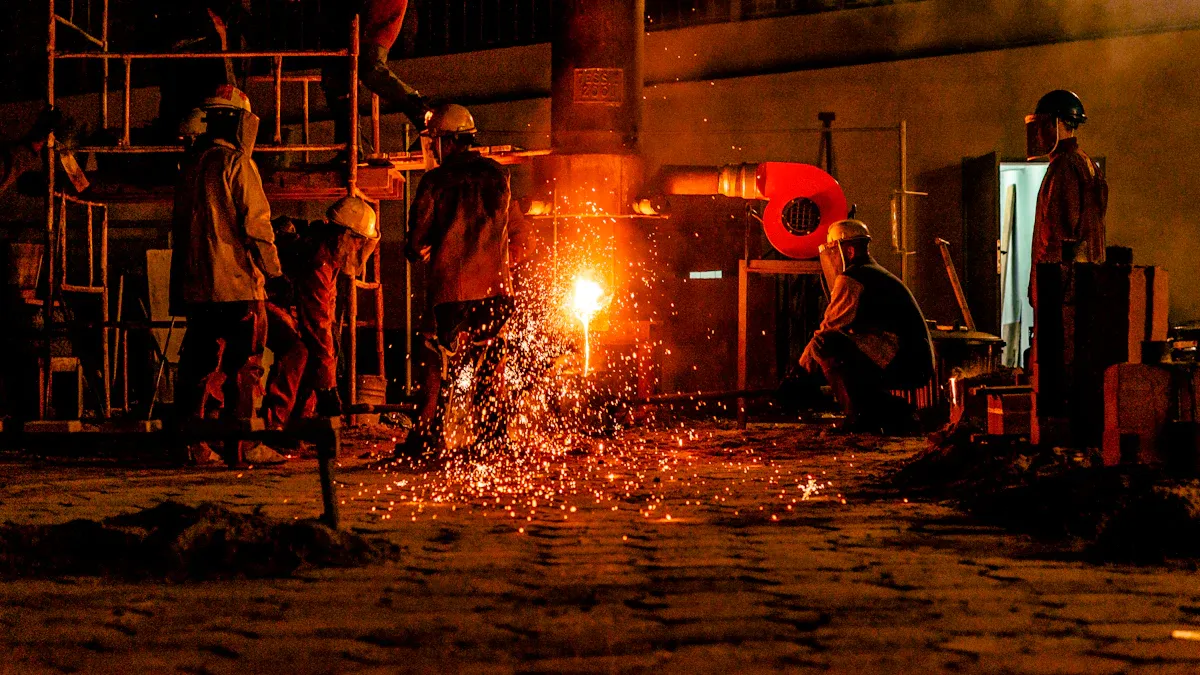
Bronze die casting is great at stopping corrosion. This makes it a top pick for places with tough conditions. Bronze does not rust like some other metals. It forms a layer called patina that protects it from harm. This is very helpful in the marine industry. Saltwater can damage most metals fast. Bronze hardware, like propellers and valves, lasts longer because of this protection. Bronze keeps looking good and stays strong over time. Brass can crack or lose its shine, but bronze does not. Bronze is made mostly of copper and tin. This mix helps parts last longer in harsh places.
Bronze fights off corrosion in wet or chemical areas. This helps parts last longer and need less fixing. Aluminum bronze alloys, like C95400 and AB2, are even stronger. They also resist corrosion better. This makes them perfect for use in the sea or outside.
Strength and Durability
Bronze die casting makes parts that are strong and tough. These parts work well in hard jobs. Bronze alloys, like aluminum bronze, can handle heavy loads. They also take repeated hits without breaking. This is why bronze is used for machine parts, gears, and bushings. These parts need to be tough and last a long time.
The table below shows how strong some bronze alloys are:
| Alloy | Tensile Strength (Typical) | Yield Strength (Typical, 0.5% Extension) | Comments |
|---|---|---|---|
| General Aluminum Bronze (Permanent Mold Cast) | ~105 ksi (725 MPa) | ~46 ksi (320 MPa) | Good wear resistance, heat-treatable |
| C95500 Aluminum Bronze | ~113 ksi (780 MPa) | ~62 ksi (430 MPa) | High strength, heat-treatable |
| C95800 Aluminum Bronze | ~96 ksi (660 MPa) | ~52 ksi (360 MPa) | Good strength and ductility |
Bronze stays strong even when it gets hot. This makes it good for parts that face heat and stress. Bronze casting gives steady results and parts that last a long time.
Machinability
Bronze die casting is easy to machine. The process makes parts that are already very exact. Most times, they do not need much extra work. If more work is needed, CNC machining works well with bronze.
- CNC machining is very accurate and fast for bronze parts.
- This means fewer steps to finish the part and faster production.
- Manual machining is good for small jobs. CNC is better for making lots of parts the same way.
Machining bronze die castings helps make parts with tight fits and special shapes. This saves time and helps companies get parts quickly. It is important for businesses that need fast and reliable parts.
Dimensional Accuracy
Bronze die casting makes parts with very exact sizes. This is important for industries that need parts to fit just right. Die casting can meet strict standards, like ISO 8062 grades CT4 to CT6. Bronze works well for these needs.
Die casting keeps sizes the same and makes parts close to their final shape. This means less extra work is needed. Bronze die casting is good for making lots of parts quickly. Sand casting does not make parts as smooth or exact. Die casting is much better for this. Investment casting can also be exact, but die casting is great for bronze and other non-ferrous metals.
Surface Finish
Bronze die casting makes parts with smooth and nice-looking surfaces. This is good for many industries, like aerospace, marine, oil and gas, cars, and buildings.
- Aerospace and medical companies need bronze parts that look good and are very exact.
- Marine and factory jobs use bronze for bearings and gears. A smooth finish helps these parts last longer.
- Builders and artists like bronze for its beauty. They use it for decorations and special pieces.
A smooth surface makes bronze parts look better and work better. It lowers friction and wear. This, along with other benefits, makes bronze die casting useful for many jobs.
Industrial Applications of Bronze Die Casting
Marine Components in Bronze Die Casting
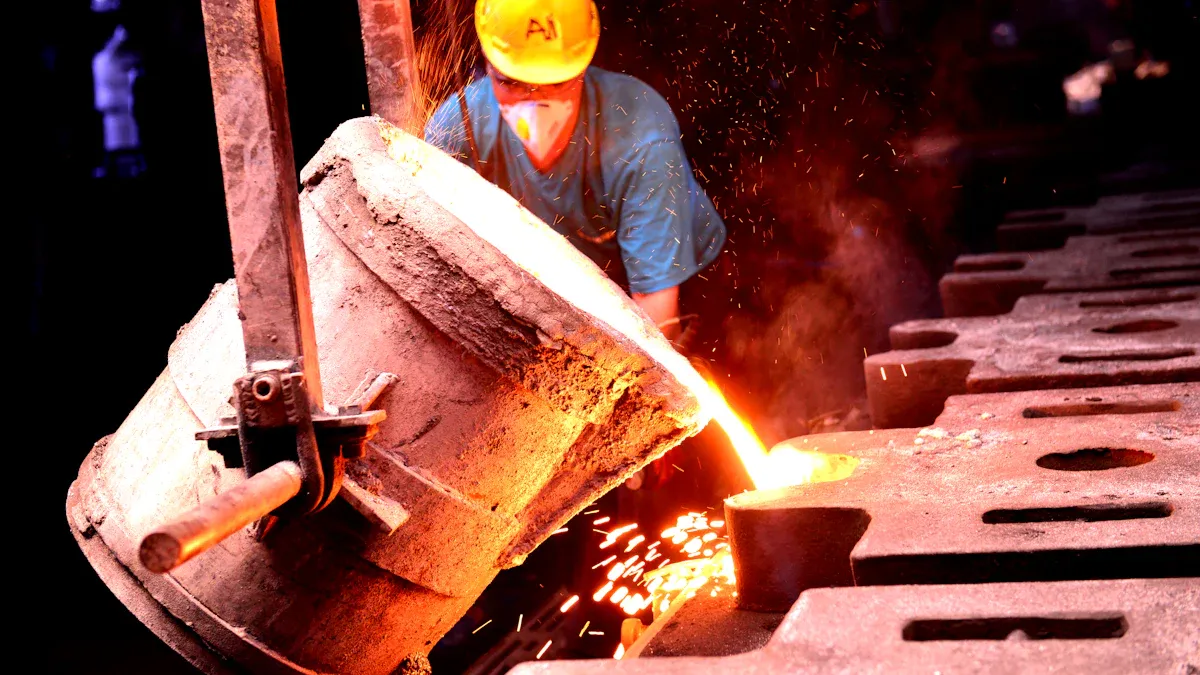
Marine industries use die-casting for important parts. Bronze casting makes parts that last in saltwater and tough marine places. Manufacturers pick bronze because it is strong and does not rust easily. It also does not wear out fast. These things help marine equipment last longer and need less fixing.
Key reasons to pick bronze die casting for marine jobs are:
- It does not rust in salt or fresh water.
- It does not wear down quickly when moving.
- Some alloys can oil themselves, so they need less care.
- Bronze is strong and does not break under pressure.
| Property / Alloy | Aluminum Bronze | Manganese Bronze |
|---|---|---|
| Corrosion Resistance | Works very well in seawater and acids | Good for marine and factory places |
| Strength & Hardness | Very strong, one of the best copper alloys | Strong and hard |
| Wear Resistance | Great for places with lots of rubbing | Good for rubbing and scraping |
| Ideal Marine Applications | Used for pumps, valves, propellers, and fasteners | Used for propellers, rudders, valves, and pumps |
Bronze die-casting helps marine parts like propellers, pumps, and valves work well in hard places.
Bronze Die Cast Electrical Components
Electrical companies use die-casting to make connectors and switches. Bronze is better than copper and brass at fighting rust and oxidation. This makes it good for electrical parts that get wet or touch chemicals. Bronze can also handle more heat without changing shape.
Bronze does not carry electricity as well as copper. But it is strong and lasts a long time, so it works for tough electrical jobs. Die-casting lets companies make exact and tricky shapes. This helps electrical systems work well.
Decorative Uses with Bronze Casting
Bronze casting is great for making pretty things. Artists and builders like bronze for its warm color and smooth feel. It can also show small details. People use bronze for:
- Statues and sculptures
- Building parts like handles, railings, and lights
- Coins, medals, and special pieces
Bronze does not rust and lasts a long time, so it works inside and outside. It is easy to shape and can be made into fancy designs. Bronze is also hard, so it can be used for strong decorations. It makes a nice sound, so it is used for bells and musical instruments.
Industrial Parts Produced Using Bronze
Industries use bronze die-casting to make gears, bushings, bearings, and hydraulic parts. Bronze does not rub away fast and has low friction, so these parts last longer and work smoothly. Casting bronze makes sure parts are the right size and always good quality. This is important for machines and tools.
Bronze die-casting helps companies make lots of parts quickly. It also means they do not have to replace parts often. This makes bronze casting a smart choice for many jobs.
Bronze Die-Casting vs. Alternatives
Sand Casting Methods in Industrial Applications
Sand casting is a common way to make bronze parts. It is good for making a small or medium number of parts. Sand molds are cheap and easy to change. This makes sand casting great for testing new ideas or making big, simple parts. The first cost is low. But sand casting takes more time than die-casting. It cannot make parts as fast as die-casting can. This makes it less useful for making lots of parts at once.
Die-casting makes bronze parts that are stronger and look better. It cools the metal quickly and uses high pressure. This gives the metal a tighter grain and more exact sizes. Sand casting makes metal with bigger grains and more tiny holes. This can make the part less strong, but sometimes it makes it tougher.
| Aspect | Die-Casting (Bronze) | Sand Casting (Bronze) |
|---|---|---|
| Production Speed | Very fast, ideal for high volume | Slower, best for small batches |
| Cost | High initial, low per-part | Low initial, higher per-part |
| Precision | ±0.1-0.3 mm | ±0.5-2 mm |
| Surface Finish | Smooth, minimal finishing | Rough, needs extra finishing |
| Mechanical Strength | Higher | Lower |
Die-casting is best for tricky shapes and thin parts. It is also good for parts that need to be very strong. Sand casting is better for big, simple parts when you want to save money.
Machined Bronze Components in Industrial Applications
Machined bronze parts start as solid pieces of bronze. Cutting tools shape them into the right form. This way can make very exact and detailed parts. But it takes more time and uses more material. Machining is good for small jobs or special parts. The first cost is not high, but each part costs more because it takes longer to make and wears out tools.
Die-casting is faster and makes parts that are closer to the final shape. This means less extra work is needed. For big jobs, die-casting saves money and time. Machined bronze parts are still good at fighting rust and sliding smoothly. This makes them great for bearings and sliding parts.
- Die-casting needs a lot of money for the tools and machines. But it gets cheaper when you make many parts.
- Machined bronze parts do not need much setup money. But each part costs more and takes longer to make.
- The price for die-casting goes down when you make more parts. Machining costs stay the same or go up.
You should pick a method based on how many parts you need, how exact they must be, and how strong you want them.
Key Factors for Choosing Bronze Die Casting
Essential Casting Project Requirements to Consider
Picking the right way to make industrial parts takes careful thought. Bronze die-casting has special benefits, but it is not best for every job. Companies should look at this checklist before picking bronze die-casting:
- Project Complexity: See if the part has tiny details or odd shapes. Die-casting with bronze is great for making tricky designs.
- Material Selection: Make sure bronze is strong enough and fights rust and heat for your needs. Different bronze alloys, like manganese bronze or copper-nickel bronze, have their own good points.
- Production Volume: Think about how many parts you need. Die-casting is good for making lots of parts that are all the same.
- Budget Constraints: Add up all costs, like tools, setup, and workers. Die-casting costs more at first, but each part is cheaper if you make a lot.
- Lead Times: Check if die-casting can finish your parts on time. This process is fast for making many parts.
- Tolerances and Precision: Make sure the sizes and smoothness you need match what bronze die-casting can do.
- Quality Assurance: Set up how you will check the parts. Die-casting lets you use strong checks, like looking at the parts and using special tests.
- Technical Support: Make sure you can get help with mold design, picking alloys, and finishing steps.
Tip: Work with skilled foundries that give expert help and have quality certificates to get the best results.
When to Choose Bronze Die Casting
Bronze die-casting is best in some cases. Companies should use this method when:
- The part has hard shapes or tiny features.
- You need very exact sizes and a smooth look.
- You want to make many parts to save money.
- The job needs strong, rust-proof bronze parts.
- You must have the same quality every time.
- The design needs the choices of bronze alloys and extra steps like machining or coating.
Die-casting with bronze is fast, lets you design freely, and makes tough parts. It is the top pick for hard jobs where you need strong and steady parts.
Bronze die casting is good because it fights rust, lasts long, and makes smooth parts. But starting costs are high and you cannot always change the design much. This means it might not work for every job. Experts say you should look at what the material can do, how many parts you need, and how much each part will cost. Companies should check different ways to make parts and talk to experts if the job is hard. The best way to make a part depends on what is most important for that job. If companies use a clear plan, they can pick the best die-casting method for their bronze parts.
FAQ
What are the main benefits of bronze die casting?
Bronze die casting helps make many parts fast. It gives parts exact sizes and makes them strong. This method is good for parts used in tough places. The process also makes parts smooth, so less extra work is needed.
How does the cost of casting in bronze compare to other methods?
Casting in bronze costs more at first because of tools. But making lots of parts lowers the price for each one. Companies also save money on work and finishing because the process is quick.
Where does bronze casting work best?
Bronze casting is best for marine, electrical, and factory jobs. These places need parts that last long and do not rust. It is also good for projects needing exact shapes and steady quality.
Why do manufacturers prefer the die-casting process for complex parts?
Manufacturers like die-casting for tricky parts. It makes parts with exact sizes again and again. This way, they can make thin and detailed shapes that are hard with other ways.
Does bronze die casting support high production efficiency?
Bronze die casting makes many parts that are all the same. It works fast and keeps the quality steady. This makes it great for big jobs where speed and matching parts are important.