

Precision machinery requires meticulous planning, specialized manufacturing processes, and rigorous quality control. Companies like KEMING utilize investment casting and CNC machining to achieve extremely high precision. Smart manufacturing, digital tools, and automation improve efficiency and result in higher-quality, more efficient products. These methods help produce high-quality parts for industries with extremely high precision requirements.
Key Takeaways
- Precision machinery requires meticulous planning and multiple quality checks to ensure its accuracy and reliability.
- Choosing suitable materials, such as stainless steel and aluminum, is crucial. These materials help extend the machine’s lifespan and enhance its performance.
- Advanced machining technologies, such as CNC machining and investment casting, can improve the machine’s precision while also helping to accelerate production speed and increase efficiency.
Precision Machines Manufacturing Process

The manufacture of precision machinery involves multiple steps. Each step is designed to ensure the machine’s accuracy and reliability.
Design and Planning
Engineers use CAD software to create 3D models. These models show the dimensions, shape, and surfaces of each part. CAD helps engineers design parts that fit perfectly. It also helps them check if the design can be manufactured using existing tools and materials. This is called Design for Manufacturability (DfM) review. It can prevent errors and save subsequent time.
Material Selection
Choosing the right materials is crucial. Materials must be strong and durable. Metals such as carbon steel, stainless steel, and iron are widely used. Stainless steel does not rust and is strong. Aluminum is lightweight and easy to form. Brass is easy to machine and has a smooth finish. Titanium is strong and heat-resistant. Commin uses high-quality materials, resulting in parts with a longer lifespan.
| Material | Properties | Applications |
|---|---|---|
| Stainless Steel | Strength, corrosion resistance, versatility, can be welded vacuum tight | Medical devices, cookware, various applications |
| Aluminum | Lightweight, easy to machine, corrosion resistant, can be plated | Aerospace, automotive, consumer goods |
| Brass | Easy to machine, smooth finish, holds tolerances | Decorative items, gears, valves, fittings |
| Titanium | High strength-to-weight ratio, resistant to heat and corrosion | Aviation, medical tools |
Machining and Forming
After material selection, workers will shape it. KEMING employs two processes: investment casting and CNC machining. Investment casting can manufacture parts with complex shapes and high precision. CNC machine tools can cut metal with extremely high precision. The table below shows the precision of the different processes.
Precision casting achieves an accuracy of ±0.25mm to ±0.5mm. CNC milling and turning offer even higher accuracy, reaching ±0.13mm. These methods contribute to a perfect fit between parts.
Assembly and Adjustment
Once all parts are ready, workers assemble them. They use tools such as locating pins to align the parts. Sometimes, they use shims or adjusting screws to ensure proper fit. Press-fit and heat-shrink fittings connect the parts tightly. Workers test and adjust the machines to ensure they function well. This step is crucial for precision machinery.
- Alignment pins help parts line up.
- Shims fill small spaces for a better fit.
- Adjustment screws move parts to the right spot.
Quality Control
Quality control involves inspecting every part and every step of the process. KEMING uses hardness testing to check the strength of metals. They use X-ray inspection to detect internal defects in parts. These tests identify defects before parts leave the factory. Quality control ensures that every precision machine is safe, reliable, and meets high standards.
- Hardness testing checks material strength.
- Radiographic (X-ray) inspection finds hidden flaws.
- All parts must pass these tests before shipping.
Once the customer uploads the CAD files, KEMING Machinery begins manufacturing. The team reviews the design and provides a quote within 24 hours. After customer confirmation, Kemin Machinery commences production. All components pass quality inspection before packaging and shipping. This rigorous process ensures that every precision machine meets the diverse needs of industries such as automotive, shipbuilding, railway, and agriculture.
| Stage | Description |
|---|---|
| Design for Manufacturability (DfM) Review | Checks if the design can be made with the tools and materials and meets accuracy goals. |
| CAD Modeling and CAM Programming | Turns design details into code for CNC machines, using speeds, feeds, and material info. |
| Material Selection and Preparation | Picks the right material based on strength, heat resistance, and how easy it is to machine. |
| Fixturing and Zero-Setting | Sets reference points and holds the part steady for machining. |
| Machining, Printing, or Casting | Makes the part using CNC machining, printing, or casting, depending on what is needed. |
| Tool-Wear Monitoring and SPC | Watches tools for wear and uses process control to keep quality high. |
| Post-Processing and Finishing | Includes steps like deburring, heat treatment, or coating to make parts better. |
| Inspection and Quality Assurance | Uses digital tools to check every piece and make sure it meets tolerance rules. |
| Packaging and Traceability Labelling | Adds labels for tracking and following rules. |
Precision machines need careful planning, good materials, special shaping, accurate assembly, and strong quality checks. Each step helps make machines that work well and last a long time.
Accuracy Methods in Manufacturing
Precision Machining Technology
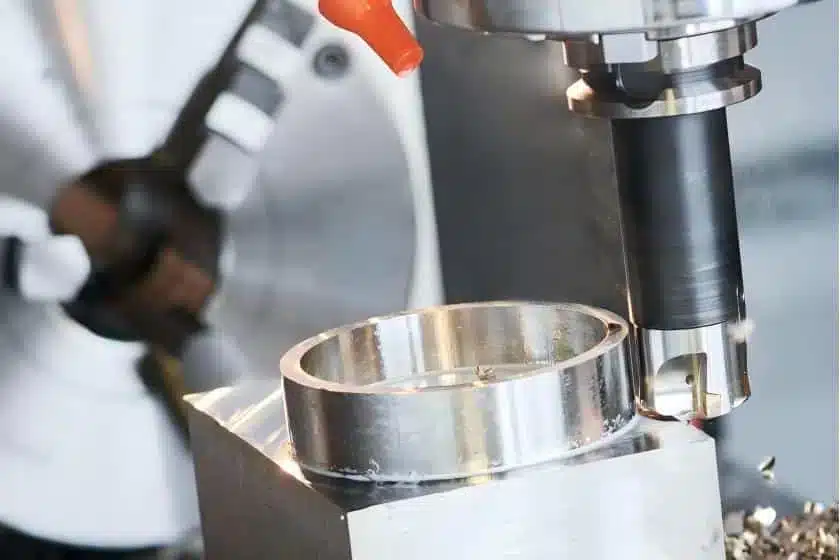
Manufacturers employ specialized machining methods to create precision machinery. High-speed machining cuts material much faster than traditional methods, resulting in smooth surfaces and reducing subsequent machining work. Laser-assisted machining heats hard materials, making them easier to shape. Five-axis CNC machining allows workers to machine complex parts in a single setup, saving time and improving part accuracy. CNC machining utilizes computer-controlled machining of parts, allowing for extremely high tolerances. These machines help industries such as aerospace and medical manufacture dimensionally precise parts. Modern CNC machine tools achieve measurement accuracy down to the micrometer level, enabling parts to fit perfectly. New software and hardware continuously drive the development of manufacturing.
CNC machining ensures consistent part dimensions with each machining operation, reducing errors and saving material. Intelligent toolpath programming and good CAD/CAM integration also contribute to improved machining accuracy.
Surface Finishing
Surface finishing makes mechanical parts smooth and robust. Grinding and polishing are two commonly used surface finishing methods. Grinding processes use tiny, coarse particles immersed in a liquid to remove small amounts of material, resulting in a very smooth surface. Grinding removes more material, but the surface finish is not as smooth as lapping. Some industries use electrochemical machining to achieve ultra-smooth surfaces.
| Method | Surface Roughness (Ra) | Processing Time | Advantages | Limitations |
|---|---|---|---|---|
| ECM | 0.05-0.15 µm | 5-20 minutes | Atomic-level material removal | Process control challenges |
| Lapping | 0.1 µm | 10-30 minutes | Exceptional flatness and finish | Possible subsurface damage |
Smooth surfaces help extend the lifespan of parts. They also improve the performance of seals, reduce friction, and prevent rust.
Measurement and Inspection
Measuring and inspecting parts is crucial for manufacturing precision machinery. Workers use a variety of tools to check whether parts meet stringent tolerance requirements.
| Tool Type | Function Description |
|---|---|
| Coordinate Measuring Machines | Check complex shapes with high accuracy. |
| Optical Measurement Systems | Use lasers to measure distances very precisely. |
| Surface Profilometers | Check how smooth or rough a surface is. |
| Environmental Controls | Keep temperature steady for accurate measurements. |
Workers also use micrometers, inside gauges, and pneumatic gauges for various inspections. Regular calibration of these tools helps reduce errors. Training workers in inspection skills improves inspection results. Digital inspection tools provide real-time data, accelerating inspection speed. Computer programs such as CAD and CAM help plan and inspect each step. These programs adjust based on tool wear to ensure each part meets design requirements.
Iterative Improvement
Manufacturers are constantly striving to improve their methods. They utilize feedback from measurement data for improvement. This helps them quickly solve problems and produce better products. Feedback loops help companies continuously evolve and stay ahead. By frequently checking data, they can identify design problems and improve production methods. This ultimately leads to higher quality, more reliable precision machinery.
Overcoming Challenges
Manufacturing precision machinery presents several challenges. Sometimes, measuring tools are limited by cost or quality constraints. Errors may originate from tools or the environment. Material quality can vary, affecting the final product. Operating advanced machines requires skilled workers. Machine downtime reduces productivity and affects accuracy. Companies must also adhere to strict regulations and standards.
| Strategy | Description |
|---|---|
| Advanced Calibration Techniques | Regular calibration keeps equipment accurate and reduces errors. |
| Multiple Point Measurements | Taking many measurements along edges gives more reliable results. |
| Gray-scale Edge Profile Analysis | This method finds the true edge for sub-pixel accuracy. |
Maintaining a suitable working temperature helps ensure the accuracy of measurement results. Temperature-compensated tools can adjust to changes in the environment. When measuring tools are limited, workers use geometric and hand tools to inspect parts. Adherence to international standards such as ASTM, DIN, and JIS helps companies remain competitive globally and ensures product safety and high quality.
Precision machinery requires meticulous planning, robust and durable materials, and specialized manufacturing processes. Quality control is maintained at every stage to ensure parts are precise, reliable, and operate smoothly. KEMING supports numerous industries by producing robust and durable mechanical parts.
FAQ
Which industries require precision machinery?
Many industries require precision machinery. Automobiles, ships, trains, and agricultural machinery all rely on it. This machinery helps create robust parts and ensures efficient equipment operation and extended service life.
How does KEMING guarantee the precision of its machinery?
KEMING employs advanced casting and CNC machining technologies and conducts rigorous quality inspections on every machine. Staff use hardness testing and X-ray inspection to identify problems, ensuring the precision of the machines.
Why does machinery require special materials?
Special materials enhance the strength of machinery and extend its service life. Materials such as stainless steel, carbon steel, and iron are widely used. These materials help improve the damage resistance and working efficiency of the machinery.