
The vacuum aluminum casting process is typically employed when industrial applications demand high standards of quality and precision. This method utilizes a specialized process to evacuate air, thereby preventing defects. Companies in the automotive, electronics, and medical sectors widely adopt vacuum aluminum casting to ensure superior product quality.
| Improvement Aspect | Vacuum Casting | Traditional Casting |
|---|---|---|
| Gas Inclusions | Gone | Still there |
| Porosity | Less | More |
| Mechanical Strength | Stronger | Normal |
| Dimensional Tolerances | More exact | Less exact |
| Surface Quality | Smoother | Average |
| Complex Geometries | Possible | Harder |
Key Takeaways
- Vacuum casting helps produce aluminum parts with fewer defects and higher strength.
- Automotive and electronics companies utilize the vacuum casting process to manufacture precise and reliable parts.
- Vacuum casting improves surface quality by eliminating air bubbles, resulting in smoother part surfaces.
Vacuum Cast Aluminum Process
What is vacuum casting?
Vacuum casting is a specialized process for manufacturing metal parts. Before molten metal is injected, the process uses a vacuum to evacuate air from the mold. This enables manufacturers to produce aluminum parts of superior quality with fewer defects. During vacuum die casting, the machine extracts air from the mold—a crucial step, as trapped air can cause internal bubbles or weak points in the part. Vacuum extraction not only removes air but also isolates the molten aluminum from oxygen, thereby preventing oxidation, which can compromise metal strength or cause surface blemishes.
Aluminum alloys are ideally suited for the vacuum die casting process. They have relatively low melting points and flow easily to fill molds with complex geometries. Many manufacturers utilize this process to produce custom parts that are strong, lightweight, and dimensionally precise.
Process Steps
The vacuum cast aluminum process has several main steps to make sure the parts are good:
- Mold Preparation: The factory designs and builds a mold using computers and special tools. This step makes sure the mold fits the custom part’s shape and size.
- Vacuum Application: Before pouring the hot aluminum, the machine makes a vacuum inside the mold. This step takes out air and lowers the oxygen.
- Metal Pouring: The supplier melts the aluminum alloy and pours it into the mold while the vacuum is still on. This keeps bubbles out and stops oxidation.
- Filtration: Ceramic foam filters made from things like alumina, silicon carbide, or zirconia clean the hot aluminum. These filters take out dirt, non-metal bits, and other pieces from the metal. They also help the metal flow better and stop holes and shrinking.
- Solidification: The metal cools and gets hard inside the mold. The vacuum keeps protecting the part from air and gas problems.
- Part Removal and Finishing: The factory opens the mold and takes out the finished part. Workers may use CNC machines, plating, or coating to make the part look and fit better.
Advanced Processes
Modern factories are adopting innovative methods to further enhance the quality of vacuum die casting. High-vacuum and ultra-high-vacuum die casting technologies utilize stronger vacuum levels to evacuate more air and gas, resulting in castings that are virtually free of porosity. The V-Process (Vacuum Sealed Molding Process) is another innovative technique that uses a vacuum to maintain mold integrity and minimize defects.
New equipment and tooling make these processes more precise and efficient. For instance, robotics enable precise control over vacuum levels and the flow of molten metal. Compared to traditional metal mesh screens, ceramic foam filters not only purify the molten metal but also promote smooth flow, thereby improving casting quality and reducing metal waste.
Vacuum Cast Aluminum Benefits
Advantages of Vacuum Die Casting
Vacuum die casting offers numerous advantages for industries requiring high-precision, high-quality components. By evacuating air from the mold, this process enables the production of aluminum parts with fewer defects and higher strength. Companies in sectors such as automotive, electronics, and medical devices widely adopt this process to meet stringent requirements for precision and reliability.
The table below outlines the key advantages of aluminum alloy vacuum die casting:
| Benefit | Description |
|---|---|
| Reduced Porosity | Hardly any gas gets trapped inside because air is removed before the metal is poured. |
| Improved Mechanical Properties | No air means the part stays strong everywhere, with no weak spots. |
| Design Flexibility | Less porosity lets makers cast thinner walls, which is hard with old ways. |
| Weldability and Heat Treatment | Less porosity means parts can be welded or heat-treated without gas problems. |
Limitations and Challenges
Despite its many advantages, vacuum die casting faces certain challenges. The process requires significant capital investment in new equipment and specialized control systems, and necessitates skilled operators to closely monitor vacuum levels and process timing. Due to the addition of extra processing steps, production cycles for components may be longer. This method is best suited for manufacturing components with complex geometries and high precision requirements; it may not be appropriate for projects involving simple structures or low-cost applications.
| Limitation | Description |
|---|---|
| High Initial Investment | Needs money for new machines, better controls, and worker training. |
| Complex System | Needs careful control of vacuum and timing, so skilled workers are needed. |
| Longer Production Cycle | Extra time for the vacuum step can slow down big orders. |
| Not Applicable to All Projects | Best for tricky, exact parts; not great for simple, cheap shapes. |
Typical Applications in the Automotive, Electronics, and Medical Sectors
Vacuum die casting technology is invaluable for applications demanding exceptional precision and quality. Automotive manufacturers utilize this process to produce engine blocks, transmission housings, and critical components where safety and reliability are paramount. By minimizing porosity and defects, vacuum die casting plays a crucial role for automakers requiring high volumes of premium-quality parts.
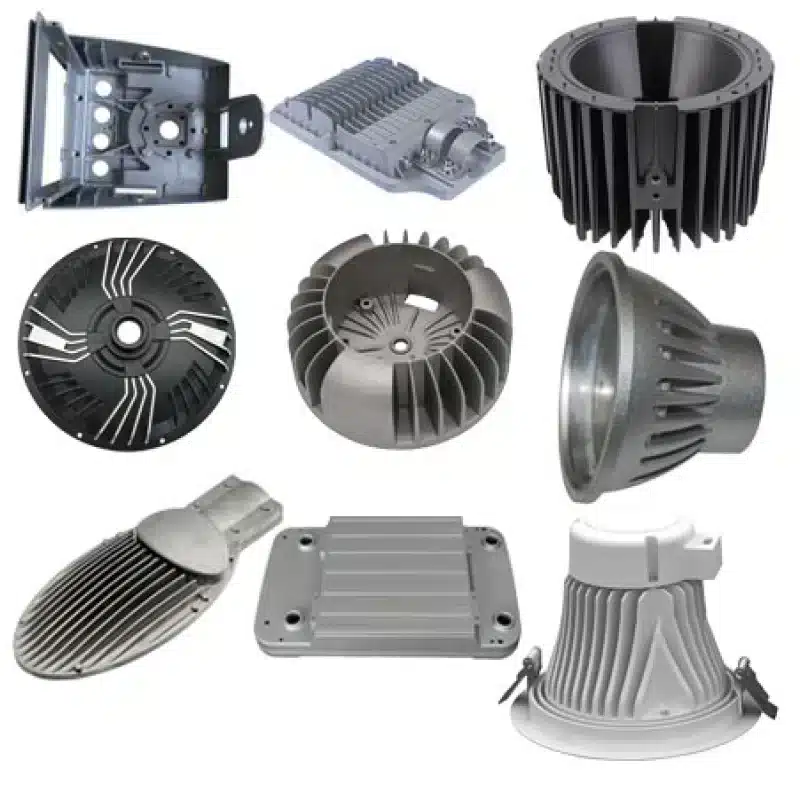
Companies in the electronics industry employ vacuum die-cast aluminum components to manufacture housings, connectors, and heat sinks. These parts require precise dimensions and smooth surface finishes to ensure optimal functionality. Similarly, medical device manufacturers use vacuum die casting to produce components that meet stringent precision standards and guarantee operational safety.
Comparison with Other Casting Methods
Vacuum die casting is different from sand casting and gravity casting. The table below shows how they are not the same in quality and speed:
| Casting Method | Quality Features | Production Speed |
|---|---|---|
| Vacuum Die Casting | Makes strong, low-porosity parts; good for strong parts | Faster than sand casting, but not as fast as high-pressure die casting |
| Sand Casting | Easy to change design; cheap tools; rougher surface | Takes longer; best for small or medium batches |
| Gravity Casting | Strong parts; better surface; steady quality | Good for medium or big batches |
Vacuum Cast Aluminum Limitations
Despite its many advantages, the vacuum aluminum casting process faces certain challenges. Porosity is the primary issue; rapid mold filling can trap air, creating voids—defects that can affect up to one-fifth of the parts produced. Porosity arises when gas trapped within the casting creates weak points. Improper shrinkage during cooling can lead to hot tears, while uneven cooling may cause shrinkage cavities. Mold release agents trapped in the mold can result in surface bubbles, and a failure of molten metal streams to fuse completely creates “cold shuts,” which further exacerbate porosity issues. Even with advanced vacuum die-casting technology, porosity remains a significant challenge during quality inspection. Factories typically employ vacuum levels below 50 mbar to mitigate porosity, yet the rapid filling process makes complete air evacuation difficult. Despite these measures, controlling porosity remains a critical priority for B2B suppliers aiming for dimensional precision.
Vacuum Cast Aluminum Industry Applications
Vacuum cast aluminum is important in many industries. These industries need parts that are strong, exact, and dependable. Makers use this process to follow strict rules and give B2B clients good parts.
- Automotive: Car companies use vacuum die casting for engine blocks and other parts. These parts are light and strong. This way also helps save materials and energy. In North America, more people want cars that use less fuel. Vacuum cast aluminum helps by making strong and light parts.
- Electronics: Factories use vacuum die casting for housings and heat sinks. These parts must be the right size and have smooth surfaces. The process also helps the parts handle heat better, which is important for electronics.FeatureDescriptionProcessVacuum die castingApplicationsHousings, heat sinks, enclosuresKey BenefitsAccuracy, surface finish, thermal conductivity
- Medical Equipment: Medical makers pick vacuum cast aluminum for parts with exact shapes. The process takes out air and gas bubbles. This means there are fewer mistakes and the parts are stronger. It also stops oxidation, so the parts stay safe for medical tools.
- Aerospace: The aerospace industry uses vacuum casting for turbine blades and other parts. This way lets them make tricky shapes and keep tight sizes. Aerospace parts need to be strong and have few holes. This keeps them safe and working well in tough places.
- Semiconductor and High Vacuum Applications: Vacuum cast aluminum is used for vacuum chambers and other special parts. These parts need to have few holes and be very strong. This is important for the semiconductor industry and other high-tech jobs.
Makers choose vacuum casting for parts with tricky shapes and good surfaces. This process is used in many businesses. It is a top pick for B2B buyers who want quality and parts they can trust.