
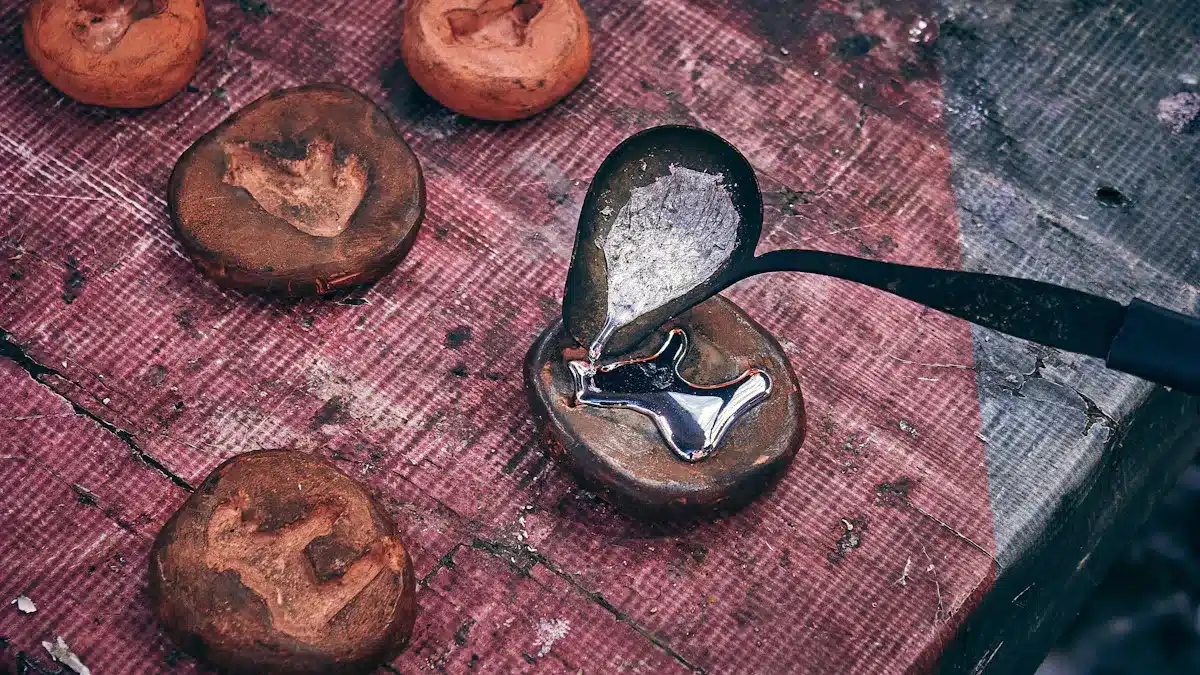
Aluminium die casting involves pouring hot liquid metal into a mold, resulting in parts that are both strong and precise. This process is utilized across various industries for producing tough and accurate products.
Car manufacturers rely on this technique for engine components and heat sinks.
Aerospace companies choose it for aircraft frames and fittings.
Electronics die casting is essential for creating cases and connectors that conduct electricity effectively.
Construction and home products benefit from durable brackets and lighting fixtures.
Aluminium die casting manufacturers also play a crucial role in medical die casting, producing parts for medical devices that must adhere to stringent regulations.
Key Takeaways
Aluminum die casting makes tough and exact parts. These parts are used in cars, planes, and electronics.
Getting the mold ready is very important. Cleaning and coating the mold helps make good castings. This also lowers mistakes.
Watching the melting and injection steps is needed. This helps aluminum fill the mold the right way. It makes parts that are strong and have good details.
Cooling and taking out the part must be done at the right time. This stops the part from breaking and keeps its shape.
Checking quality during the whole process is important. This makes sure every part is good and meets what people want.
Mold Preparation
Before aluminum casting starts, workers get the mold ready. Careful mold preparation helps make sure each part is high quality. It also lowers the chance of mistakes.
Cleaning & Coating
First, workers clean the mold. They take out any old material left from before. Clean molds stop dirt from getting in and help parts look smooth. Next, they put a special coating on the mold. This coating keeps the mold safe and helps metal move easily.
The table below lists common coatings and how well they work:
Coating Type | Effectiveness |
|---|---|
Epoxy Powder Coating | Great chemical resistance, good for inside use, but not good with sunlight. |
Polyester Powder Coating | Handles sunlight and weather well, good for outside, keeps color and shine. |
Hybrid Powder Coating | Mixes epoxy and polyester benefits, costs less, used in many ways. |
Special Effect Coatings | Can be changed for looks or performance, hides marks or stops dirt. |
These coatings help molds last longer and make better castings. Special effect coatings can also make castings look nicer or stay clean.
Preheating the Die
Heating the mold before casting is important. Workers warm up the mold before pouring in hot metal. This step stops problems like cracks, shrinking, or sticking. If the mold is cold, metal cools too fast and gets weak spots.
Tip: Heating the mold helps metal fill every space, so castings are strong and smooth.
Aluminum casting molds should be heated between 180°C and 280°C (356°F to 536°F). This temperature makes sure the mold is ready and lowers the risk of mistakes.
A good mold system has many parts. These include the cavity, runner, exhaust channel, riser, and cooling system. Each part helps guide the metal and control the process. Good planning and setup help every casting be strong and accurate.
Melting & Injection
Melting Aluminum
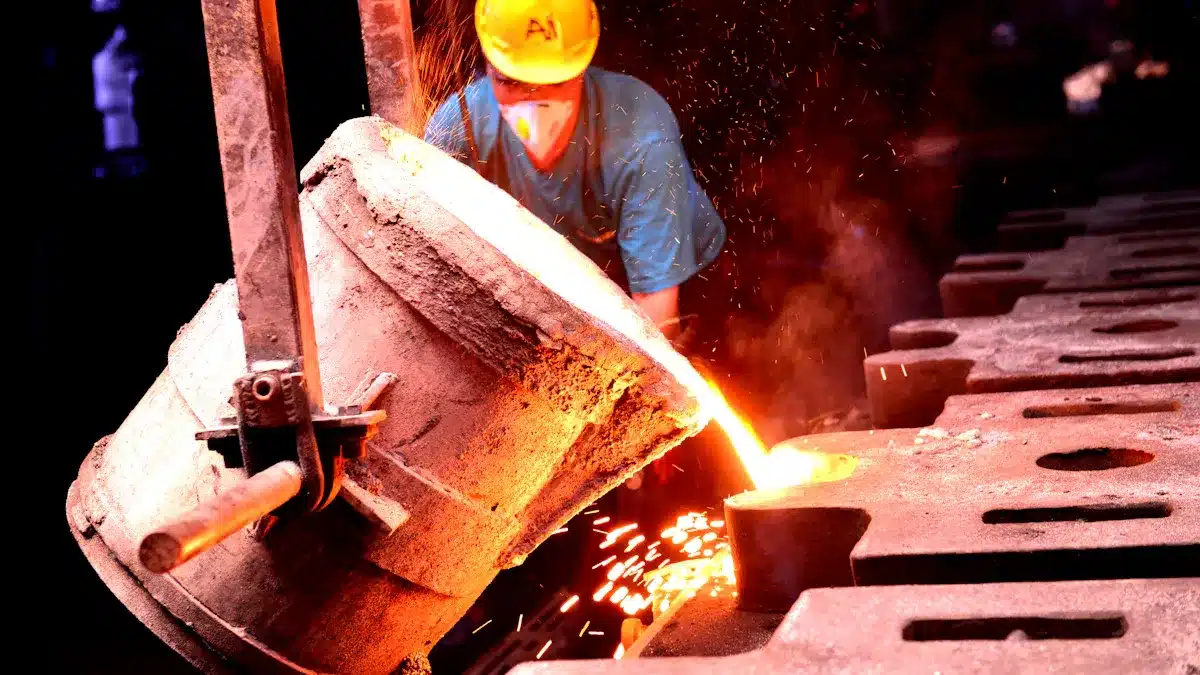
Aluminum casting starts by melting aluminum. Workers put aluminum ingots or scrap in a furnace. The furnace heats the metal until it becomes liquid. Most factories melt aluminum at about 720°C. This temperature helps the metal flow into the mold easily.
Factories need lots of energy to melt aluminum. Melting aluminum in big factories uses between 580 and 900 kWh for each ton. Some special furnaces, like the StrikoMelter® with ETAMAX® shaft, use only 600 kWh per ton. These furnaces help save energy and lower costs.
Workers must keep the melted aluminum clean. They remove dirt or dross from the top. Clean metal makes better castings. The melted aluminum stays in a holding furnace until the next step. This furnace keeps the metal hot and stops it from cooling too soon.
Aluminum casting needs careful temperature control. If the metal gets cold, it may not fill the mold. If it gets too hot, it can hurt the mold or cause problems. Skilled workers watch the process to keep everything correct.
Injection Process
The injection process is very important in aluminum casting. Workers move the melted aluminum into a chamber. A plunger or piston pushes the metal into the mold fast. This step uses high-pressure to fill every part of the mold.
Most aluminum casting uses pressure between 100 and 200 MPa. This is about 14,500 to 29,000 psi. Some big or thick parts need even more pressure, up to 250 MPa. High-pressure injection helps the metal fill the mold quickly and makes strong, detailed parts.
The speed of injection also matters. There are two main stages: slow injection and fast injection. The table below shows how speed changes the quality:
Injection Speed Stage | Effect on Quality |
|---|---|
Slow Injection | Poor forming quality or incomplete filling |
Fast Injection | Improved filling quality, avoids flow marks and cold separation |
Filling speed and pressure are important for good casting. For simple, thick parts, workers use slow filling and high pressure. For complex, thin parts, they use fast filling and high speed. This helps stop problems and makes smooth, accurate castings.
Controlling speed, pressure, and temperature is very important. These things stop problems like uneven cooling and shrinking. Good control makes aluminum parts that are the right size.
Tip: High-pressure die casting makes parts with great detail and strength. This method is best for car, airplane, and electronics parts.
Aluminum casting needs skilled workers and good machines. The right mix of temperature, pressure, and speed makes high-quality castings every time.
Cooling & Ejection
Cooling Phase
After injection, the aluminum casting starts to cool in the mold. Cooling is very important for the casting’s strength and shape. Workers watch the cooling time closely. The right cooling time keeps the casting’s shape. It also stops cracks or bending. If cooling is too fast or slow, problems can happen.
Many things change how fast aluminum cools:
High-pressure die casting settings change cooling speed.
The alloy’s temperature before pouring affects heat flow.
The alloy’s chemical makeup changes how it cools.
Modification treatments can change the casting’s structure.
The die’s temperature matters for cooling.
How workers fill metal into the die changes cooling speed.
The venting system helps control heat in the cavity.
The number, shape, and place of filling gates affect cooling.
Cooling speed changes the microstructure and quality.
Workers use these things to make cooling better. Good cooling management can make production faster by 15–30%. Knowing about heat flow and defects helps workers know when to move to the next step.
Note: Good cooling makes sure the aluminum casting is strong and looks good.
Ejecting the Part
When the casting is cool enough, workers take it out of the mold. Ejection must happen at the right time. If the casting is still hot, it can bend or break. If it is too cold, it can stick and get damaged.
Factories use different ways to eject aluminum castings:
Mechanical ejecting uses machines to push the casting out.
Hydraulic ejecting uses oil cylinders in the mold to move the casting.
These systems help workers remove castings quickly and safely. Ejection ends the main casting cycle. Workers check the casting for sticking or damage before the next step.
Aluminum casting needs careful work during cooling and ejection. Each step helps make sure the casting is good and ready for finishing.
Trimming & Finishing
Trimming Excess Material
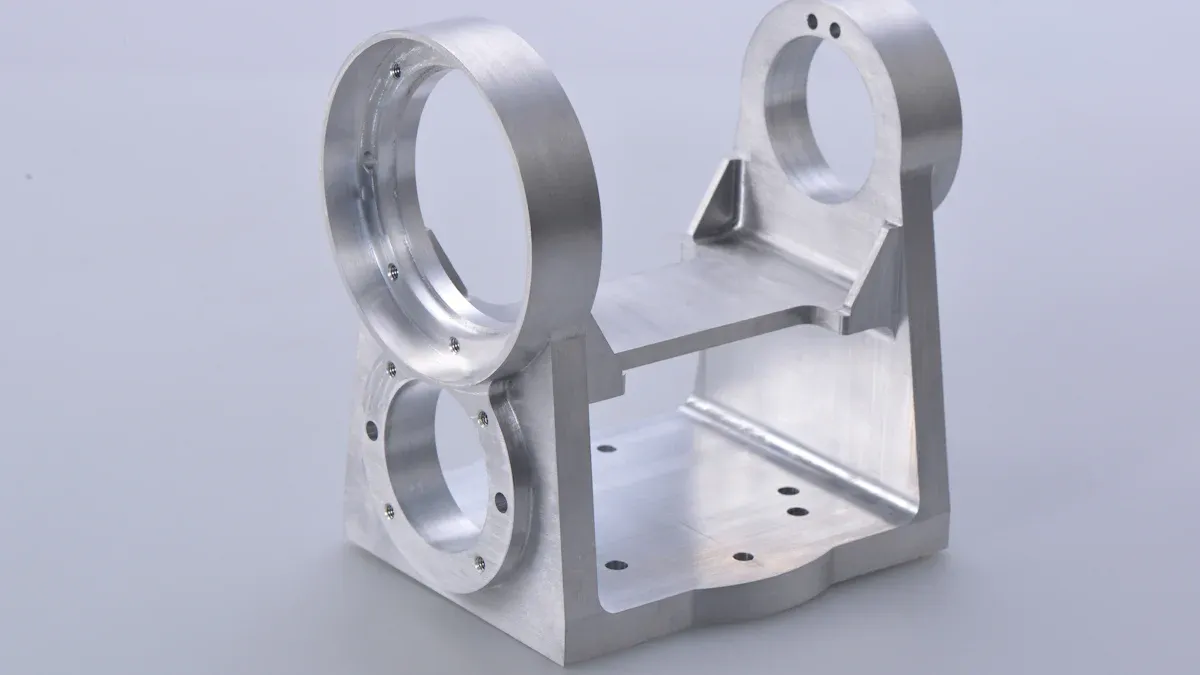
When the aluminum casting cools, workers cut off extra metal. This extra metal is called flash. Flash is thin and sticks to the edges. Trimming helps the part get the right shape and size.
There are two main ways to trim:
Method | Description |
|---|---|
Manual tools | Workers use files or sanders. This way is slow and can make uneven parts. |
Trim die | A special die cuts off extra metal fast and evenly. This way makes better parts. |
Most factories use a trim die for trimming. The trim die uses strong pressure to cut off flash. It works faster and costs less than manual tools. Workers pick trim dies when they need many parts that look the same.
Tip: Every casting needs trimming. Trimming removes flash and helps the part fit its job.
Surface Finishing Options
After trimming, the part goes to finishing. Finishing makes the aluminum casting look nice and last longer. It also protects the part from rust and scratches.
Popular finishing choices are:
Anodizing
Powder Coating
Chromate Conversion Coating
Electrophoretic Painting
Electroplating
Painting
Passivation
Shot Blasting
Physical Vapor Deposition (PVD)
Each finishing type gives special benefits. Anodizing makes a hard layer that stops scratches and helps the part last. Powder coating gives a smooth, colorful cover that protects from damage. Electroplating puts a thin metal layer on the part to make it stronger and better looking.
Finishing also helps stop rust. This means the aluminum part lasts longer, even in wet places. Some finishes, like electroplating, make the part stronger. Other finishes, like powder coating, make the part flexible and hard to scratch.
Note: Picking the right finish helps the part work well for its final use.
Aluminum casting needs careful trimming and finishing. These steps help every part be strong, smooth, and ready to use.
Quality Control by Aluminium Die Casting Manufacturers
Aluminium die casting manufacturers care a lot about quality control. They check every step in the casting process. Each step, from getting the mold ready to finishing, matters for the final part. Companies like MORELUX use special checks to make sure each casting is good. They want every part to meet tough industry rules.
Inspection Steps
Aluminium die casting manufacturers use different ways to check castings. These checks help them find and fix problems early. This means customers get better parts.
Inspection Method | Description |
|---|---|
Visual Inspection | Looks at the part’s surface for scratches or cracks. Workers use magnifying glasses and microscopes. |
Dimensional Measurement | Checks size and shape with calipers and CMM tools. This makes sure the part is the right size. |
Non-Destructive Testing (NDT) | Looks inside the part without breaking it. Uses radiography, ultrasonic, and eddy current testing. |
Destructive Testing | Tests how strong the part is by breaking or hitting it. Checks if the part can handle heavy use. |
Workers use these checks to make sure castings are strong and correct. Visual checks find surface problems. Size checks make sure the part fits the design. Non-destructive tests look inside the part. Destructive tests see how much force the part can take.
Ensuring Precision & Standards
Aluminium die casting manufacturers use new machines and skilled workers to keep high standards. They use special systems to watch every part of the process. Some companies use vacuum-assisted die casting and multi-cavity tooling. These help lower mistakes and make better parts.
Skilled teams are very important for quality control. They use new tools and smart ways to make the process better. Their skills help stop mistakes and make sure each part is what the customer wants. Quality checks, like strong testing, help stop recalls and keep customers happy.
MORELUX is known for using new technology and skilled workers. They work hard to make sure every aluminum casting is strong and accurate. This helps car, airplane, and electronics companies get good parts for their products.
Note: Strong quality control by aluminium die casting manufacturers makes sure every part is strong, correct, and ready to use.
Aluminum casting has several main steps. These are mold preparation, melting and injection, cooling and ejection, and trimming and finishing. Each step helps make parts that are strong and accurate. Working with skilled manufacturers gives many good results. You save money and time. The parts last longer and need less fixing. Your products can do better in the market.
You spend less and get parts faster.
The parts are tough and need little repair.
Your business can stand out from others.
Expertise Impact | Description |
|---|---|
Advanced techniques | Experts use smart ways to make aluminum casting better. |
High-quality production | Skilled teams make sure every part is made right. |
Complex designs | Experts can make hard shapes without trouble. |
Picking a trusted company like MORELUX means your aluminum casting project will be high quality and work well.